The Agony in the Garden by Benvenuto di Giovanni
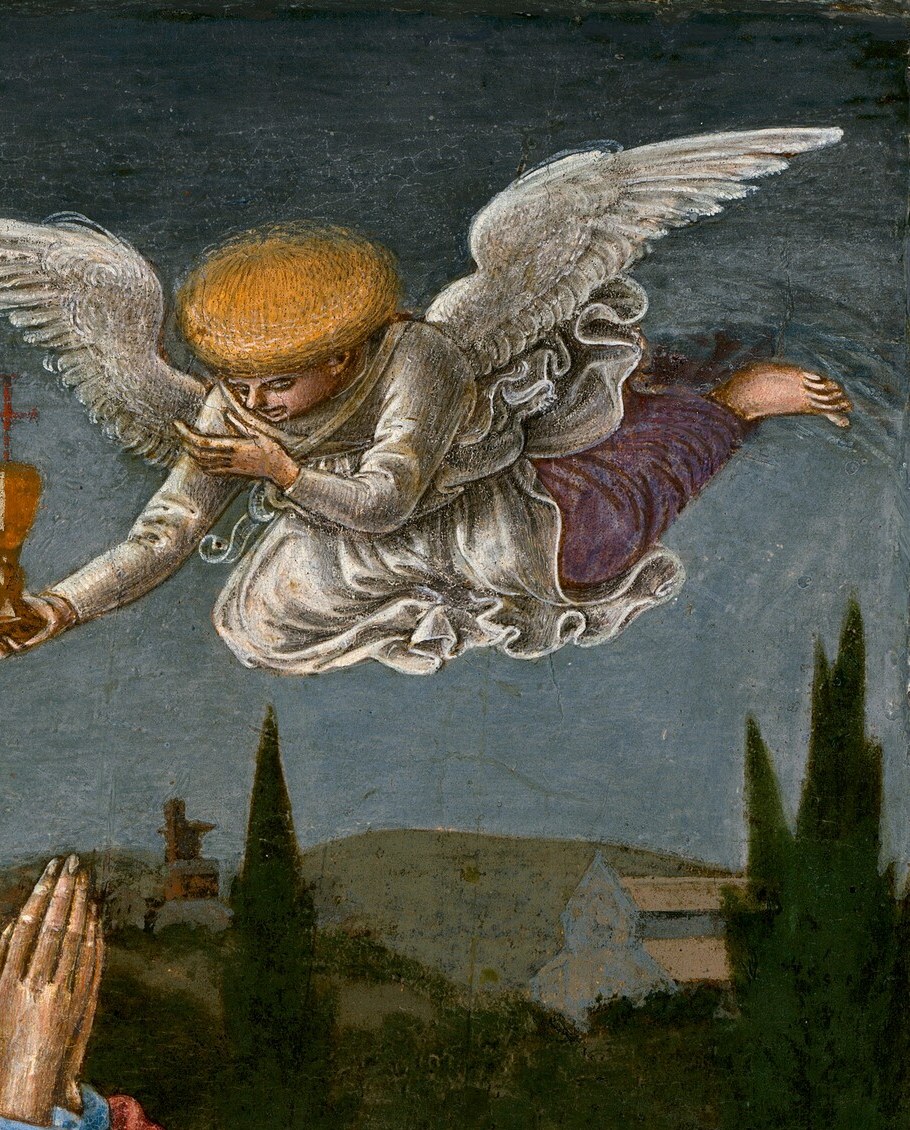
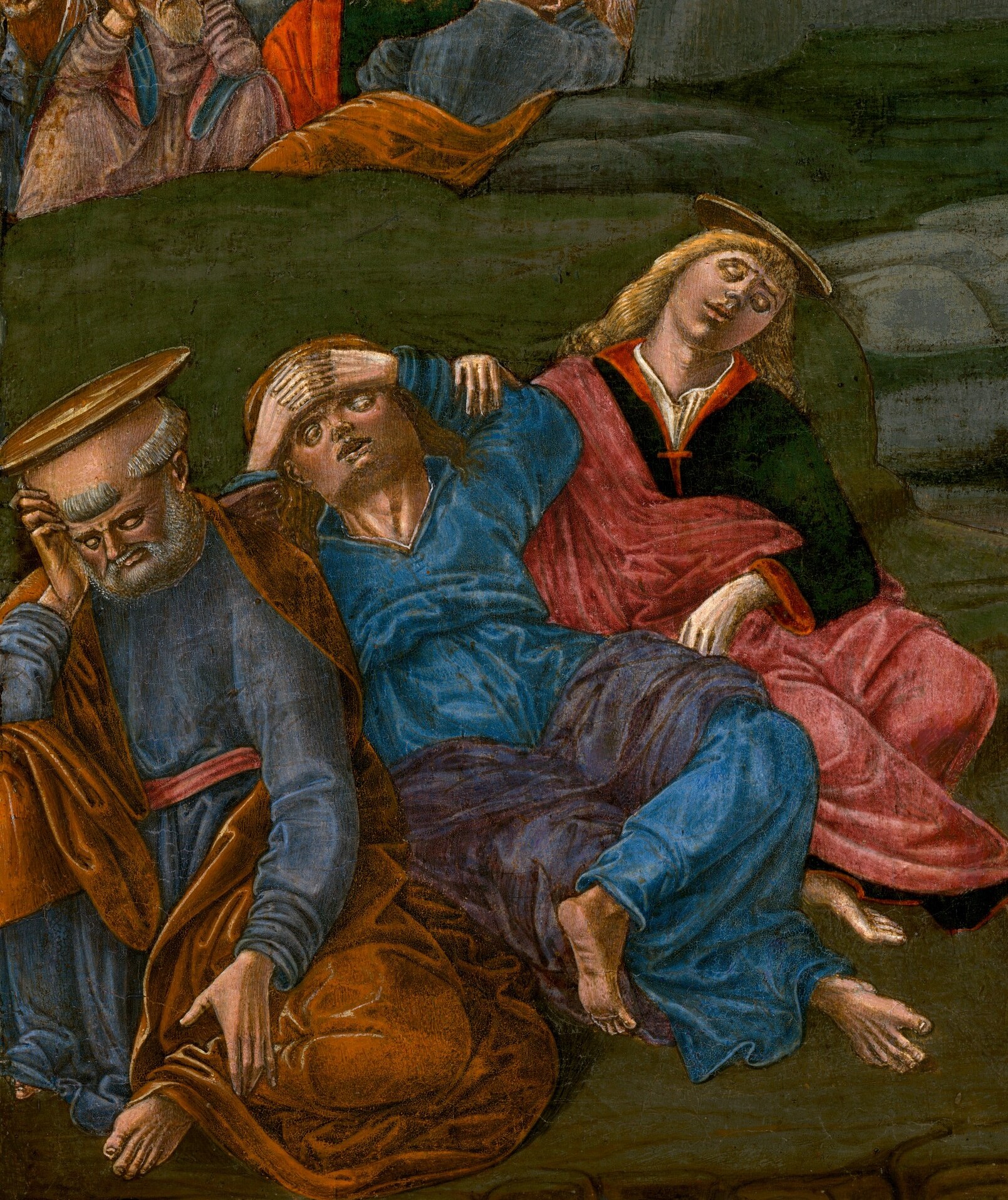
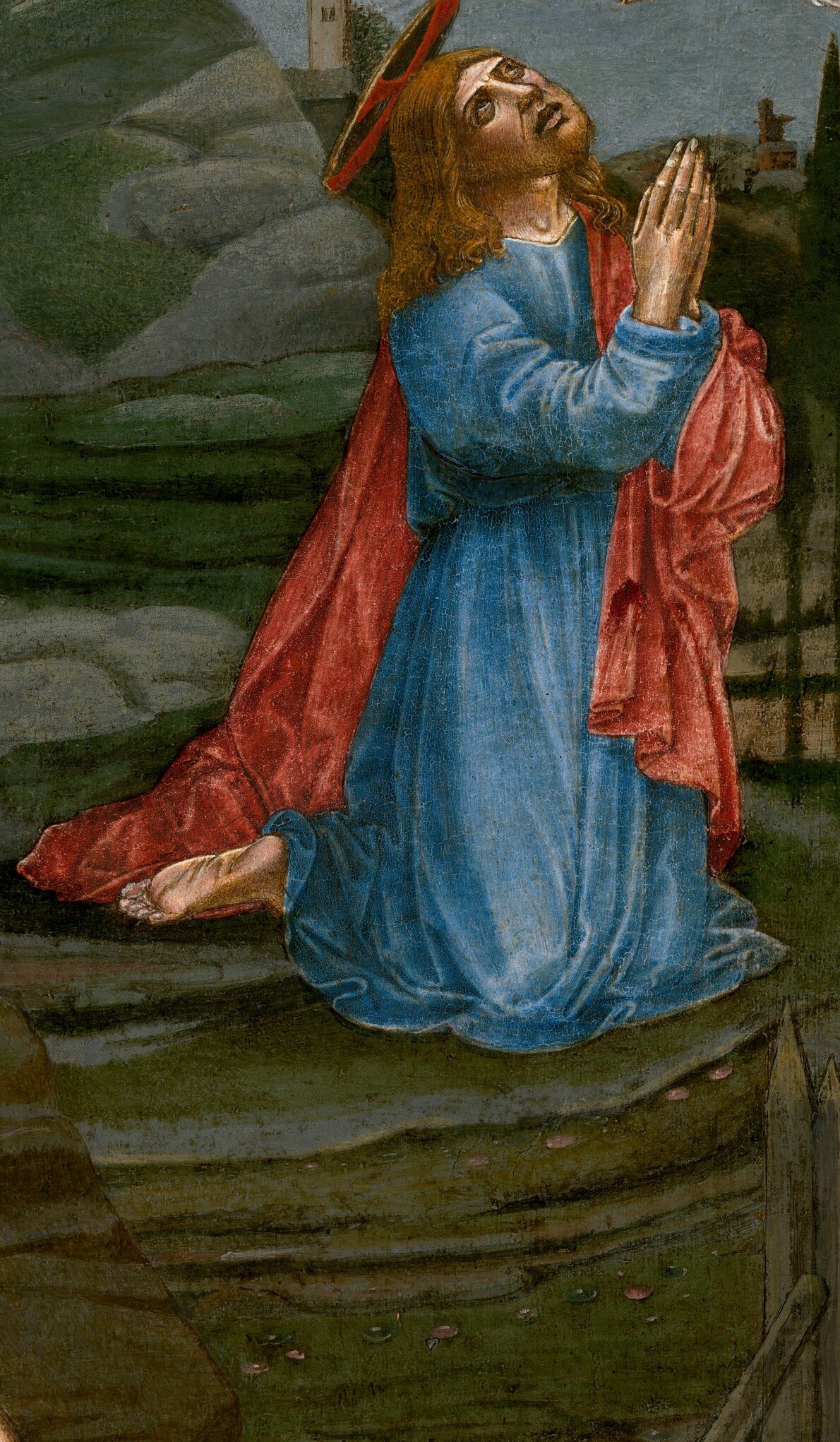
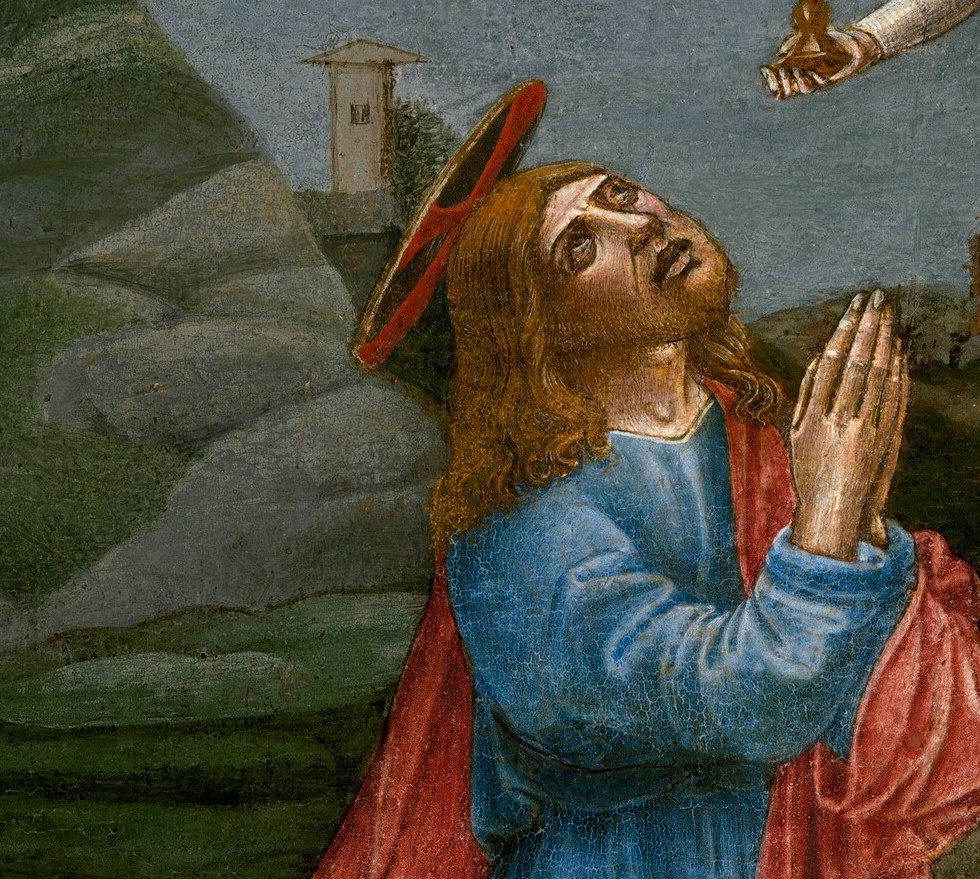
Benvenuto di Giovanni's *The Agony in the Garden*, painted around 1491, masterfully combines different moments in time within a single frame. While Christ kneels in prayer, comforted by an angel, his disciples sleep nearby, oblivious to the impending events.
But if you look closely at the background, a hidden detail reveals the dramatic tension. Across the stone bridge, Judas is already leading soldiers to arrest Christ, collapsing the past, present, and future into one powerful visual narrative.
This early Renaissance tempera on panel painting by the Sienese artist showcases his skill in creating nuanced compositions. Benvenuto di Giovanni, active from 1453, was known for his diverse contributions, and this work is a testament to his unique ability to tell a complete story with a single image.
What other stories do you see unfolding in the details?
Details
Transcript
This painting shows Christ praying, just before his arrest. An angel offers him the cup of suffering. His disciples sleep, unaware of what is coming. But look closely in the background, to the right. Across the stone bridge, Judas leads soldiers to betray him. The artist compresses past, present, and future into one scene.