Insects and a Sprig of Rosemary by Kessel the Elder, Jan van
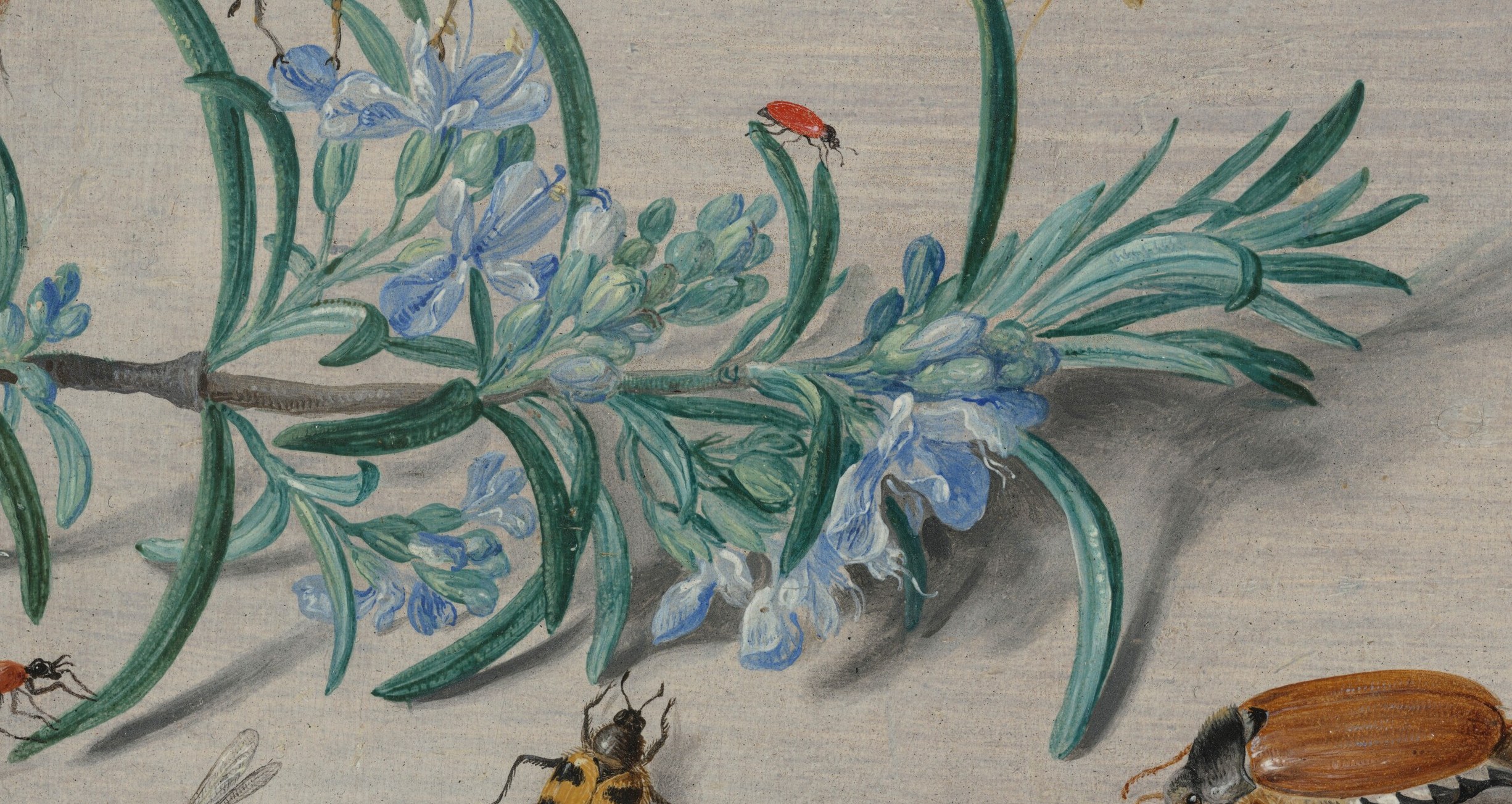
Jan van Kessel the Elder's 1653 painting, *Insects and a Sprig of Rosemary*, at the Rijksmuseum, is a marvel of minute detail and lifelike texture. Painted on a copper support, the surface glows, enhancing the vivid colors and the delicate rendering of each insect and the rosemary sprig.
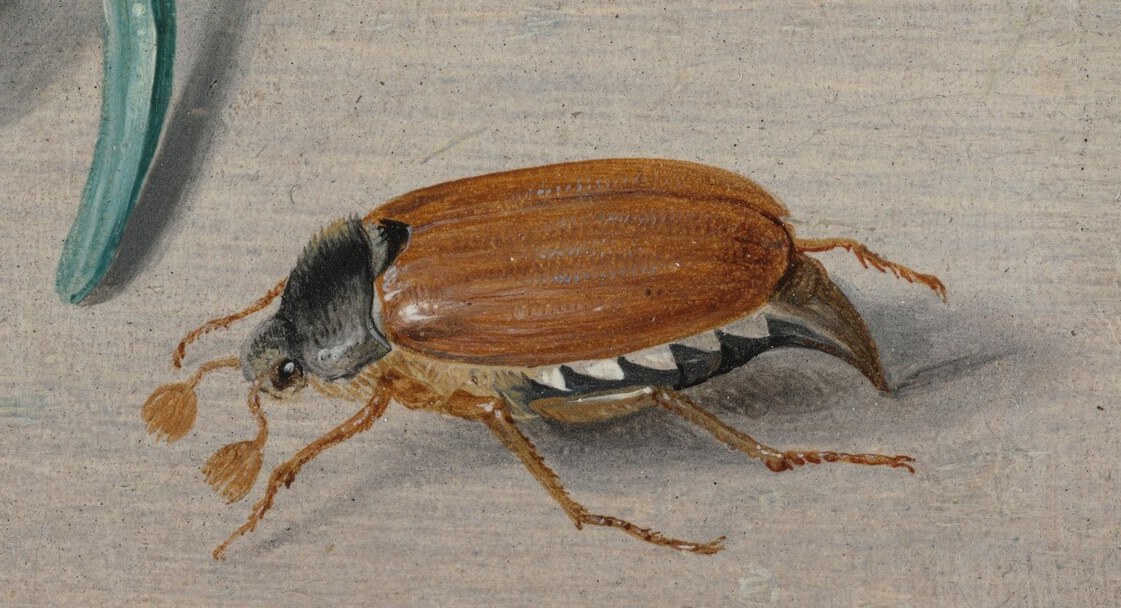
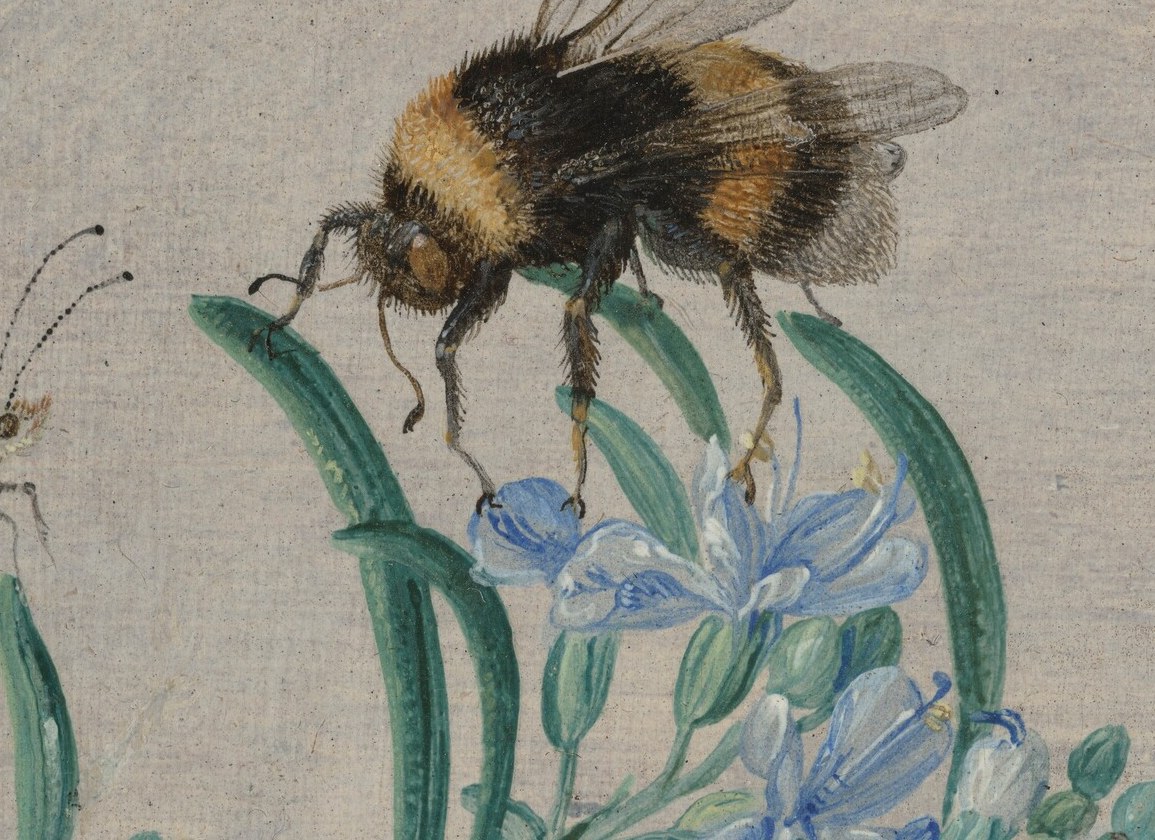
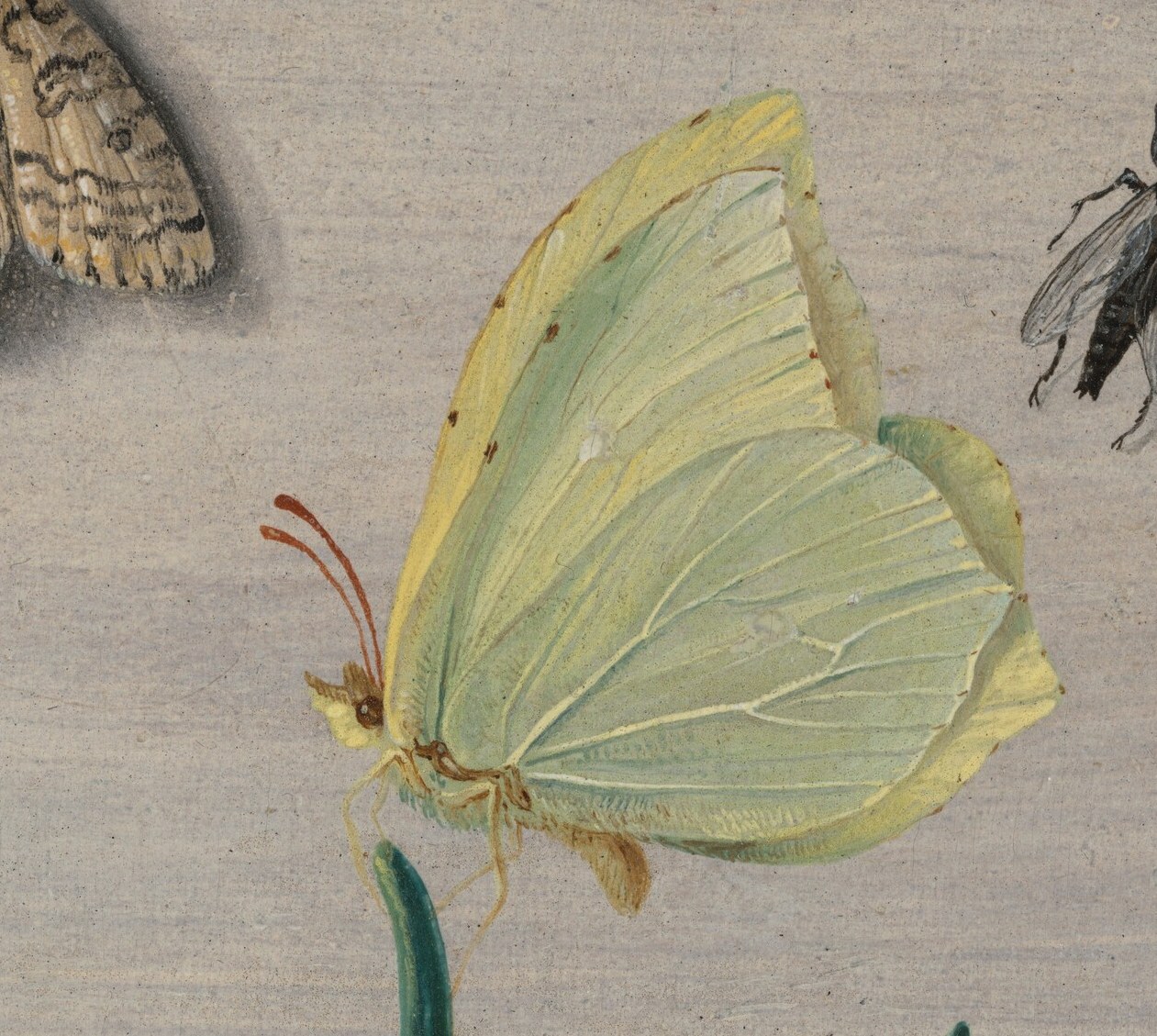
The artist meticulously captures every fuzzy hair on the bumblebee, the translucent fragility of butterfly wings, and the metallic sheen of beetles. It's a testament to the artist's keen observation and incredible skill, making each creature feel tangible and alive within the small frame.
This work is a fine example of 17th-century Flemish naturalist painting, blending artistic virtuosity with scientific curiosity. Artists like Kessel often explored the natural world, creating detailed studies that were both beautiful and educational, reflecting the period's fascination with cataloging the natural world.
What tiny detail in this painting surprises you the most?
Details
Transcript
This painter brought an entire ecosystem to life. He painted on copper to achieve this luminous surface. Every tiny creature is rendered with astonishing detail. Look at the fuzz on this bumblebee, ready to fly off. Or the delicate wings of this pale yellow butterfly. This small green beetle has an iridescent, metallic sheen. The artist signed and dated his work in the upper corner.