Sea Cove by Albert Bierstadt
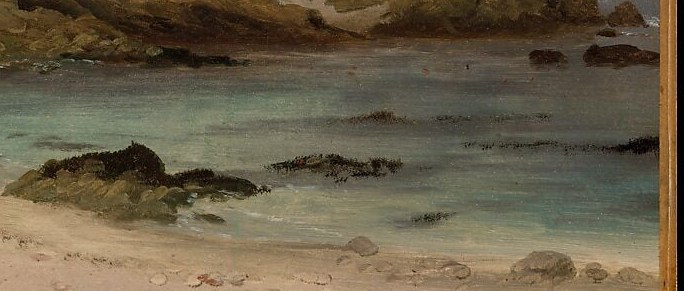
Albert Bierstadt's Sea Cove (ca. 1880-90), oil on wood, National Museum of American Art. This painting offers a quiet contrast to Bierstadt's famous grand Western landscapes. Here, the focus is on an intimate, secluded coastal cove.
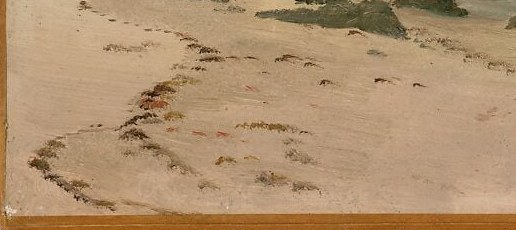
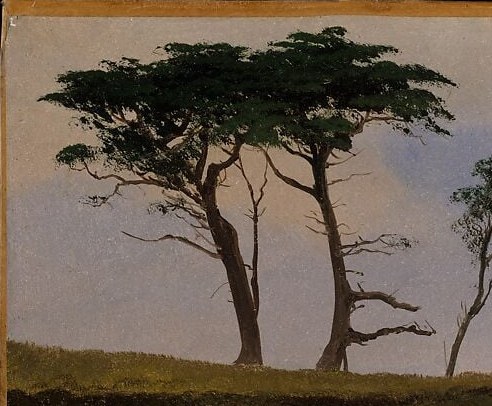
Look at the tranquil sea and the footprints leading into the sand, suggesting a recent solitary visitor. The gnarled cypress trees stand tall against the sky, framing a moment of natural solitude.
Bierstadt, a key figure of the Hudson River School, was known for his meticulous detail and romantic lighting. While he documented the vast American West, works like Sea Cove reveal his appreciation for nature's smaller, more personal vistas.
This piece invites contemplation on the serene beauty of undisturbed nature.
Details

Transcript
A quiet place where the land meets the sea. The artist captures a peaceful coastal scene. Footprints mark the wet sand. Someone was here. Tall cypresses stand guard over the cove. Albert Bierstadt often painted grand Western scenes. This intimate cove shows nature's quiet beauty. He painted this between 1880 and 1890.