A Storm Behind the Isle of Wight by Julius Caesar Ibbetson
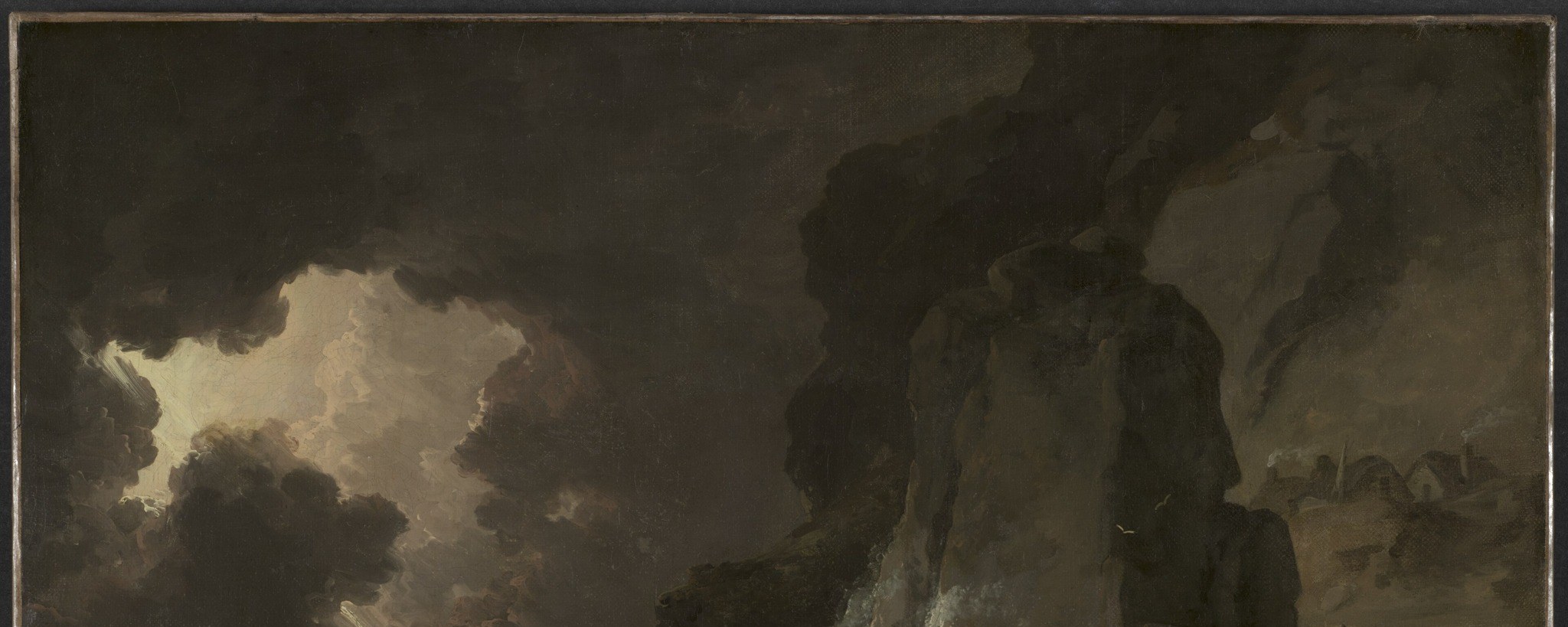
Julius Caesar Ibbetson's 1796 oil painting, *A Storm Behind the Isle of Wight*, captures a moment of immense natural power, showcasing the raw force of a sudden squall near England's southern coast. It is part of The Cleveland Museum of Art's collection.
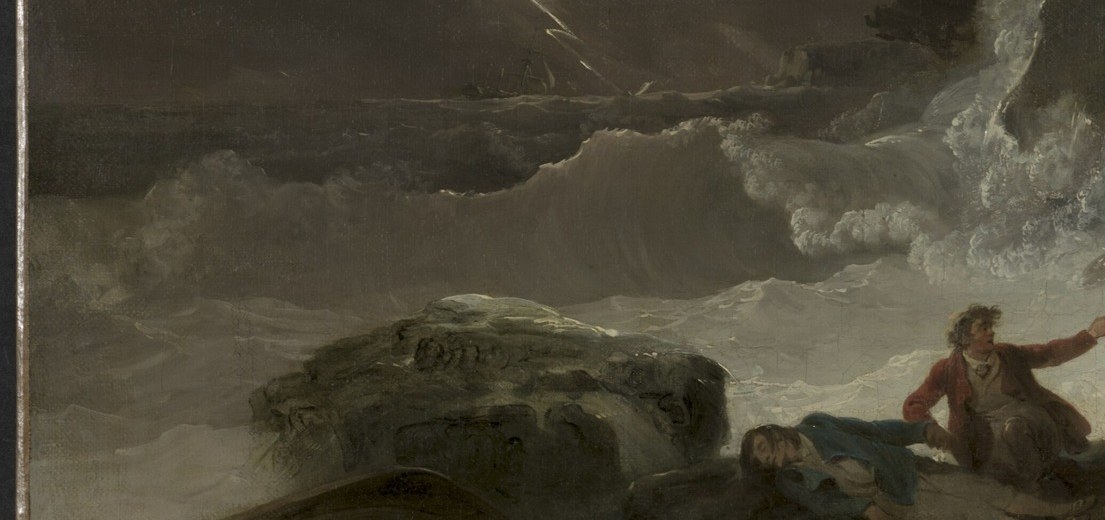
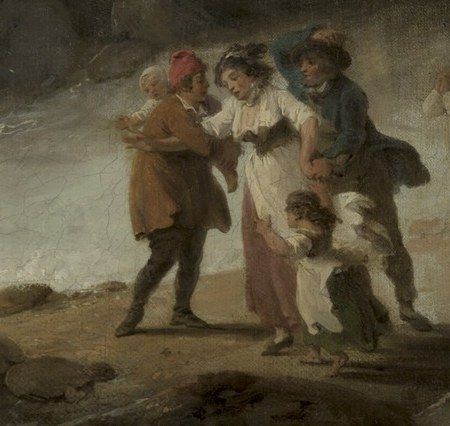
Look closely at the churning waves and the dramatic lightning strike, which highlights the precariousness of human activity. The huddled figures on the shore emphasize humanity's vulnerability in the face of such overwhelming forces.
Ibbetson was a British landscape and watercolor painter active in the late 1700s. His work reflects the British Romantic movement's emphasis on dramatic natural scenes and the sublime power of weather.
This painting invites us to consider our place within the vast, untamed beauty of the natural world.
Details
Transcript
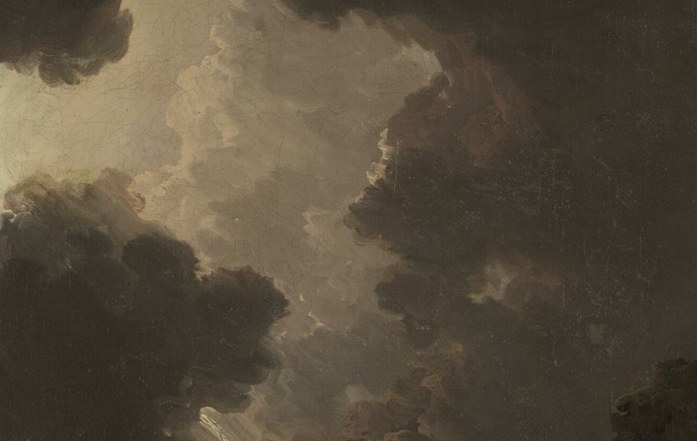
This 1796 painting shows nature's raw, untamed power. Turbulent storm clouds dominate the sky. The sea churns with towering waves, threatening the shore. A dramatic lightning strike illuminates the scene. On the shore, people struggle against the fierce wind and rain. This artist, Julius Caesar Ibbetson, specialized in dramatic landscapes. His work captured the Romantic era's awe of nature's sublime force.