Mrs. William Astor (Caroline Webster Schermerhorn, 1831–1908) by Carolus-Duran
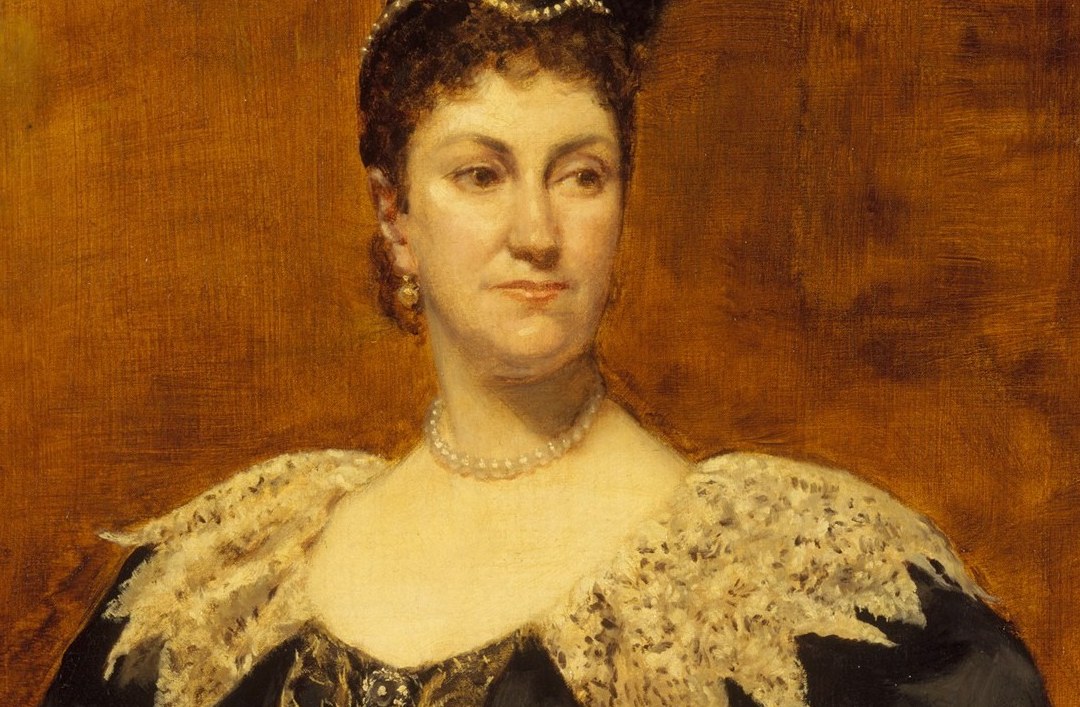
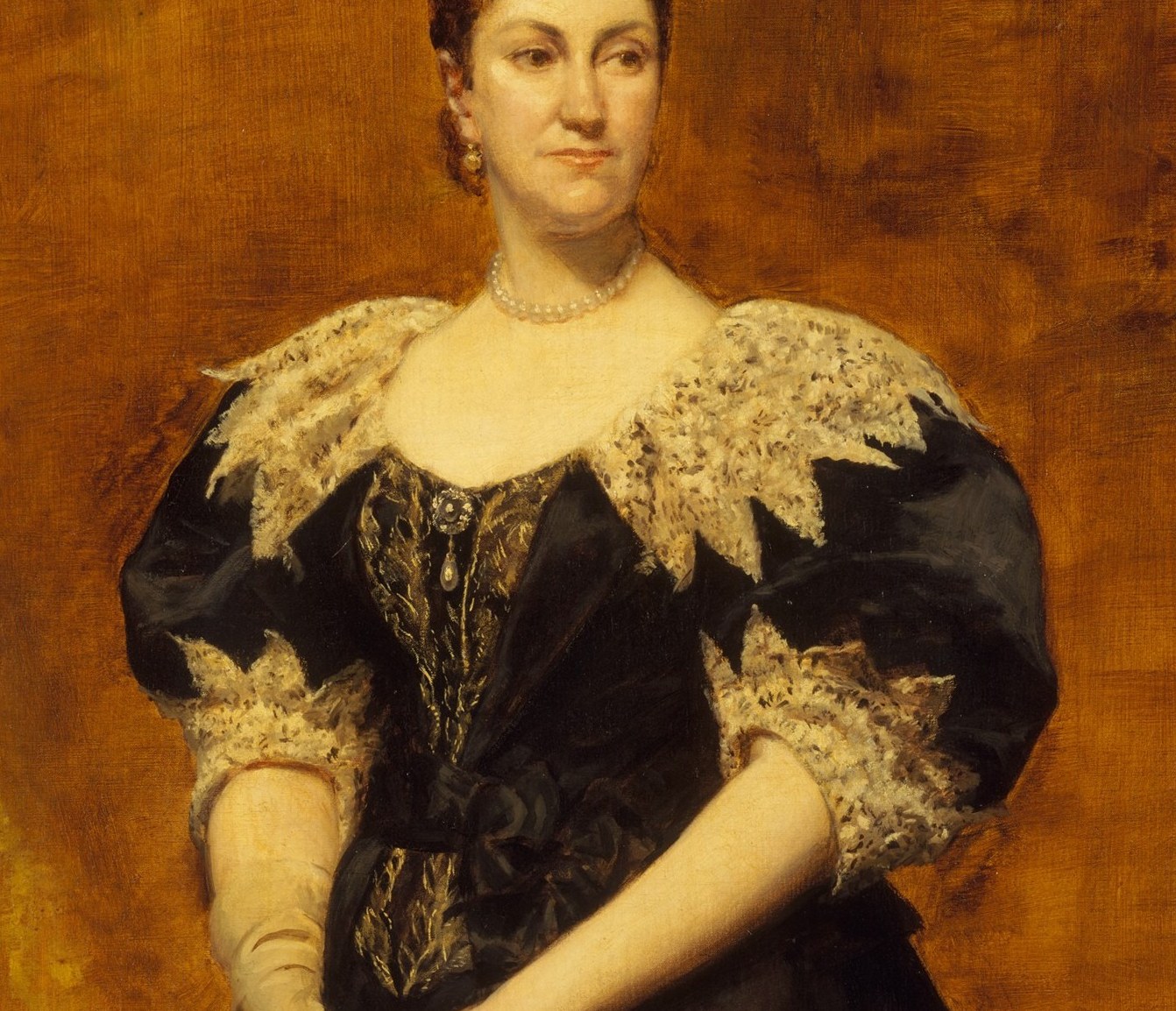
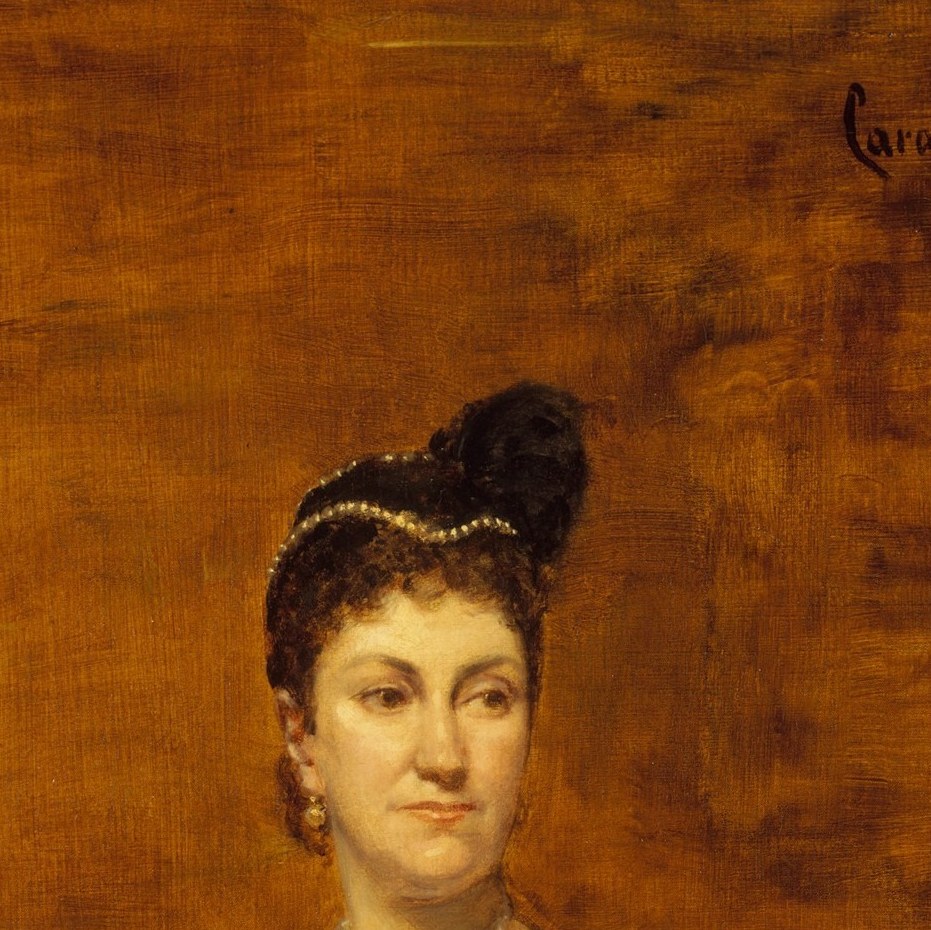
Carolus-Duran painted Caroline Schermerhorn Astor, the gatekeeper of Gilded Age New York society, in 1896. The portrait hangs at The Metropolitan Museum of Art and is known simply as Mrs. William Astor.
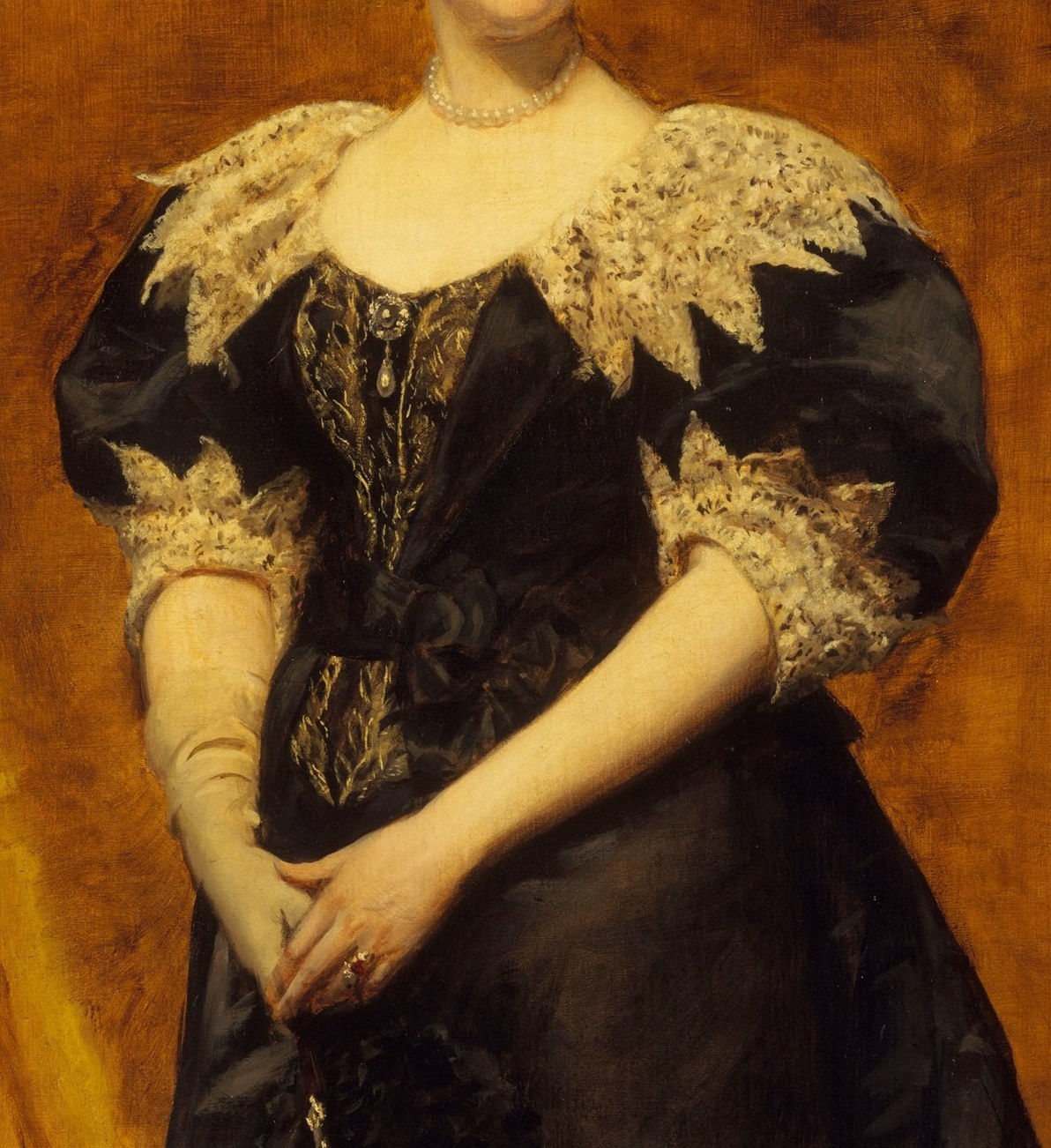
What stops the scroll is the black silk. It reads as a column of darkness, but the closer you look the more colors separate out: blue-black, green-black, brown-black. Carolus-Duran worked the entire surface wet into wet, brushing one tone into another before the paint dried, a method he absorbed from Velázquez and taught to his most famous student, John Singer Sargent.
The gold embroidery is the most efficient trick in the room. Each highlight is a single confident stroke of a loaded brush, laid onto the dry underpainting and never touched again. The lace at the collar, by contrast, is a dry scumble, dragged lightly over dark paint with a stiff brush. He moves through three different paint applications in a single dress.
Mrs. Astor controlled a social list of four hundred names, the ceiling of New York society. Carolus-Duran gave her exactly what she paid for: a portrait that feels effortlessly expensive. The technique is so quiet you might miss it, which is the point.
Details

Transcript
A column of black silk fills the frame. It is not one black. It is charcoal, jet, and deep forest green. Carolus-Duran built every fold wet into wet, layering while the paint was still soft. The dress cost more than most New Yorkers earned in a year. Now look at the gold trim. Each stroke of gold thread is a single loaded brush, laid down once. The background glow is not a curtain. It is pure pigment, scrubbed thin over warm ground. He learned this from Velázquez: let the light live inside the shadows.