Harvest Time by George Inness
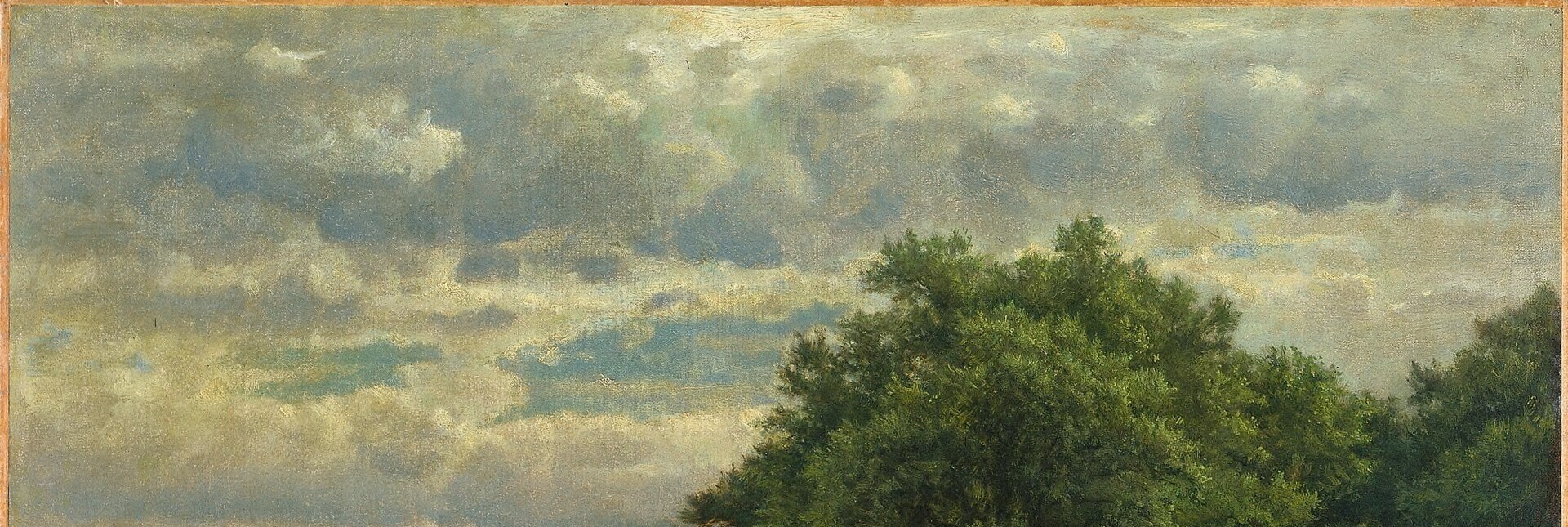
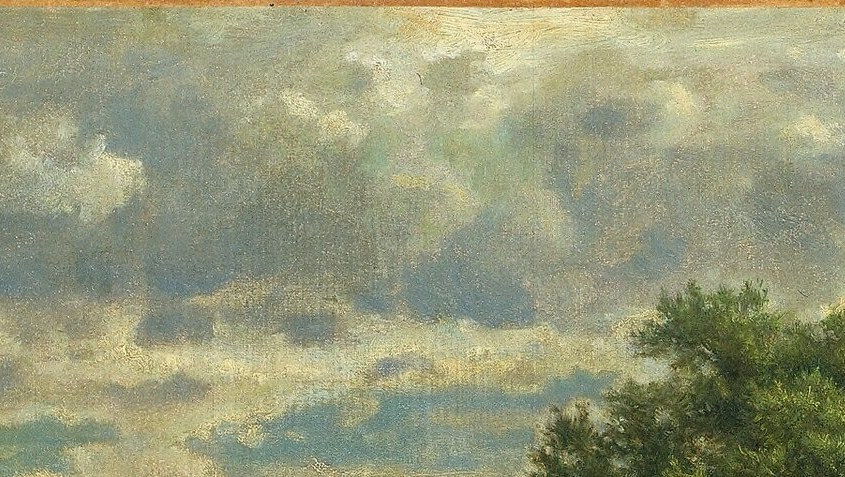
George Inness painted "Harvest Time" in 1864, and it hangs today at the Cleveland Museum of Art. At first glance it is a peaceful farm scene, workers in a field, a big anchoring tree, a meandering stream. But the real subject is the sky, which takes up almost half the canvas.
That was a deliberate choice. In the 1860s, American landscape painting was still dominated by the Hudson River School, which prized crisp, detailed, topographical views. Inness was starting to pull away. He had seen the Barbizon painters in Europe and had been reading the mystic philosopher Emanuel Swedenborg, who believed the natural world was a vessel for spiritual meaning. Inness began to care less about cataloging every leaf and more about capturing how a place felt.
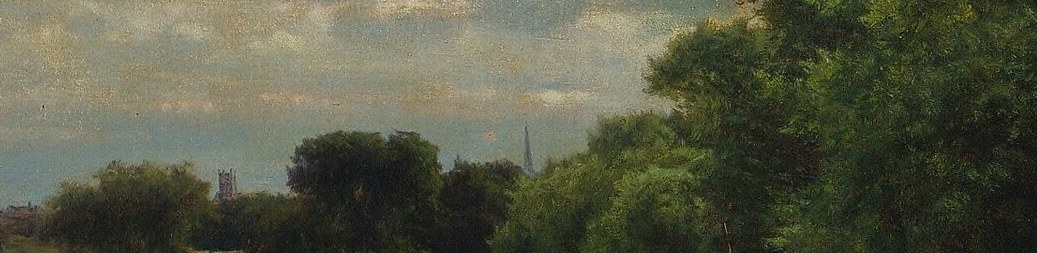
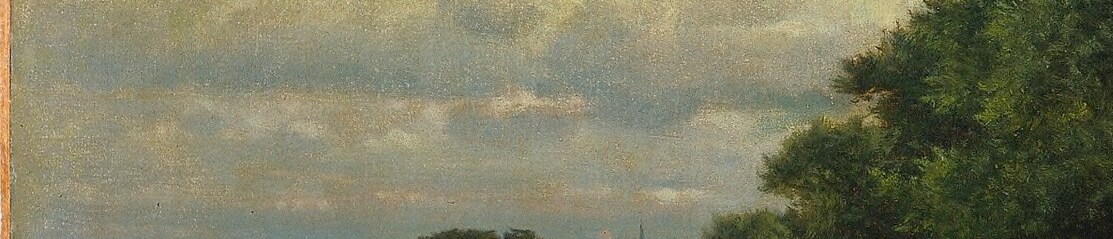
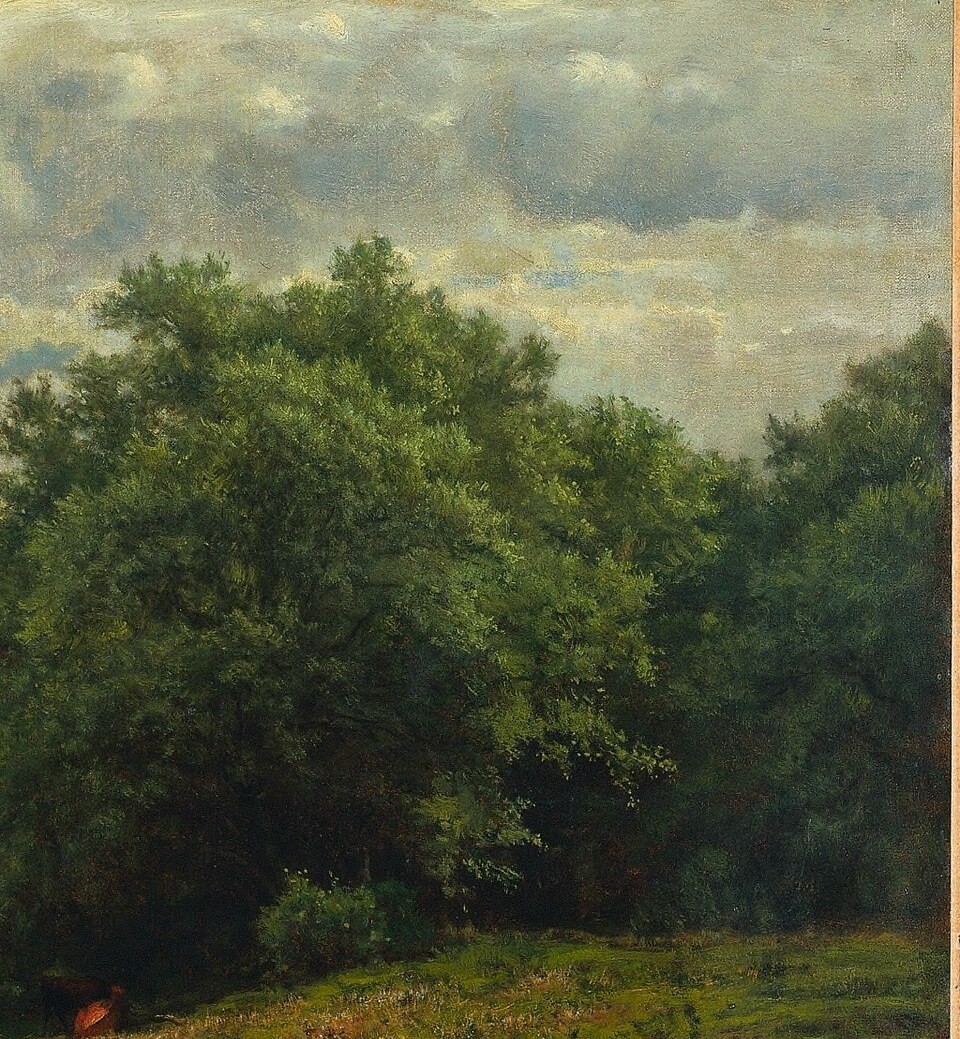
Look at the field. A cloud shadow moves across the crops, not a permanent feature of the land, but a passing moment. The distant tree line softens almost to nothing in the humid air. And the light breaking through the clouds unifies the whole painting from sky to earth. He was painting weather, not scenery.
"Harvest Time" marks the hinge in Inness's career: the moment an American painter began reaching for atmosphere over inventory, for the transient over the fixed. Next time you look at a landscape, ask yourself, did the painter show you the land, or the air around it?
Details
Transcript
An American farm in the summer of 1864. But the painter gives nearly half the canvas to the sky. That was a quiet rebellion. American landscapes were supposed to be about land, identifiable, mapped, owned. Now watch the field. A cloud passes, and the light shifts. He's painting a transient shadow, weather happening in real time. The farthest treeline dissolves into humid summer air. This was the year Inness began to leave the Hudson River School behind. He wanted paint to feel like atmosphere, something you breathe, not something you catalog.