Gathering Wild Rice - Winnebago by Catlin, George
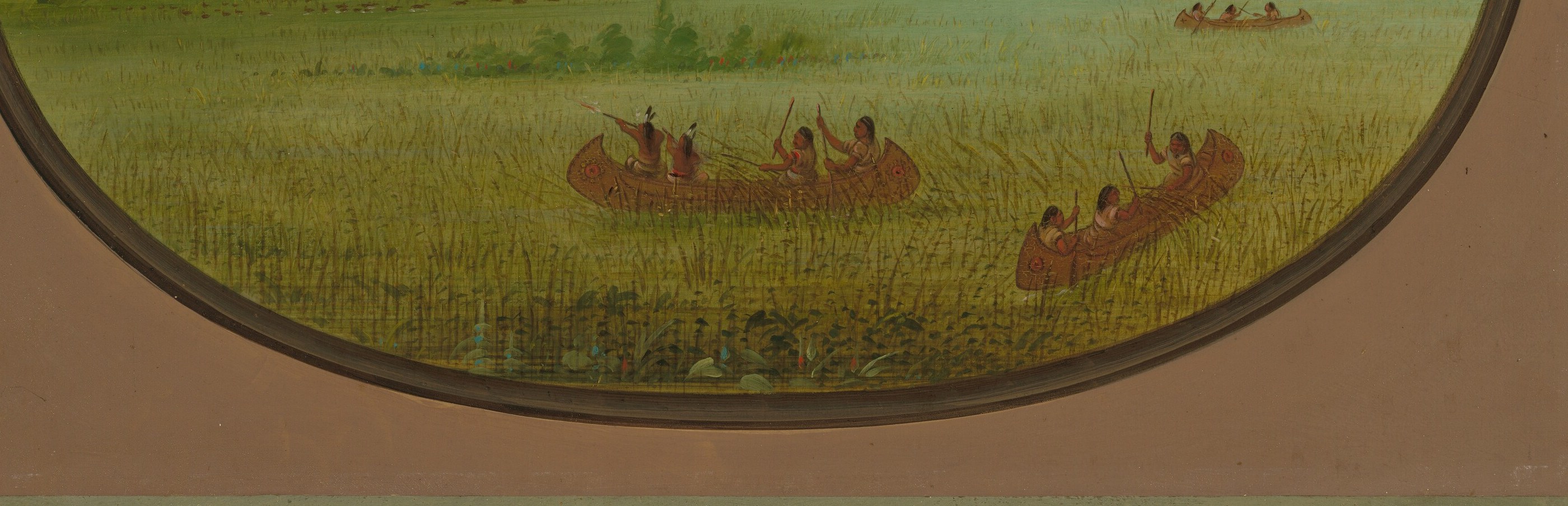
George Catlin's "Gathering Wild Rice - Winnebago," painted in 1865, offers a rare glimpse into the daily life and vital subsistence practices of Indigenous communities. This oil-on-card work, now housed in a prominent collection, captures a moment of communal harvest rather than a staged scene.
Observe the details: figures in canoes use long poles to bend the wild rice stalks, while others collect the grains. The painting emphasizes cooperation and the intimate relationship between the Winnebago people and their natural environment, showcasing a traditional method of gathering that has sustained them for generations.
Catlin, a lawyer turned artist, dedicated his career in the 1830s to traveling the American frontier and documenting the customs of various Plains tribes. His works, including this piece, served as an important visual record, preserving aspects of Indigenous life at a time of significant cultural change.
This painting is not just an artwork; it's a historical document, capturing a way of life that Catlin believed needed to be remembered. It invites us to appreciate the ingenuity and cultural richness of the Winnebago people.
Details
Transcript
This painting captures a moment of everyday life. It shows the Winnebago people gathering wild rice. Notice how they use long poles to bend the rice stalks. Another person in the canoe harvests the grains directly. The artist, George Catlin, documented Native American life. He aimed to preserve these vital customs for the future.