Portrait of a Man, Said to be Christopher Columbus (born about 1446, died 1506) by Sebastiano del Piombo
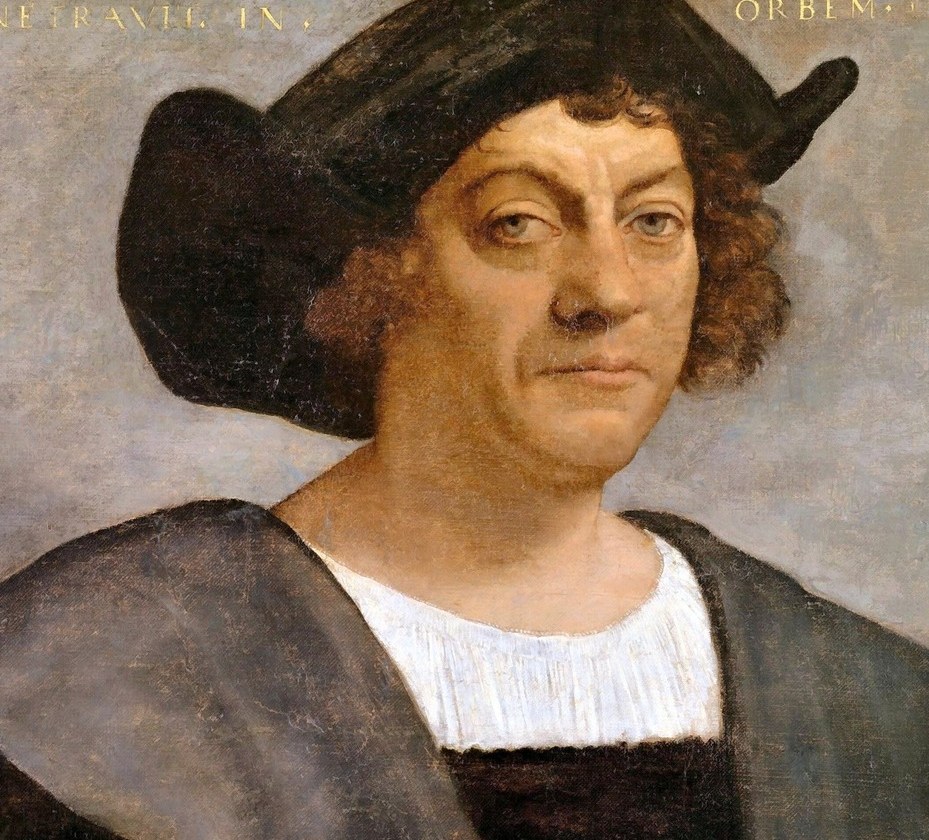
This painting seems certain about who it shows. The Latin across the top identifies the sitter as Christopher Columbus. But look closer and the certainty dissolves. Sebastiano del Piombo painted it in Rome in 1519, thirteen years after Columbus died. The inscription was probably added later to retrofit a generic merchant portrait into a likeness of the famous explorer. The face belongs to an unknown man, now permanently tied to a name he never answered to.
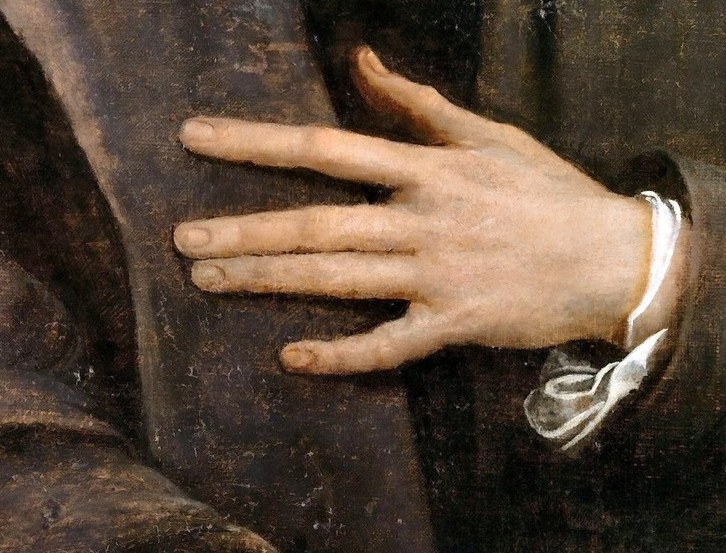
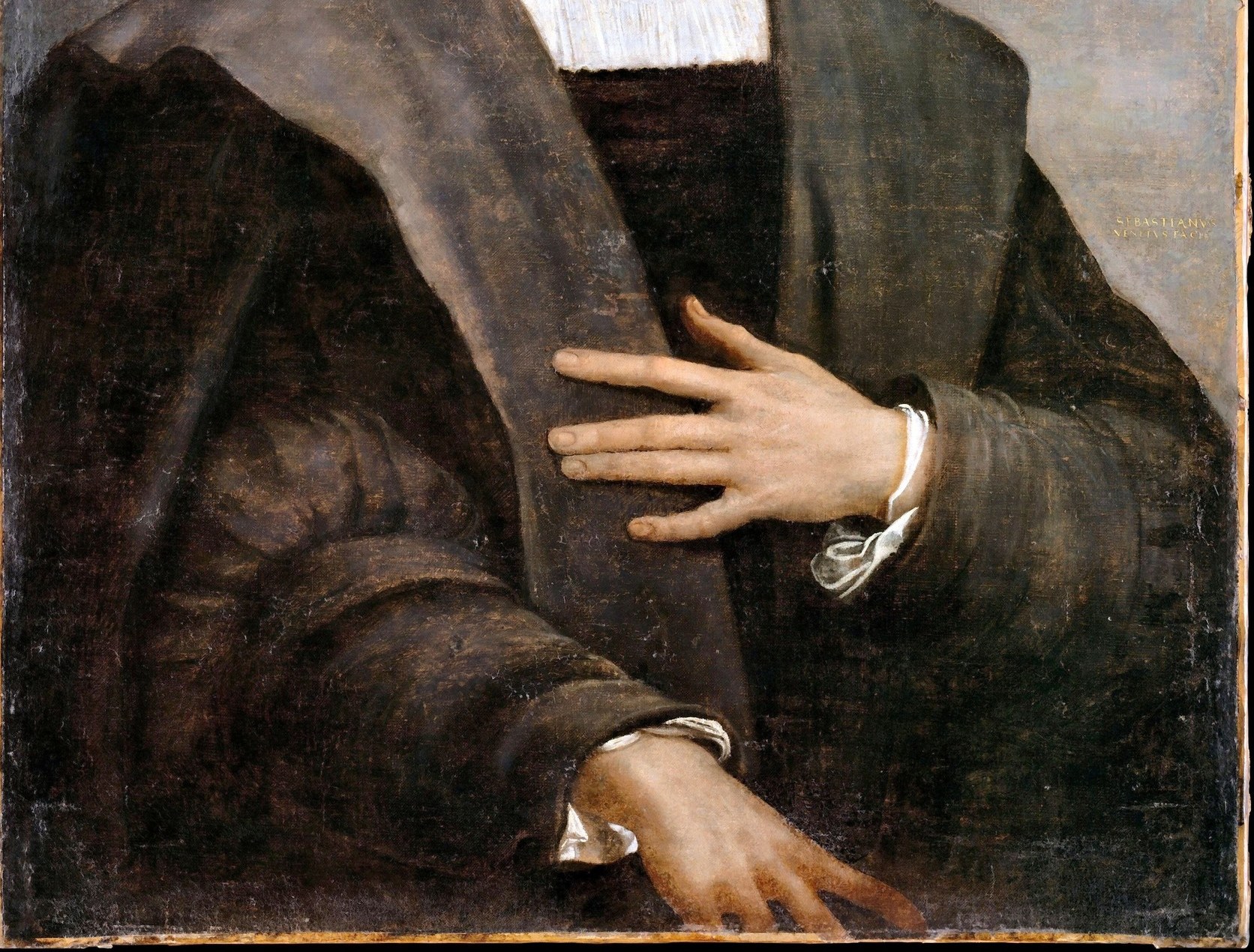
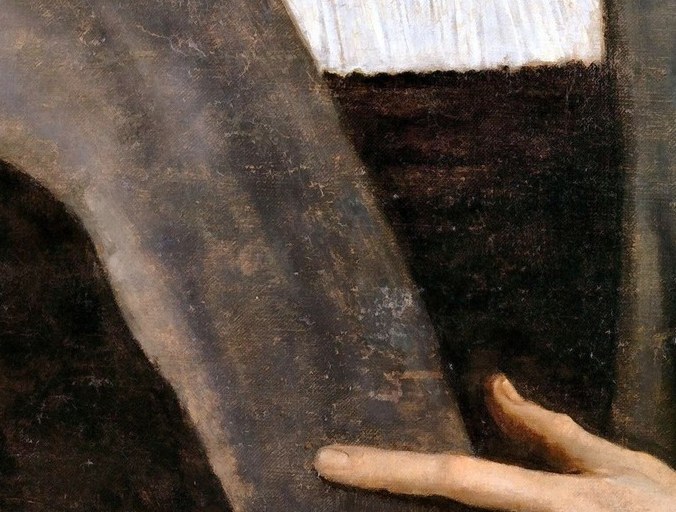
Look at the hand resting across his chest. It is a gesture of self-assurance common in Venetian merchant portraits, a man stating his credit and standing. Then look at the black cloak. In pure painting terms, it is the real subject. Del Piombo built it from deep browns and olives, layering warm Venetian glazes under the Roman severity. The bright white collar below it acts as a reflector, pushing light up into the face so the eyes hold you from the shadows.
The painter had arrived in Rome from Venice eight years earlier and was trying to fuse two traditions that barely trusted each other: Venetian color and Roman monumental form. The cloak and the white collar, more than the man wearing them, are the argument. Del Piombo was proving a painter could carry Venice to Rome and make it look like authority. Friends called him Fra Bastiano; Michelangelo gave him drawings to work from. His own fame was rising.
For a long time the painting sat quietly at the Met, identified as Columbus more by the banner than by any proof. The question of who the sitter really was remains open, but the painting tells us something clearer: it is a portrait of an artist proving what two traditions can do in one panel. Next time you see a darkened portrait, look into the black. The color might be doing more work than the face.
Details

Transcript
The Latin band at the top says CHRISTOPHORUS COLUMBUS. But it was probably added later, to turn an unknown man into the explorer. His hand rests on his chest like a Venetian merchant stating his credit. The cloak is not just black. Look closer: warm browns and olives built it. The painter trained in Venice, then moved to Rome. This cloak was his argument. He was proving you could paint Roman gravity with Venetian color. The white linen drives light up into the face. A technique, not an accident. Columbus died 13 years before this was painted. The code adds up to a self-portrait of the artist's skill.