Lemons on a Pewter Plate by Henri Matisse
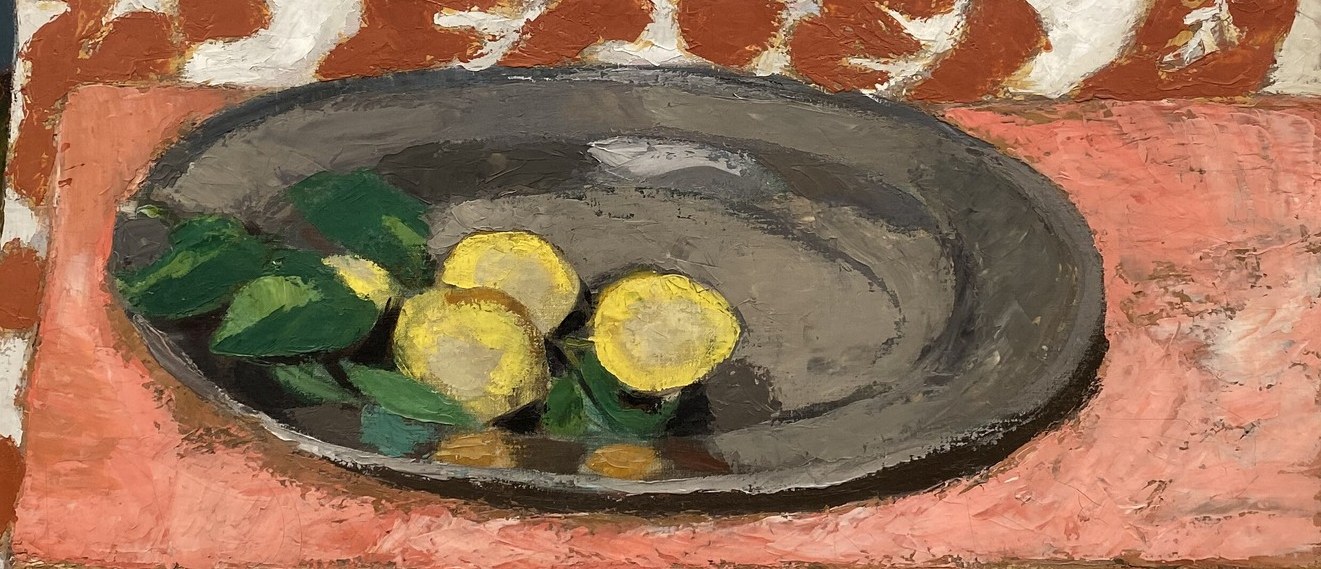
Henri Matisse, famous for his vibrant and revolutionary use of color, also created quieter masterpieces like *Lemons on a Pewter Plate* in 1926. This oil painting, held in a private collection, shows his mastery in exploring everyday subjects with subtlety.
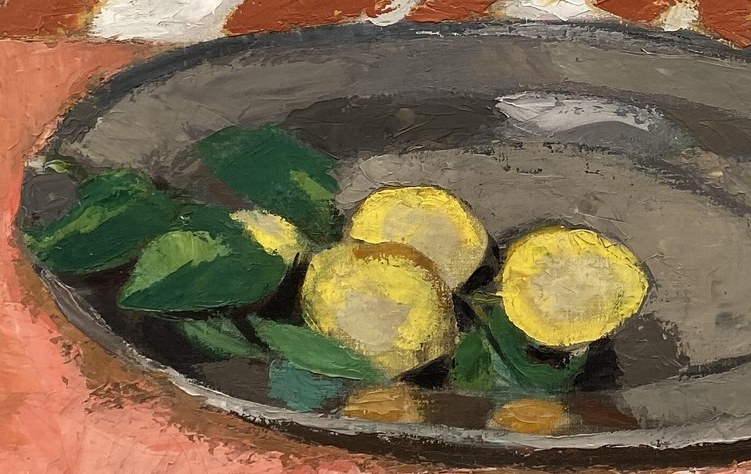
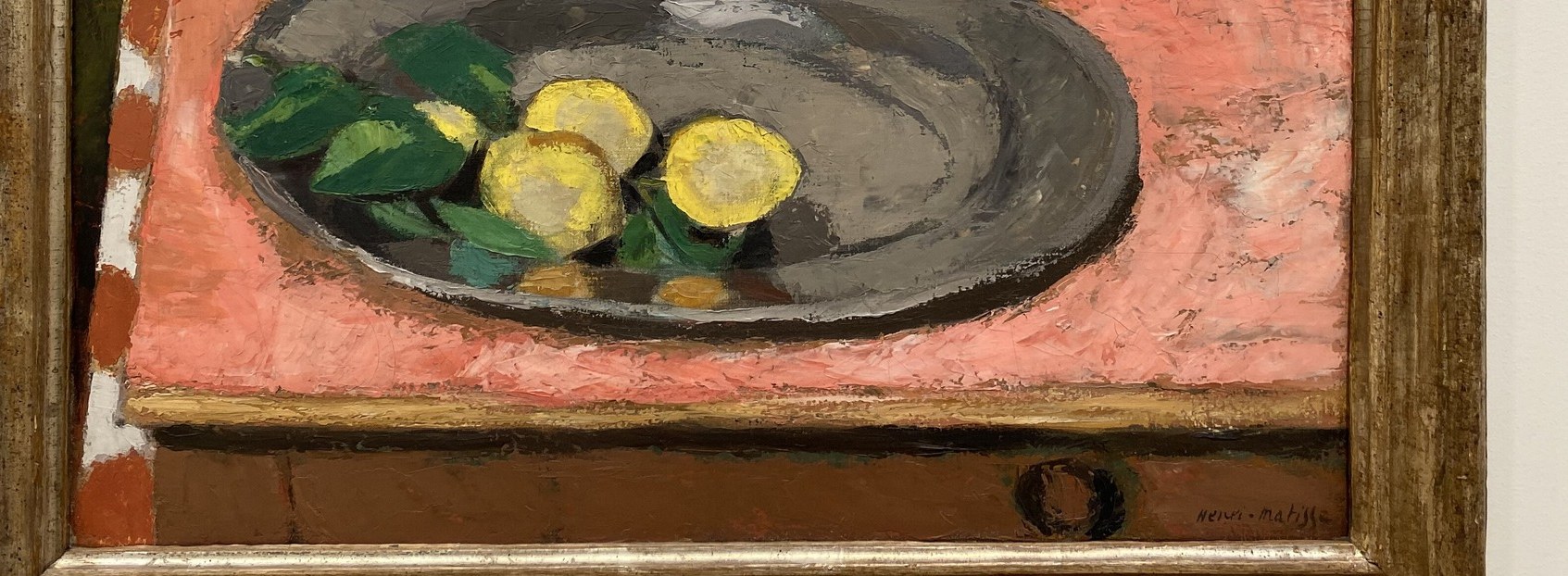
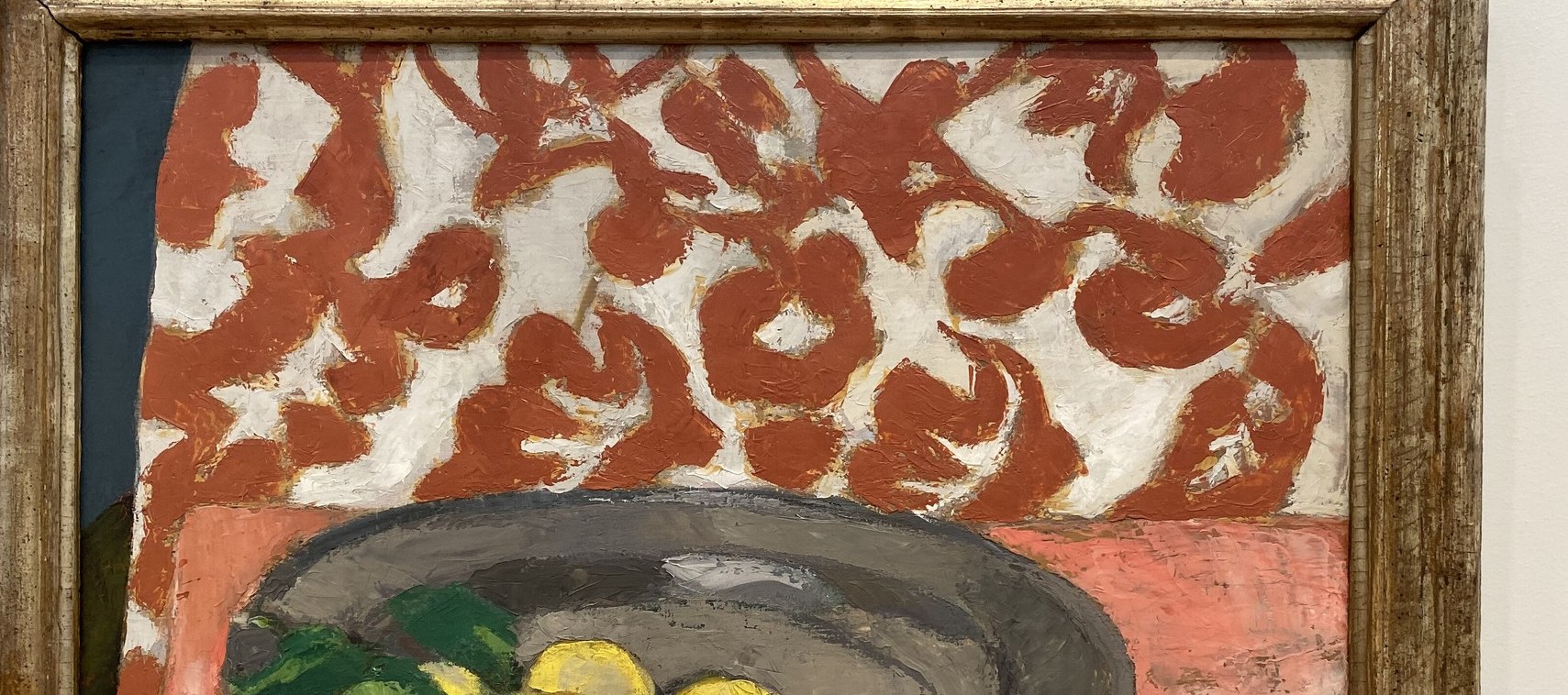
Notice the three lemons, their green leaves, and the way they sit on the reflective pewter plate. The soft pink tablecloth and the patterned red-and-white wallpaper showcase Matisse's interest in form and surface, even in a restrained palette.
Created during a period when Matisse was deeply engaged in still-life painting, this work reflects his ongoing dialogue with modernist movements and contemporaries like Pablo Picasso. It's a testament to his versatility and commitment to formal exploration throughout his career.
What details in this painting draw your eye the most?
Details
Transcript
Henri Matisse, known for bold colors, painted this quiet still life. In 1926, he explored everyday objects with subtle tones. Look at the dark pewter plate. Its surface reflects the light. The vibrant yellow lemons contrast with the muted pink tablecloth. The wallpaper's rhythmic pattern provides a dynamic background. This piece shows his skill beyond bright Fauvist works.