A Flathead Chief with His Family by Catlin, George
George Catlin, a lawyer-turned-artist, created *A Flathead Chief with His Family* between 1855 and 1869, an oil painting now at the Smithsonian American Art Museum. Catlin traveled extensively through the American West in the 1830s, documenting Indigenous peoples through sketches and written accounts.
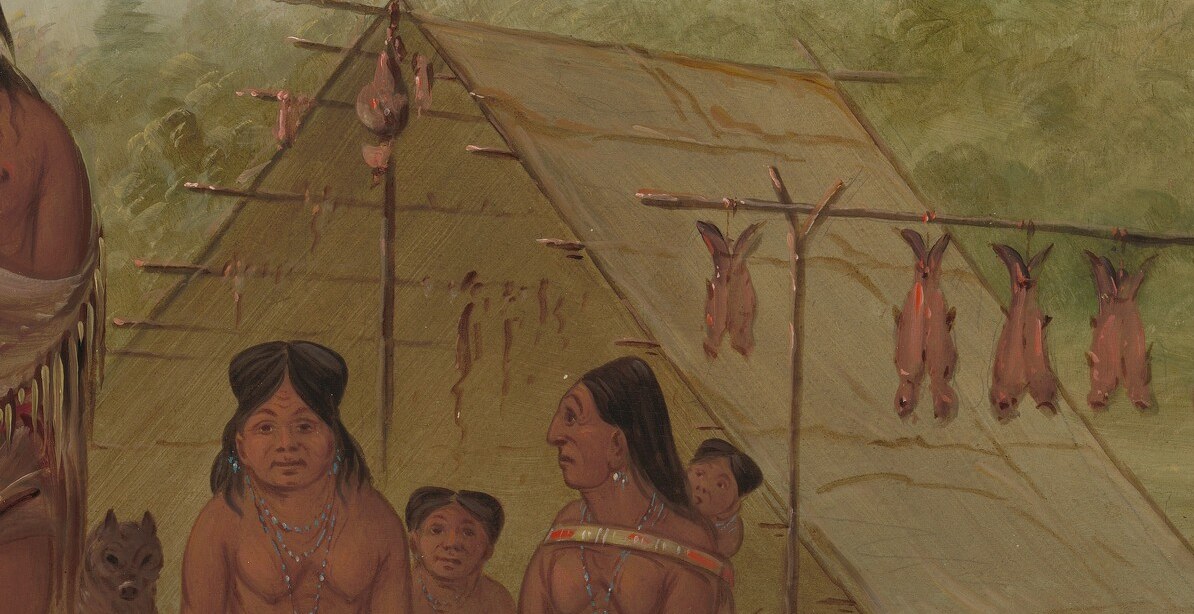
This painting captures a domestic moment, portraying a Flathead chief and his family near a lakeside camp. Visible elements like the conical tent, drying racks with meat, and fish laid out on the ground illustrate their daily lives and reliance on the surrounding environment for sustenance.
Catlin's work aimed to preserve a visual record of Native American life, produced decades after his initial field trips and intended for a broader public audience. This studio piece offers a composed, almost ethnographic view, illustrating cultural practices and the natural landscape that shaped daily existence.
His art provides an important historical perspective on 19th-century Indigenous life during a period of expanding American settlement. What details in their everyday life resonate with you?
Details
Transcript
This painter traveled the American West in the 1830s. He documented the lives of Native Americans through art. A chief wears his traditional feathered headdress. Here, a conical tent provides shelter. Racks of meat are drying in the sun. And fish, a key food source, lay on the ground.