Mountain Scenery with Streams and Pavilions in the Style of Fan Kuan by Wang Jian
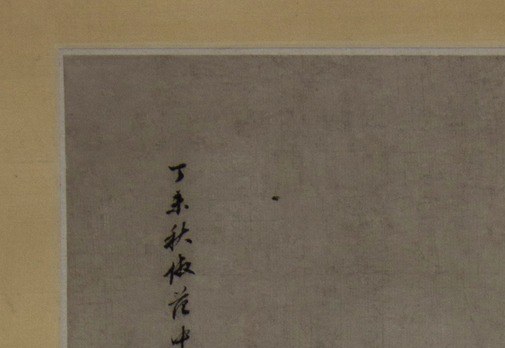
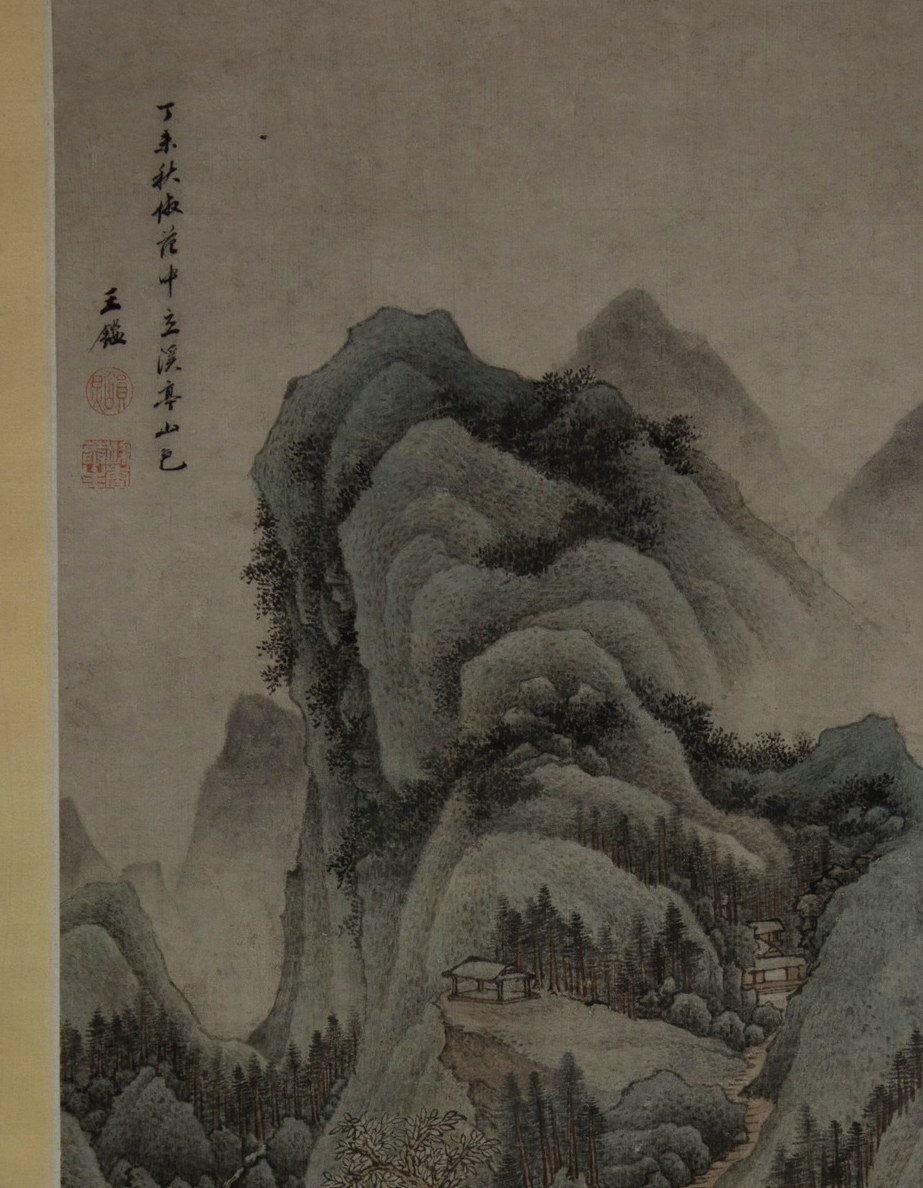
This is Wang Jian's *Mountain Scenery with Streams and Pavilions in the Style of Fan Kuan*, painted in 1667 and held by the Metropolitan Museum of Art. The title openly admits it is a copy, an emulation of the great Northern Song master Fan Kuan, who painted his monumental landscapes around the year 1000. For a 17th-century Chinese scholar-painter, this was not a confession of failure. It was a badge of legitimacy.
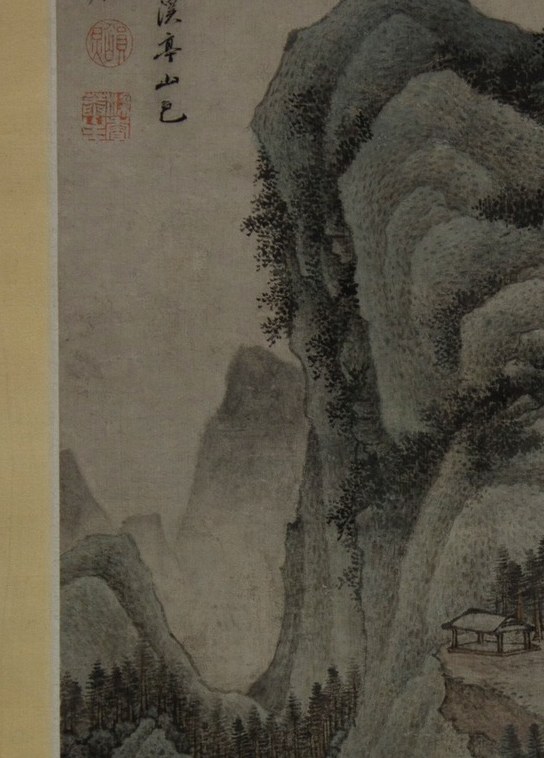
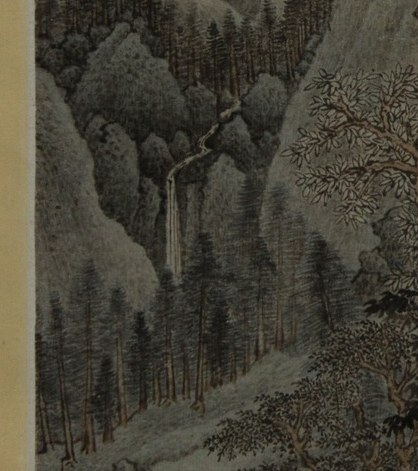
Look first at the central cliff face. Those rough, pebbly texture strokes are 'raindrop cun', Fan Kuan's signature brush technique, replicated here across six centuries. Then find the small pavilion nestled in the rocks just above the mist band. The mist itself is unpainted silk. Where European painters used perspective to create depth, Wang Jian simply stopped applying ink to let the void breathe.
Wang Jian lived through the collapse of the Ming dynasty and the arrival of the Manchu Qing rulers in 1644. Many of his fellow literati, men trained for government service under a now-extinct dynasty, withdrew from public life and turned to painting as a private, coded language. Copying Fan Kuan was a statement: a declaration of continuity with the values of the past, performed in the face of a present he did not choose.
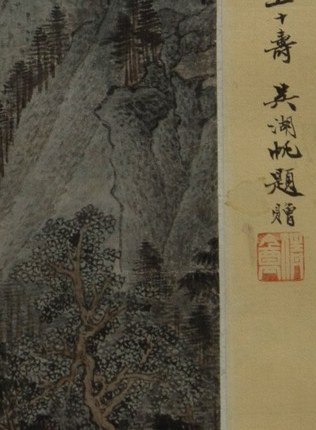
Every red seal on this scroll marks a collector who, over three and a half centuries, judged it worthy of preservation. The painting is a collaboration across time, Fan Kuan's hand in the mountain, Wang Jian's in the brush, and each seal-owner's in the history that carried it to us.
Details
Transcript
It begins not with a mountain, but with words. The title names Fan Kuan, a Song dynasty master who died 600 years earlier. For Wang Jian, painting was an act of ancestor worship in ink. He built his mountain with the same 'raindrop' strokes Fan Kuan used in the year 1000. But the pavilion is his own, a scholar's retreat from a fallen dynasty. That red seal is a 350-year record of every collector who kept this scroll alive.