El Bautismo de Cristo by Juan de Pareja
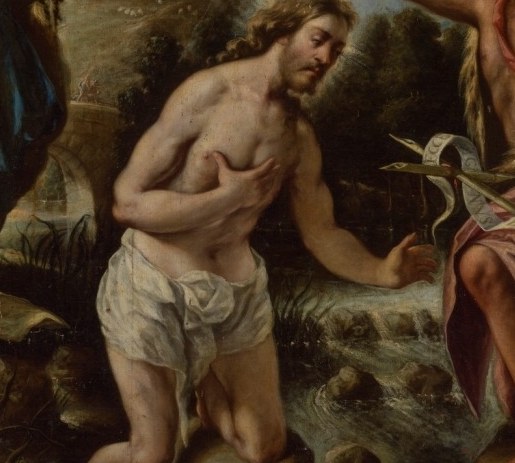
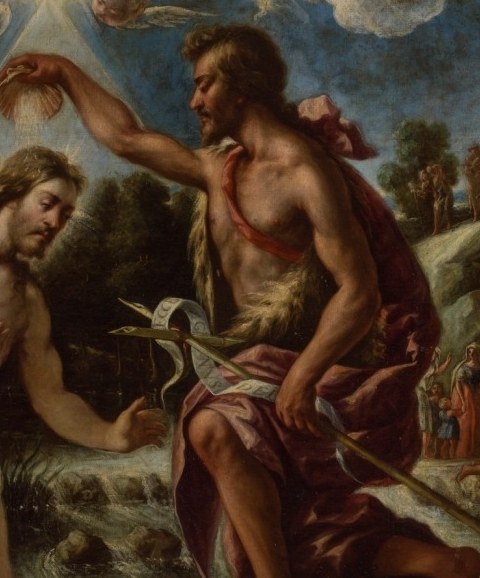
Juan de Pareja's "El Bautismo de Cristo" (1700) is a powerful Spanish Baroque work. Most striking is the faint inscription on the rock, possibly the artist's signature.
Look closely at the rock in the lower left. A nearly illegible inscription is etched into its surface. This mysterious detail hints at a personal mark by the artist.
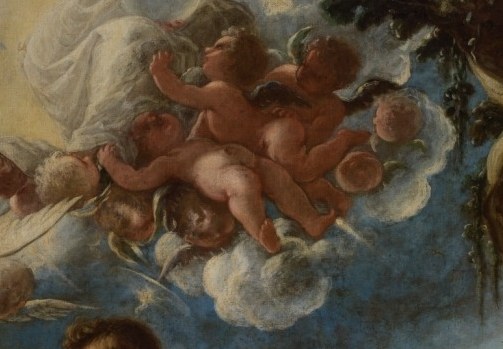
Born into enslavement, Juan de Pareja was freed by Diego Velázquez and became a notable painter in his own right. His "El Bautismo de Cristo" showcases dramatic chiaroscuro and rich symbolism characteristic of the era.
The artist's desire to leave his mark, however subtly, adds a profound human dimension to this sacred scene.
Details
Transcript
Look at the rock on the left. There is a faint inscription here. It is mostly illegible. Juan de Pareja painted this in 1700. He was formerly enslaved by Velázquez. The inscription might be his signature.