The Smugglers' Cove by Albert Pinkham Ryder
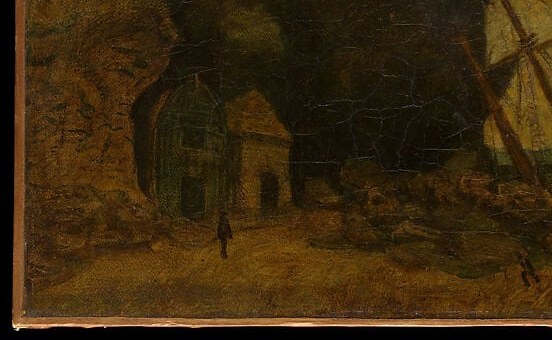
Albert Pinkham Ryder's The Smugglers' Cove (c. 1880) is a nocturne that literally glows from within, not because of any trick of paint, but because of its bizarre and decaying surface.
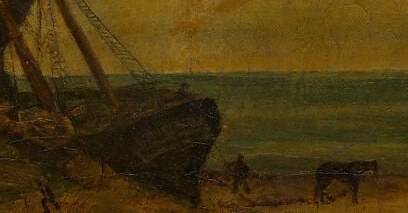
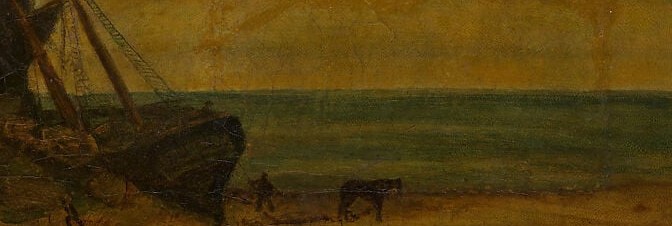
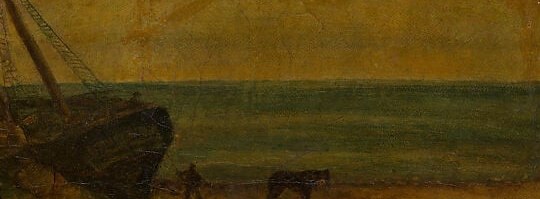
Look into the water. The network of fine cracks across the cove is not just damage; it is a window. Ryder painted this scene on gilt leather, a support of thin leather covered in gold leaf. As the oil paint ages and cracks, the gold beneath breaks through, making the smuggler's cove shimmer as if lit by bioluminescence or a hidden moon.
Ryder was an American eccentric obsessed with mood, the sea, and the materiality of paint itself. While his contemporaries stretched canvas, he experimented with unorthodox supports to achieve a mystical effect. Here, the quiet drama of the horses waiting in darkness for illicit cargo is upstaged by the painting's own slow, accidental transformation.
A painting about a secret cargo now carries a secret of its own, hidden in its physical structure. What do you think: is this damage destroying the art, or has time given it a second life?
Details

Transcript
A moonlit cove, a secret trade, and waiting horses. The darkened sky and high cliffs hide everything from view. Ryder painted this around 1880, when smuggling stories fascinated him. But look closely at the water. It glows from within. Ryder didn't paint on canvas. He painted on gilt leather. The gold leaf under the paint is cracking through into the moonlight.