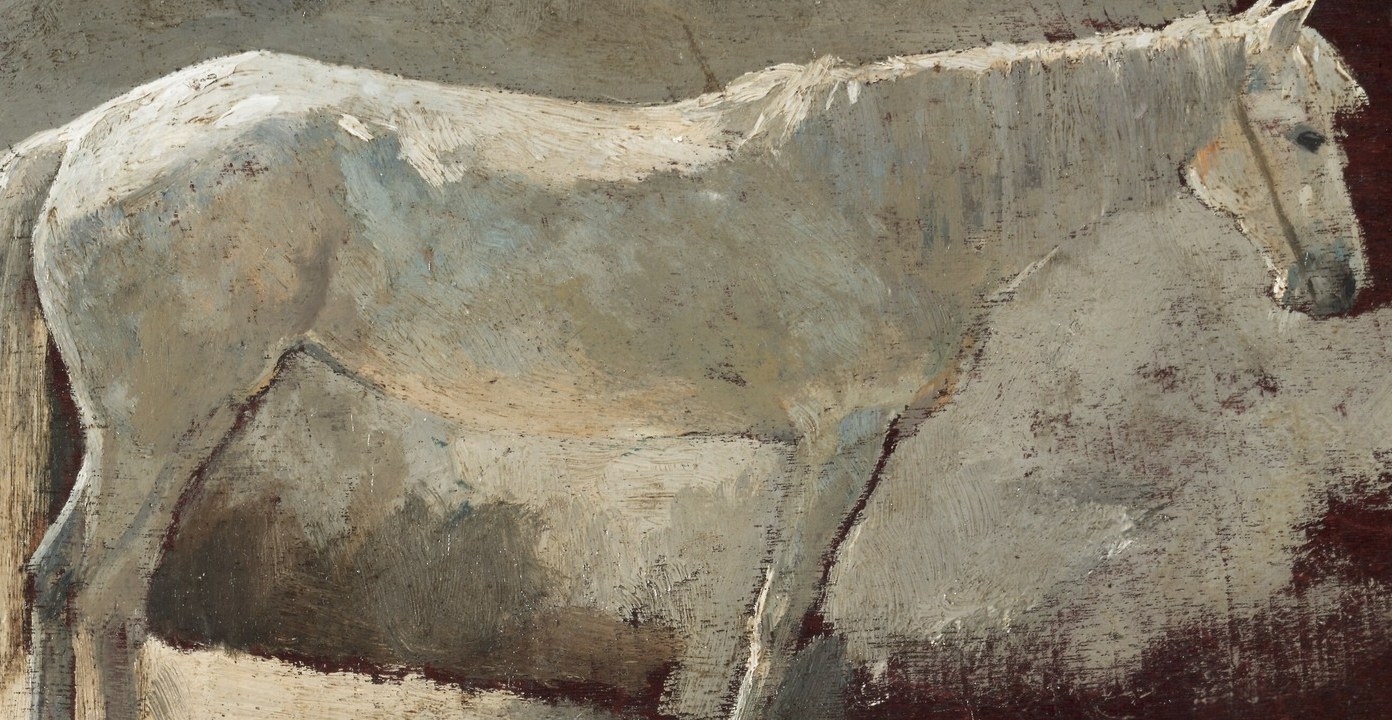
White Mare by Winslow Homer (American, 1836–1910)
Winslow Homer's "White Mare," painted in 1868 and housed at The Cleveland Museum of Art, showcases the artist's remarkable ability to capture a sense of vitality and presence. Homer, largely self-taught, developed a unique and powerful handling of oil paint, making him one of 19th-century America's foremost painters.
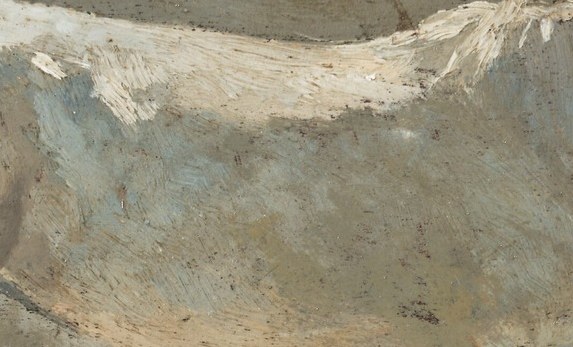
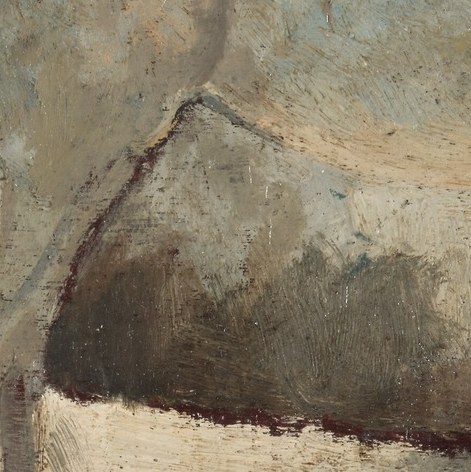
Notice the thick, sculptural quality of the paint, particularly in the horse's mane and body. These visible brushstrokes aren't just details; they are fundamental to how Homer defines the animal's form and creates a luminous, almost three-dimensional effect.
Homer transitioned from commercial illustration to oil painting in the late 1860s. This work exemplifies his embrace of a dense, weighty application of pigment, aligning him with the emerging American Impressionist style.
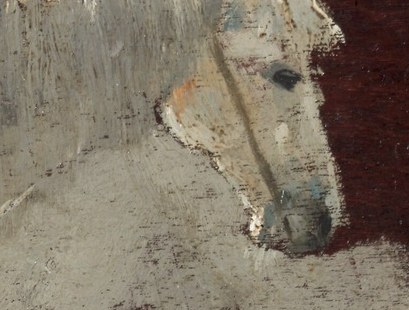
The "White Mare" stands as a testament to Homer's mastery, inviting viewers to contemplate the animal's quiet isolation and compelling presence amidst an ambiguous, shadowy setting. What does the horse's gaze suggest to you?
Details
Transcript
This painter was largely self-taught. He became famous for works like this. Look at the texture on the horse's mane. He built up the paint in thick, dense layers. Every brushstroke creates a sense of its form. The whole painting glows with a quiet strength.