Seville Surrenders to the king, Saint Ferdinand by Charles Joseph Flipart
Charles Joseph Flipart's "Seville Surrenders to the king, Saint Ferdinand," painted in 1775, is housed in the Museo del Prado. It depicts a pivotal moment in Spanish history: the capitulation of Seville to King Ferdinand III of Castile in 1248.
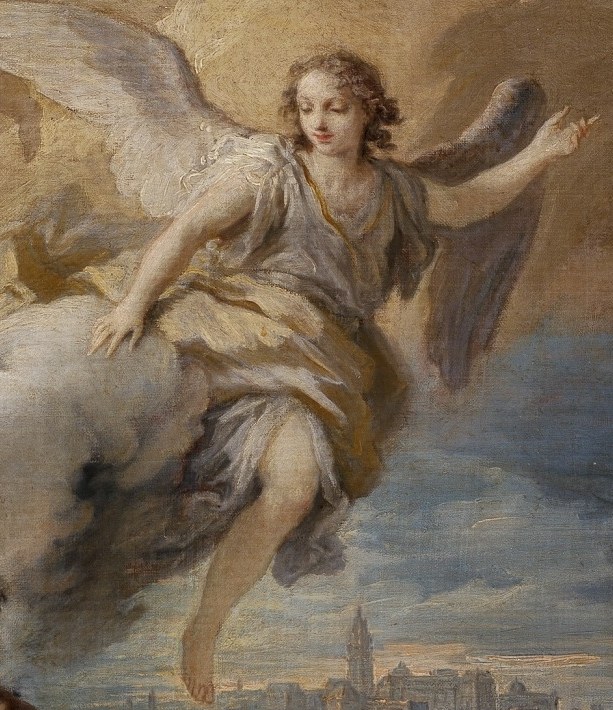
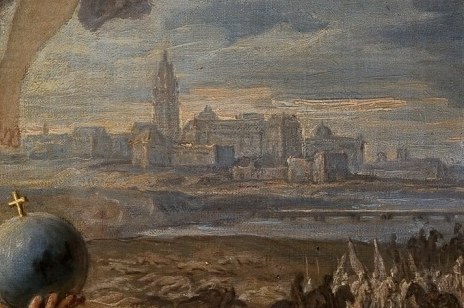
Observe the details: King Ferdinand, with his sword and orb, symbolizes both military might and divine right. The kneeling figure presents a key, a powerful symbol of the city's surrender. An angel hovers above, suggesting heavenly endorsement of Ferdinand's conquest.
Flipart created this work centuries after the actual event, reflecting the enduring reverence for Ferdinand III and this significant moment in Spanish history. The painting's dramatic interplay of light and shadow, typical of 18th-century academic art, emphasizes the solemnity and importance of the scene.
This painting invites us to reflect on the ways history is remembered and retold through art, long after the events themselves. What other historical moments might be re-imagined by artists centuries later?
Details
Transcript
This painting shows a king accepting the surrender of a city. The king, Ferdinand III, conquered Seville in 1248. He holds an orb, symbolizing his Christian rule and dominion. The kneeling figure offers a key, representing the city's submission. An angel above suggests divine approval for Ferdinand's victory. The burning city in the distance underscores the conflict's resolution. The artist completed this work in 1775, over 500 years later.