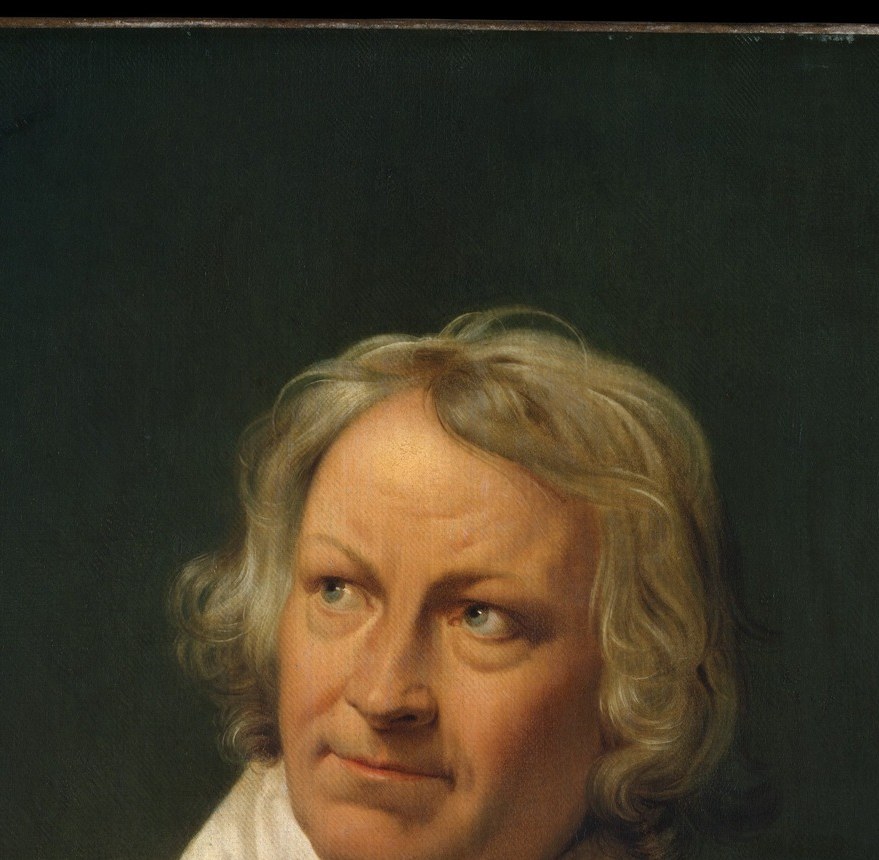
Bertel Thorvaldsen (1768–1844) with the Bust of Horace Vernet by Horace Vernet
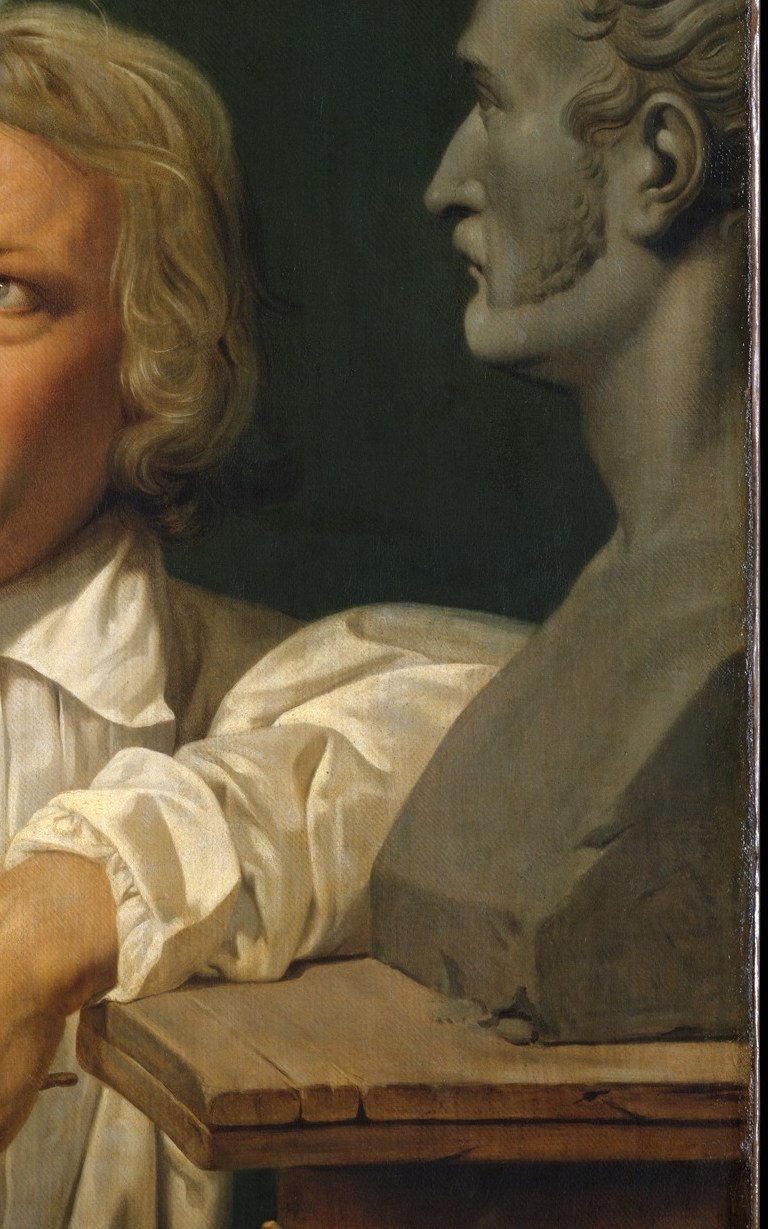
Horace Vernet painted his friend Bertel Thorvaldsen in 1833, and the object on the table is the whole story. The marble bust Thorvaldsen holds is a portrait of Vernet himself, carved by the Danish sculptor. The two men met in Rome, where Vernet was Director of the French Academy, and decided on a reciprocal exchange: each would produce a portrait of the other, one in oil and one in stone.
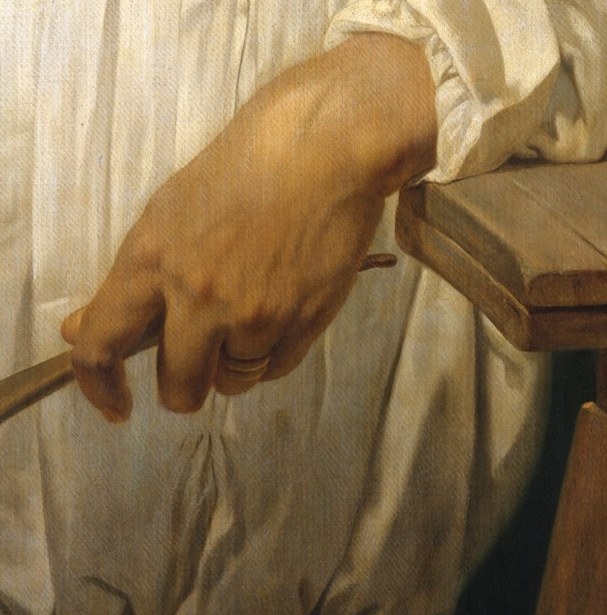
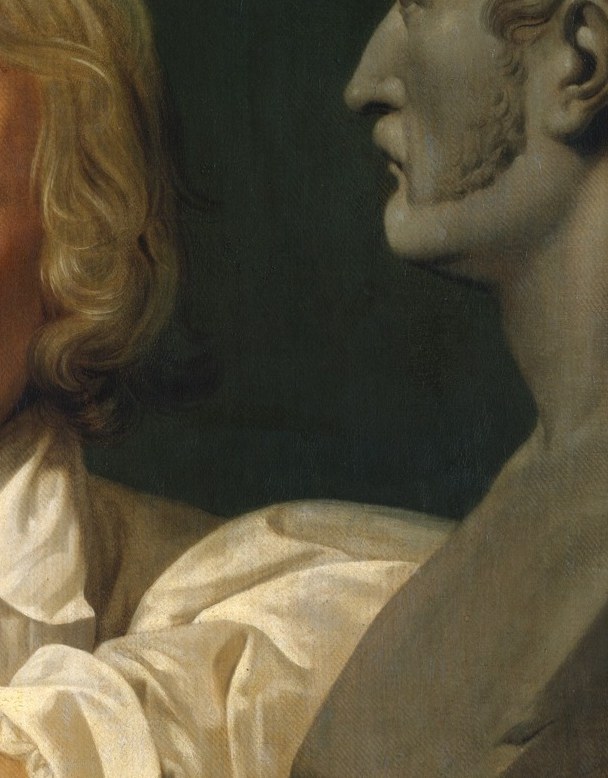
Look at how Vernet handles the two surfaces. Thorvaldsen's white shirt catches light in loose, virtuoso folds that echo classical drapery. Directly beside it, the marble bust of Vernet is painted with a cooler, harder precision. The profile is crisp enough to compare with Thorvaldsen's actual surviving sculptures, and the cast shadow where the base meets the plinth quietly proves Vernet could render weight and dimension as confidently as any stone carver.
The result is a rare loop. A painting of a sculptor holding a sculpture of the painter, made inside a friendship that neither man treated as a commission. Thorvaldsen's relaxed left arm and open collar signal the intimacy: this is two artists in Rome, trading visions across their materials.
What would your medium be, if a friend asked for your portrait in return?
Details
Transcript
He looks like a man in a formal portrait. But see what he is holding. A sculptor's chisel. This is Bertel Thorvaldsen. He and Horace Vernet met in Rome and became friends. They agreed to each make a portrait of the other. Thorvaldsen sculpted this bust. The painter painted the sculptor's sculpture of the painter.