The Crucifixion by Sano di Pietro
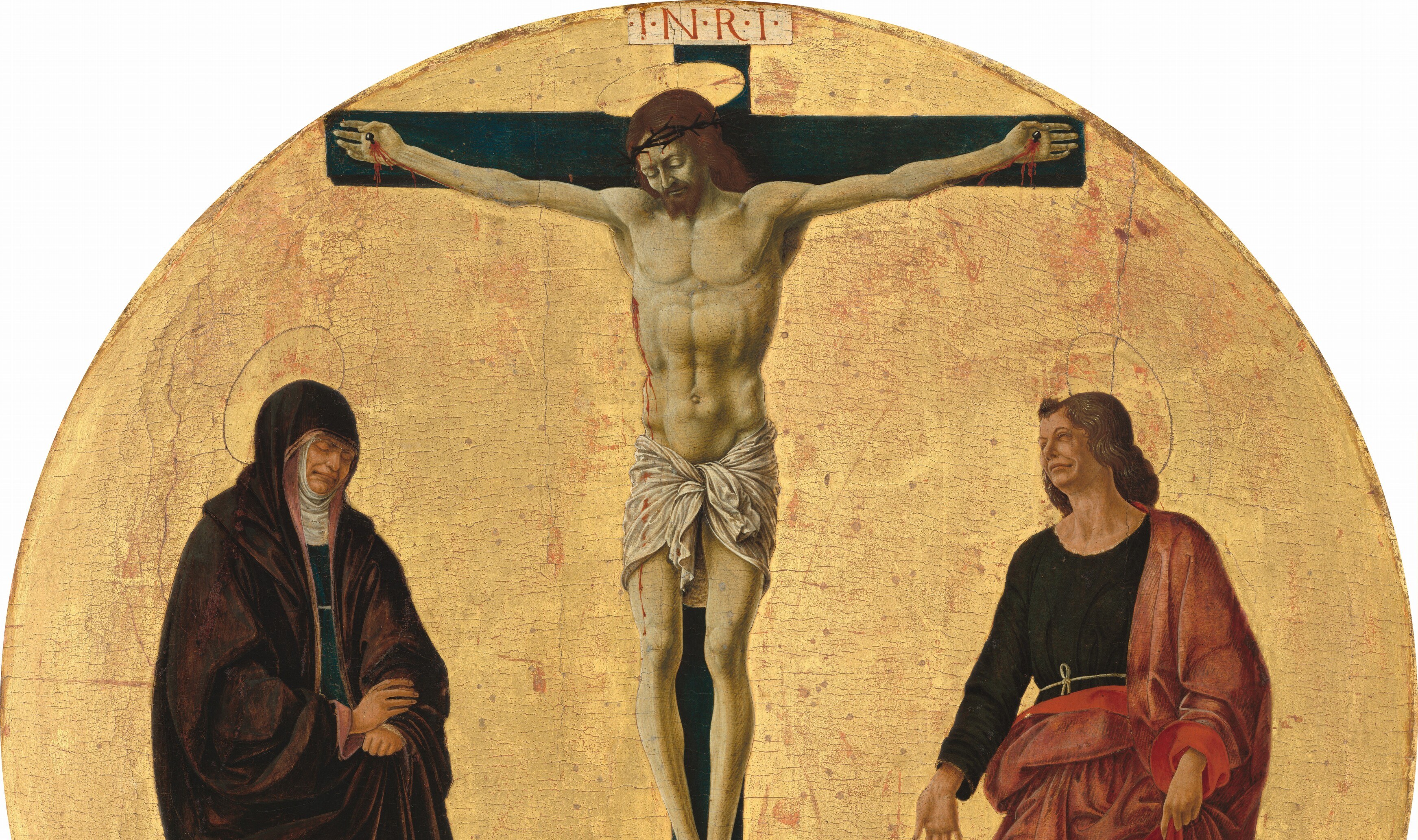
This is Sano di Pietro's The Crucifixion, painted around 1445 in Siena. The panel, barely over a foot tall, is tempera on poplar, egg yolk and ground pigment laid down in layers so thin and fast they demand absolute precision. Sano di Pietro was active for nearly fifty years in the Quattrocento, producing devotional works that fused meticulous naturalism with a flat, transcendent gold ground.
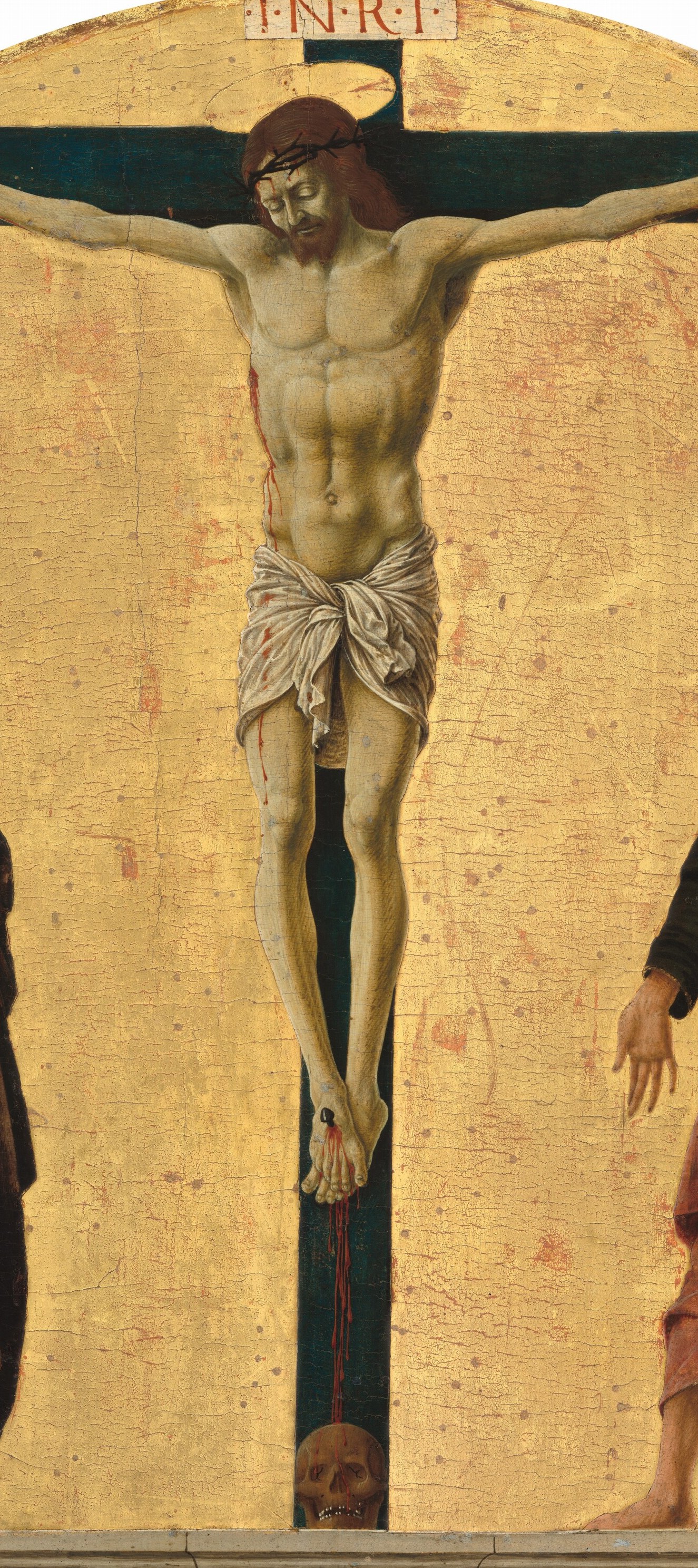
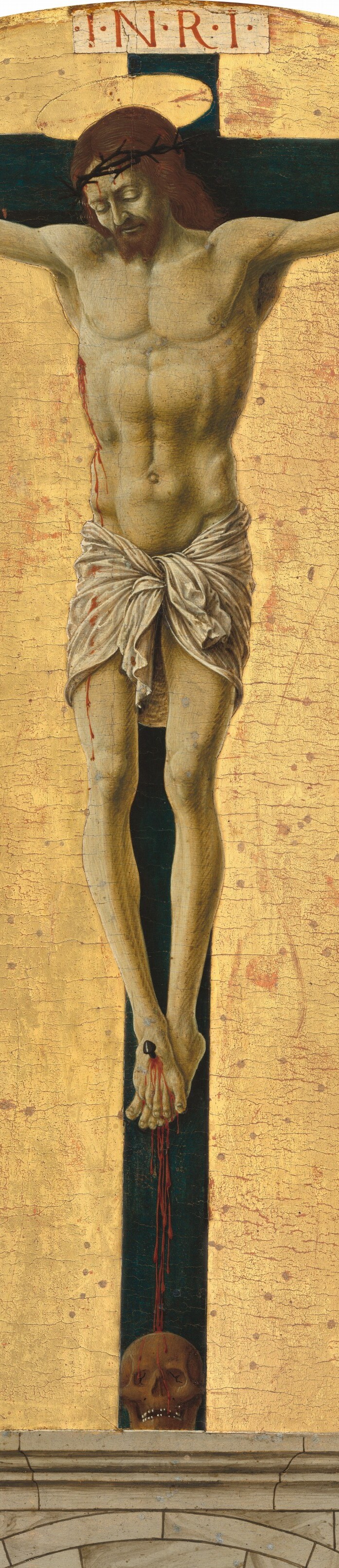
Watch the transition where Christ's pale torso meets the burnished gold. That edge is the whole trick. The flesh is modeled with thousands of tiny hatched strokes, each one a separate decision applied before the tempera skin dried. The gold behind it is untouched leaf, tooled with punched halos that dissolve any sense of earthly space. The painting makes no attempt to blend the two worlds, it simply butts modeled anatomy against sacred abstraction, and trusts the viewer to feel the rupture.
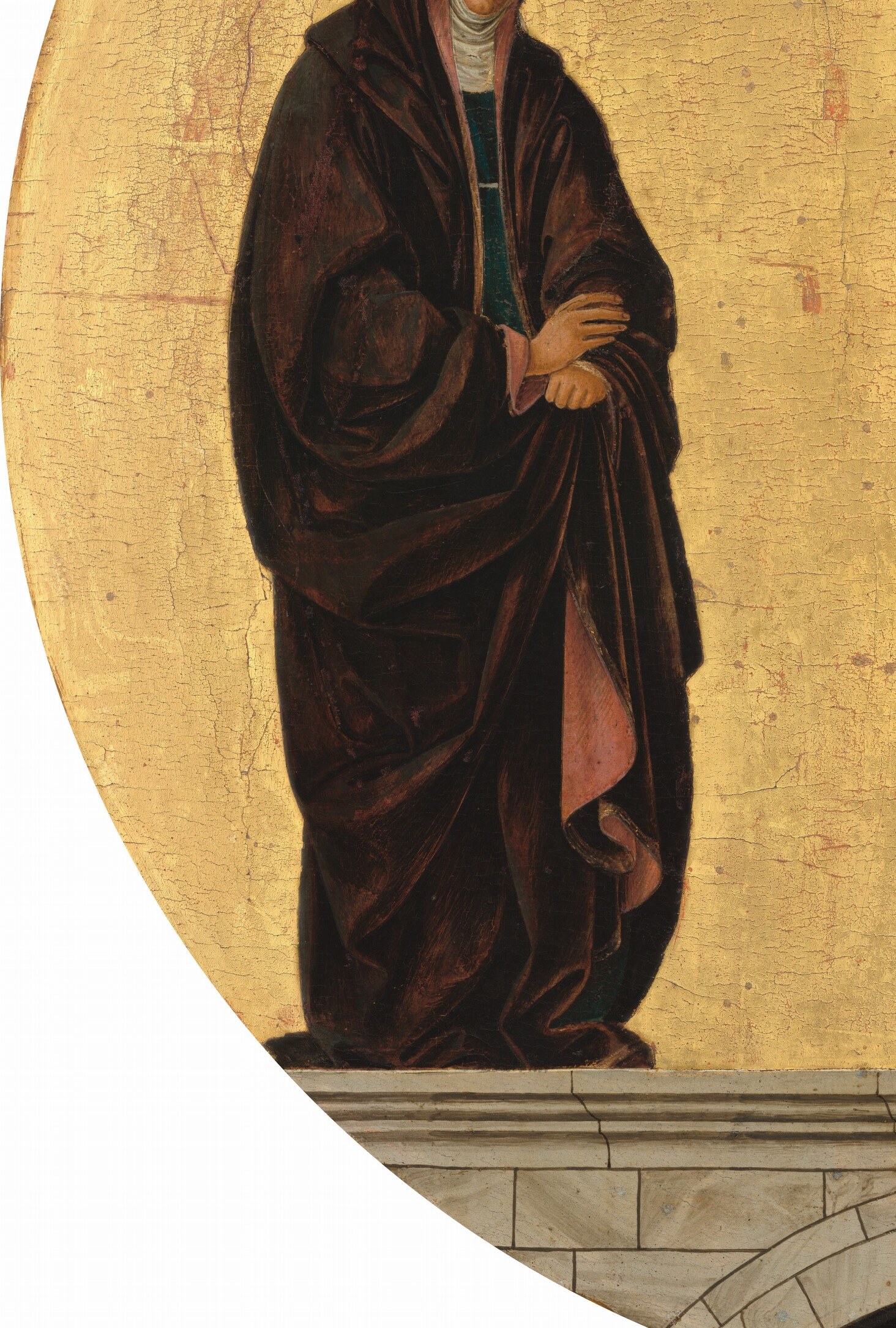
The red loincloth is the only warm body color, pulling the eye to Christ's vulnerability near the center of the cross. Mary's blue mantle on the left and John's rose-pink robe on the right create a cool-to-warm diagonal that frames the crucifixion. Look closely at John's upturned face: it carries the painting's most legible human anguish, and it is barely the size of a thumbnail.
A devotional panel this small was meant for private meditation, held in the hands or placed on a home altar. Every blade of grass at the base of the cross is individually painted, a detail a viewer might only discover inches from the surface. That intimacy is the point. The painting asks you to come close and stay there.
Details
Transcript
These three figures hold a silent geometry. Gold leaf fires the whole ground. But Christ's flesh is built from egg and pigment. Sano di Pietro painted this around 1445. Tempera dries in seconds. So every pale shadow is a separate decision. Look at the edge where the body meets the gold. Modeled flesh just stops, and heaven begins.