Madame Auguste Cuoq (Mathilde Desportes, 1827–1910) by Gustave Courbet
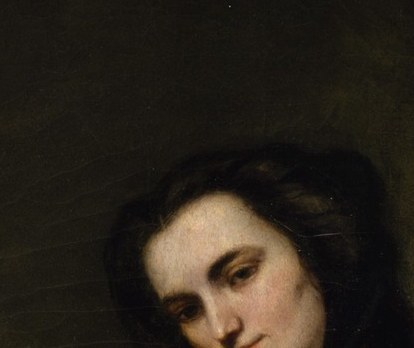
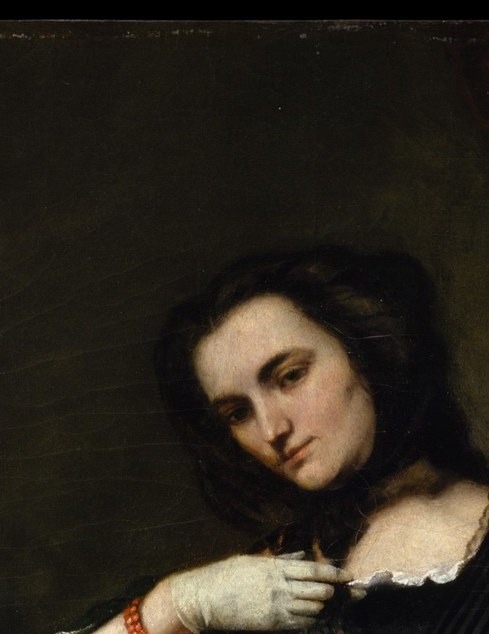
Gustave Courbet's portrait of Mathilde Desportes, known professionally as Madame Auguste Cuoq, sits in the Metropolitan Museum of Art. Painted between about 1852 and 1857, it is a portrait of private thought disguised as a formal sitting. Courbet led the Realism movement and famously swore to paint only what he could see, no angels, no allegories, no flattery.
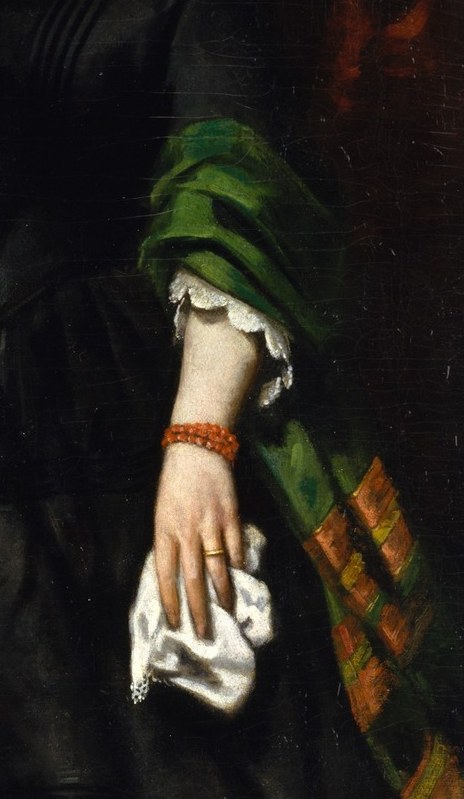
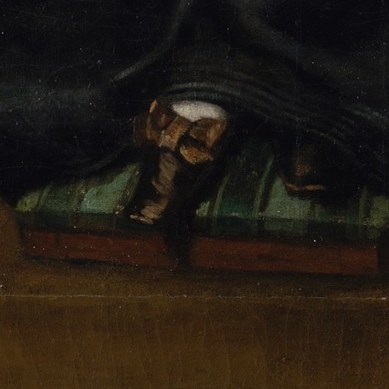
Look at the hands. One adjusts the fabric at her chest, the other holds a white cloth loosely. These are not the still, posed hands of a society portrait. They are busy, restless, caught in a moment of adjustment. The serious, level gaze reinforces the sense of an active mind interrupted. A stack of books sits on the dark cabinet beside her, a quiet signal of intellectual life in an era when women were rarely painted that way.
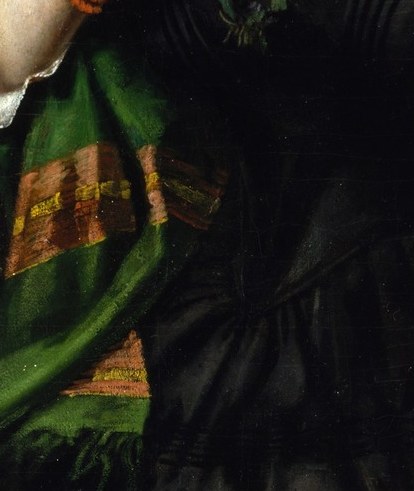
The most telling detail sits almost out of frame. In the deep shadow at the base of the canvas, near the hem of her skirt, a small dark object rests on the floor. It could be a dropped book, a bag, or a glove. Courbet included it deliberately, low and barely lit, as if to say: see the whole person, even the parts others would crop out. The painting entered the Met’s permanent collection and remains a striking example of Courbet’s commitment to psychological truth over conventional beauty.
It asks you to look everywhere, even down into the shadows.
Details
Transcript
She meets your eyes without a smile. Her hands won't hold still. Gustave Courbet painted only what he saw. He refused to flatter. The sitter, Mathilde Desportes, was a professional model who posed for many artists. A stack of books sits on the table beside her. Courbet hints she is a figure of intellectual life, not just display. Now look down, in the shadow of her hem. A small dark object rests on the floor. A book, perhaps, or a bag laid down mid-thought.