Untitled by Sōami
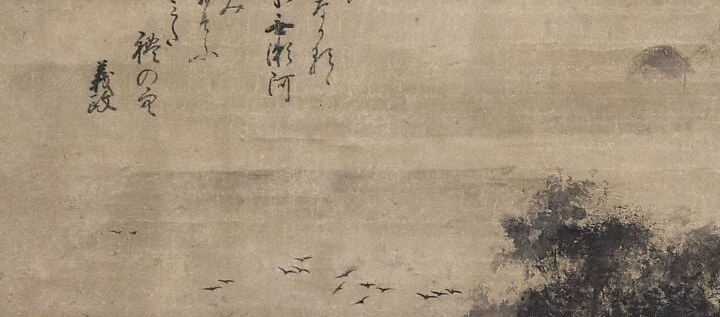
A landscape painted almost entirely with absence. This is an untitled ink-on-paper hanging scroll by the Japanese artist Sōami, dating from the 17th century. It belongs to the sansui, mountain-water, tradition, where a painting's blank spaces are not passive but highly active sites of meaning.
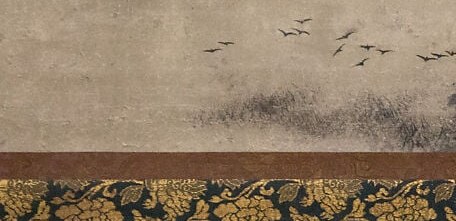
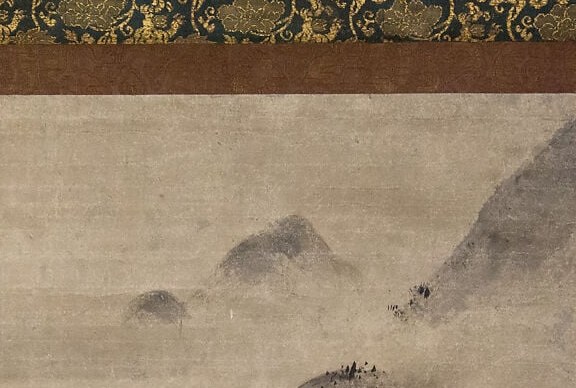
Look first at the vast central passage of untouched paper. In a Western painting, emptiness might signal an unfinished work. Here, it represents water, mist, and distance all at once. Sōami demands the viewer supply what the brush refused to state. The pine cluster anchors the foreground with dense, rapid strokes, then the eye crosses a void to the faint, wet-on-wet mountain peaks that seem to dissolve as they rise.
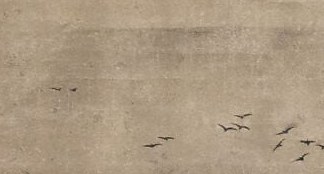
If you look long enough, you may catch something most people scroll past: an almost invisible treeline emerging from the mist. Its presence proves the void was calculated, each blank area left bare for a reason. This technique, often called haboku or broken ink, uses controlled washes applied while earlier layers are still damp to fuse ink, paper, and atmosphere into a single breath.
Quiet painting demands quiet looking. The longer you stay, the more the emptiness fills in.
Details
Transcript
At a glance, ink and empty paper. But in the sansui tradition, emptiness is the main subject. The paper is left bare, no wash, no stroke. And it reads as water, cloud, and infinite depth at once. The dark pines anchor the foreground, then your eye leaps the void. A faint treeline hides inside the mist, proving the silence is deliberate. The mountain peaks dissolve in wet-on-wet washes, while the silk below stays untouched.