鄭旼 黃山八景 水墨紙本 九開冊|Eight views of the Yellow Mountains by Zheng Min
Zheng Min completed his 'Eight Views of the Yellow Mountains' in 1681. It is an album of nine ink-on-paper leaves now in a museum collection. The story it carries is as dramatic as the landscape itself. In 1978, a man named Roger Marshall stole 12 Chinese paintings from the Art Gallery of Greater Victoria. He sold them for a pittance. Most were eventually recovered, including this leaf, but the theft left a scar on the collection's history of Chinese art.
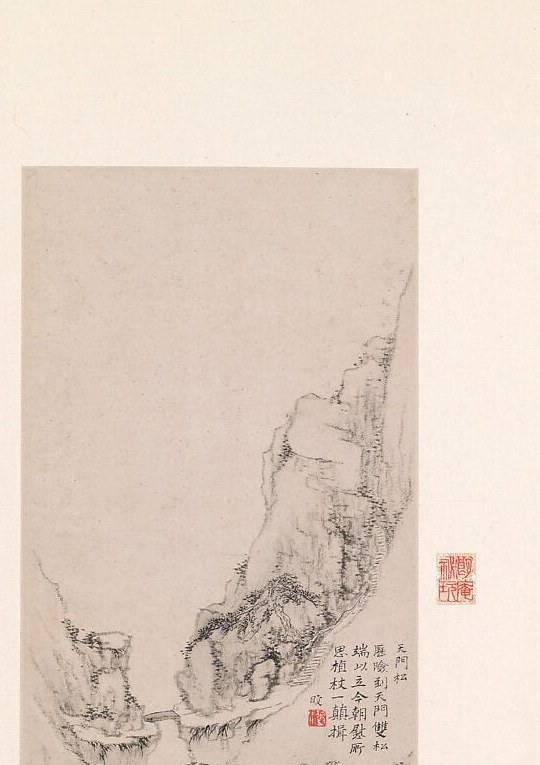
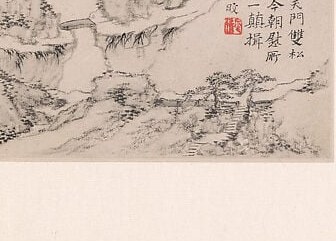
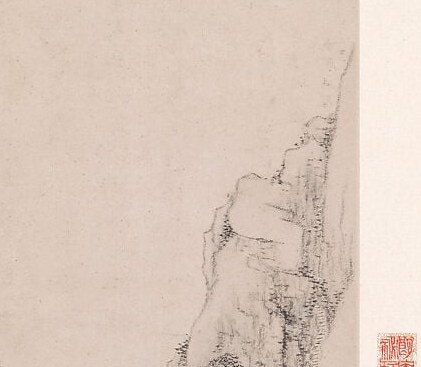
The image shows a sheer cliff rendered in angular, dry-brush strokes. The painter's hand is visible in every mark. Near the base, two tiny figures barely register. Their size against the rock is the whole point: this is a landscape meant to overwhelm. The blank paper that surrounds the cliff is not empty space. It is liubai, deliberately left to function as mist, a literati technique where the absence of ink does the painting.
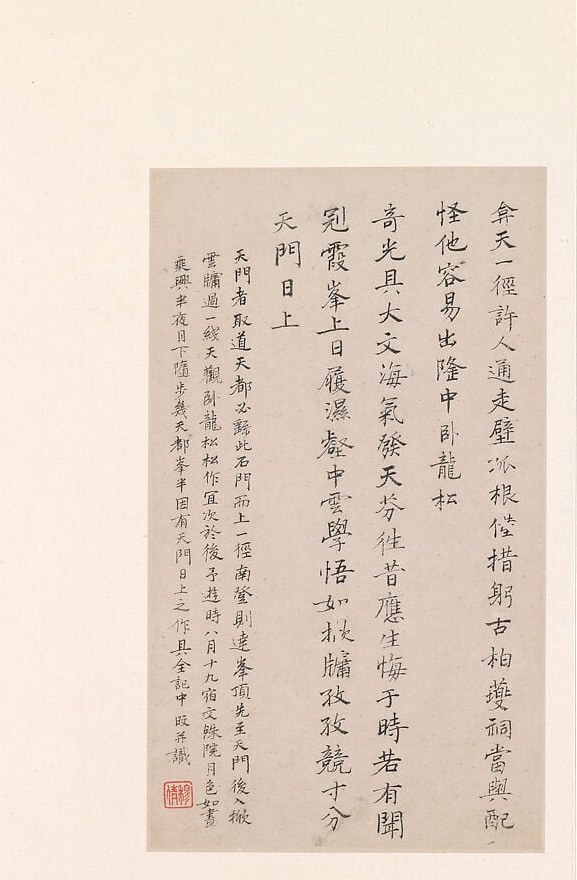
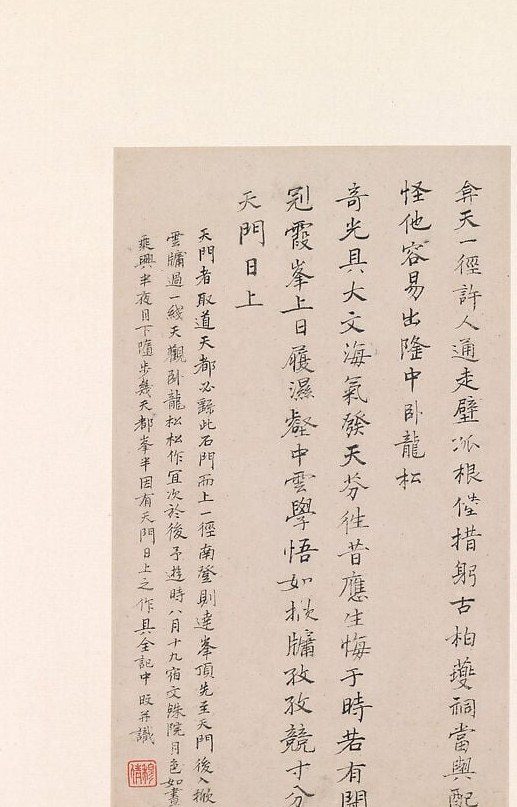
Here is the thing that makes this album unusual. Zheng Min never went to Huangshan. He synthesized these views from earlier poems and existing visual traditions. The calligraphy on the facing leaf is the direct source. The painter read a verse and imagined a cliff. Every jagged rock form is a calligraphic gesture, a conversation with past masters rather than a record of observed geology.
A stolen painting, recovered, built from poetry and brushwork alone. It is a work that survived not just one kind of loss, but the impossible pressure of a mountain that exists only in the mind.
Details
Transcript
In 1978, a desperate man stole 12 paintings from a museum. He sold them for just a few thousand dollars. This landscape was one of the few recovered leaves. Look at the extreme height of this cliff. Now find the tiny figures at its base. It is a vertiginous view the painter never saw himself. Zheng Min built this mountain from poems, not life. The dry brushstrokes are calligraphy pretending to be granite.