The Departure of the Gondola by Giovanni Domenico Tiepolo (Italian, 1727–1804)
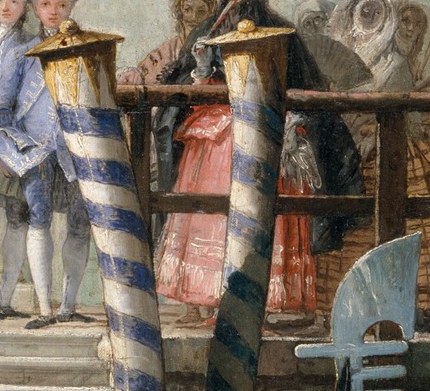
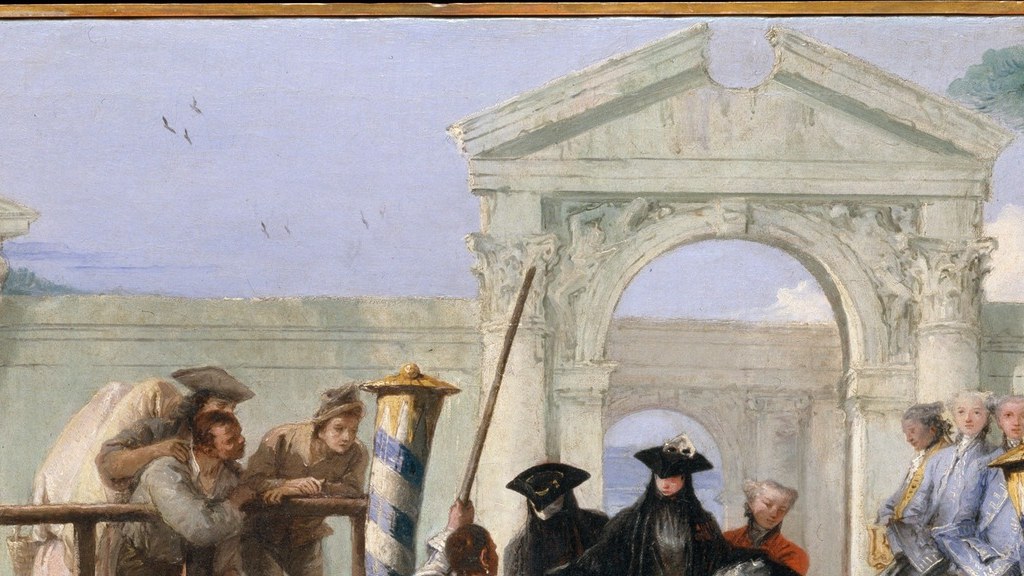
Giovanni Domenico Tiepolo's 'The Departure of the Gondola,' painted in 1765, is more than just a farewell scene; it's a window into the social fabric of 18th-century Venice. Now housed at The Metropolitan Museum of Art, this oil painting captures a moment of intrigue and daily life along a canal.
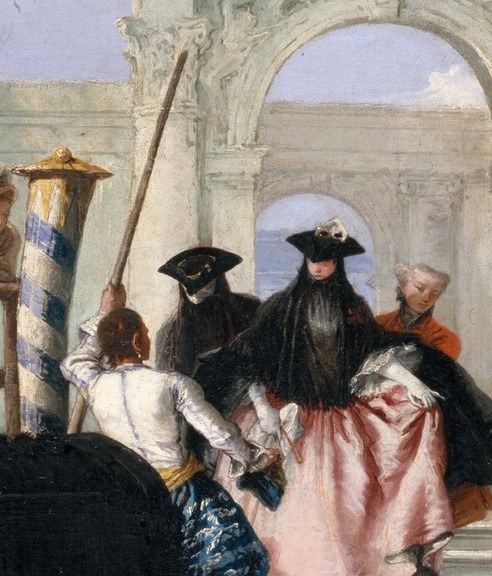
Look closely at the figures, especially the masked individual in the gondola. This is a bauta mask, a common accessory during Venetian carnival, designed to obscure identity and allow wearers to move through society anonymously. Tiepolo, unlike his famous father, often focused on these more 'genre' aspects of life, highlighting the interactions between different social classes.
The artist, who trained under his renowned father Giovanni Battista Tiepolo, excelled at infusing his scenes with a sense of theatricality and narrative depth. His choice to feature the working-class gondolier so prominently, alongside the elegant patricians, speaks to his interest in the nuances of Venetian society.
What stories do you imagine unfold behind these masked faces and formal farewells?
Details


Transcript
Venice, 1765: a gondola awaits a mysterious departure. This painter, Domenico Tiepolo, loved painting daily life. He was more interested in gondoliers than grand gestures. Look at the masked figure in the center of the boat. The blank mask, a bauta, erased identity in Venetian society. It allowed anyone to hide in plain sight at carnival. But who is this figure, truly, beneath the disguise?