Saint Andrew by Simone Martini
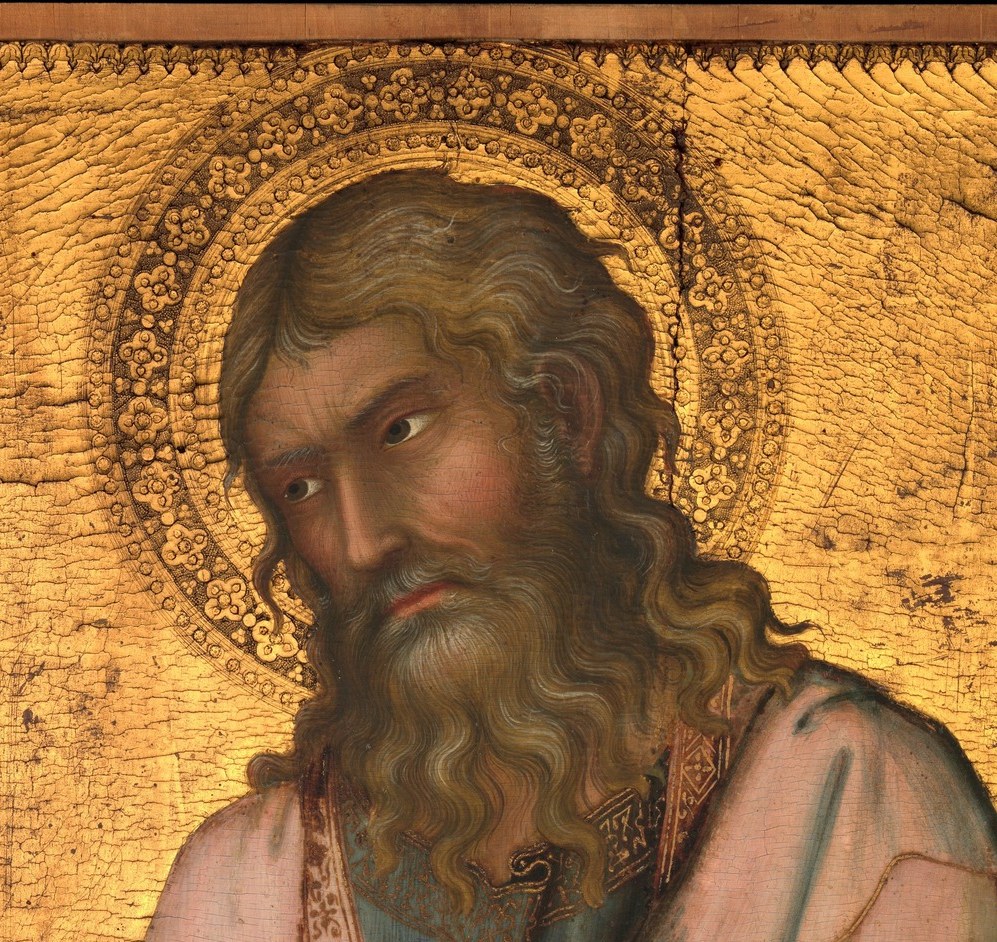
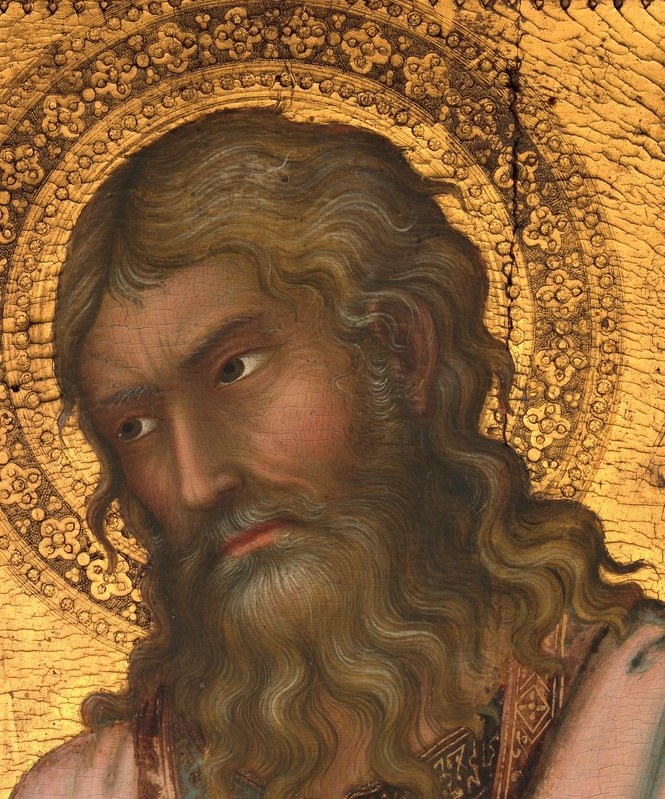
This is Simone Martini's "Saint Andrew," painted in 1326 and now in the collection of The Metropolitan Museum of Art. It's a portrait, but also a code. In the 14th century, when literacy was rare, paintings served as visual identification systems for the faithful.
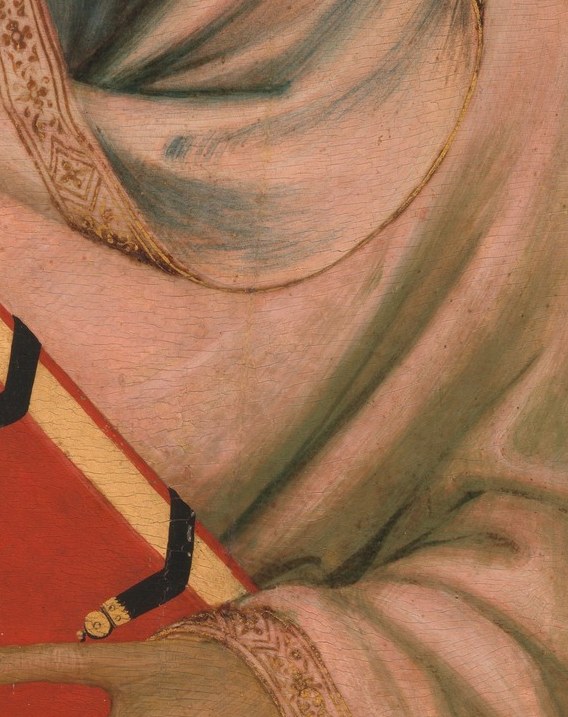
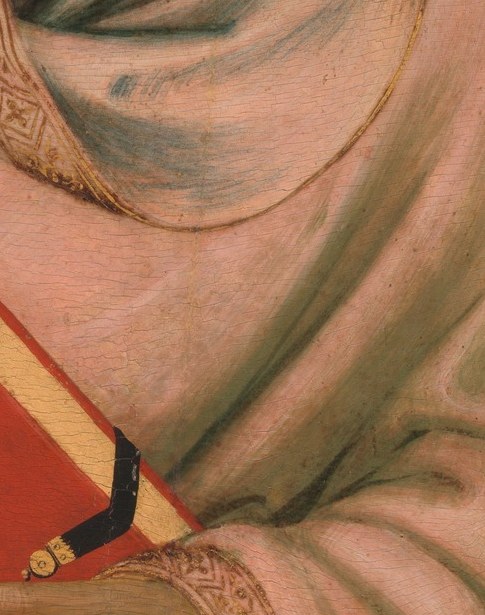
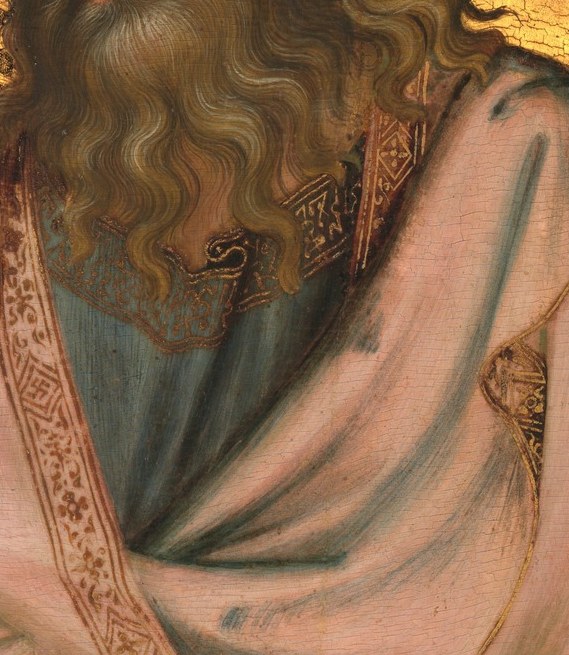
Look at the saint's attributes: the red book with gold corner bosses is a liturgical manuscript, the kind reserved for sacred texts. His blue undergarment and white mantle form the codified color scheme of the apostles. And the burnished gold ground behind him is not a landscape or a sky but a theological claim about the space a saint occupies: divine, immaterial light.
Simone Martini was the leading painter of the Sienese school, known for refined linework, sumptuous gold leaf, and elongated, graceful figures. He painted this panel in tempera on wood, building luminous layers that still glow nearly seven centuries later.
Next time you see a halo or a red book in a medieval painting, you'll know exactly what you're looking at. What coded objects have you spotted in other works?
Details
Transcript
Before everyone could read, paintings had to do the talking. A red book, offered forward. This is the first clue. Gold bosses on the binding mark it as a sacred text. His blue tunic and white mantle were the apostolic uniform. The real gold leaf behind him isn't sky. It's divine light. Burnished halos like this one meant: you are looking at a saint in heaven. A medieval churchgoer would know this man in two seconds. The book says apostle. The blue and white say Andrew.