Virgin and Child Enthroned between Saints Cecilia and Catherine of Alexandria by Francesco Morone
Francesco Morone's "Virgin and Child Enthroned between Saints Cecilia and Catherine of Alexandria" (1510, The Metropolitan Museum of Art) is often read as a formal sacra conversazione. But the panel is more alive than the term suggests, it is a concentrated study in three distinct forms of feminine devotion, painted in a single Veronese altarpiece.
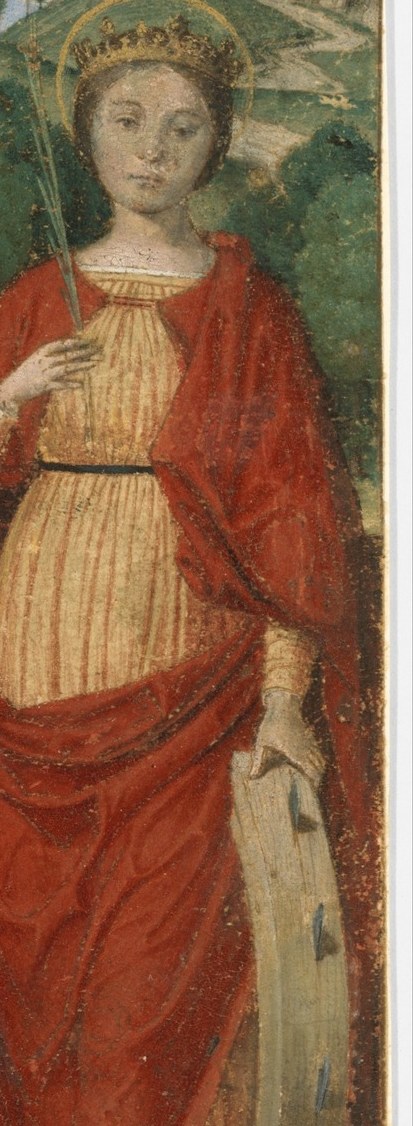
Look at the faces. Saint Cecilia, on the left, holds her head with a gentle, inward tilt, the musician-saint absorbed in silent prayer. Across from her, Saint Catherine of Alexandria is more upright, her expression composed and direct: the philosopher-martyr queen. Between them, the Virgin Mary looks down at the Christ Child with a tenderness that is maternal rather than remote. Morone gives each woman a different interior life.
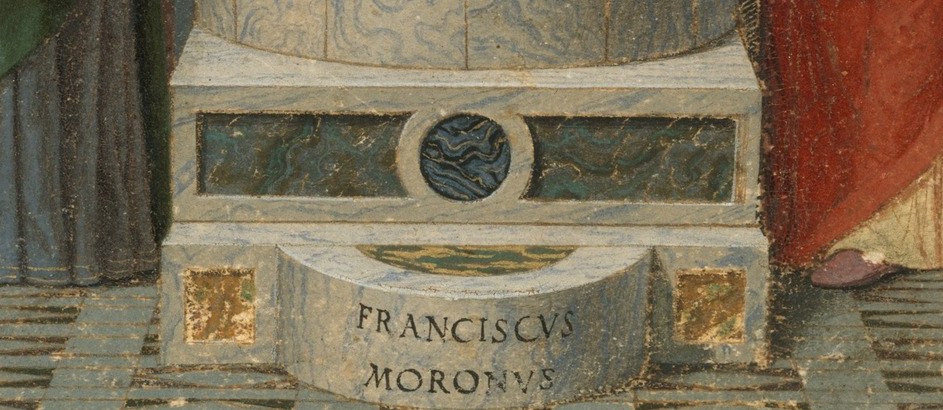
Morone trained in his father Domenico's workshop and worked as his assistant for years. This panel comes from the period around 1510, after he had finally established his own independent practice. His name, "FRANCISCUS MORONVS," is carved into the illusionistic stone pedestal, a quiet declaration of authorship that is easy to miss if you do not look at the base of the throne.
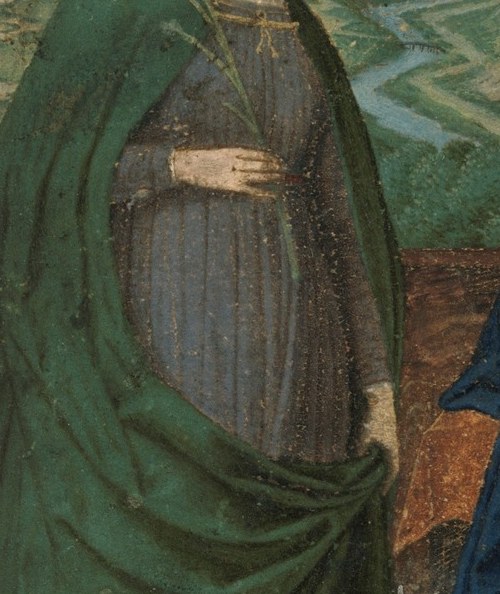
Catherine's palm frond, Cecilia's folded hands, Mary's blue mantle painted with costly lapis lazuli, every detail carries meaning a 16th-century congregation would have recognized instantly. That the painting still rewards close looking today is its own quiet triumph.
Details
Transcript
1510. Verona. A painter signs his name on a stone ledge. Francesco Morone was 39, and finally working on his own. He doesn't give us one kind of saint. He gives us three. On the left, Cecilia. Her face is soft, her gaze inclined. She was the patron saint of music. Her prayer is a quiet one. On the right, Catherine. A philosopher queen. Her bearing is regal. She carries the palm. The sign for every viewer in 1510: she has already won. Between them, Mary looks down at her son. Tender, not remote.