Portrait of a Man in a White Fur Coat by http://www.wikidata.org/.well-known/genid/765f4b11af33da2a8976d35a311846b0
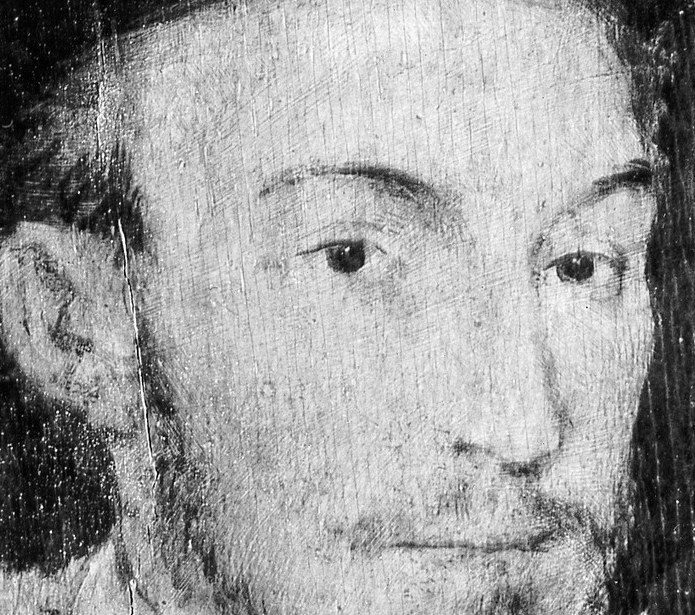
In *Portrait of a Man in a White Fur Coat*, painted by Gerrit Dou around 1660, the artist masterfully uses chiaroscuro, a dramatic contrast of light and shadow, to create a profound sense of depth and form. This technique brings the man's face to life, making his gaze seem to follow the viewer.
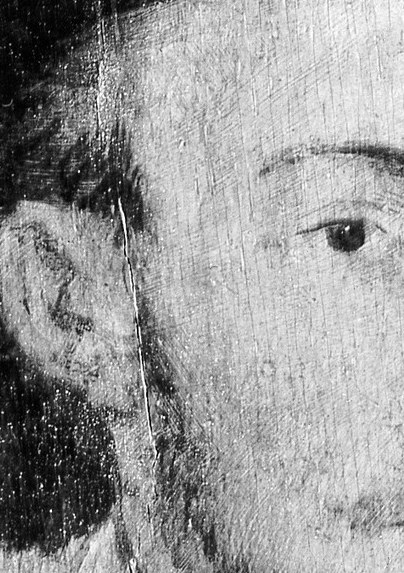
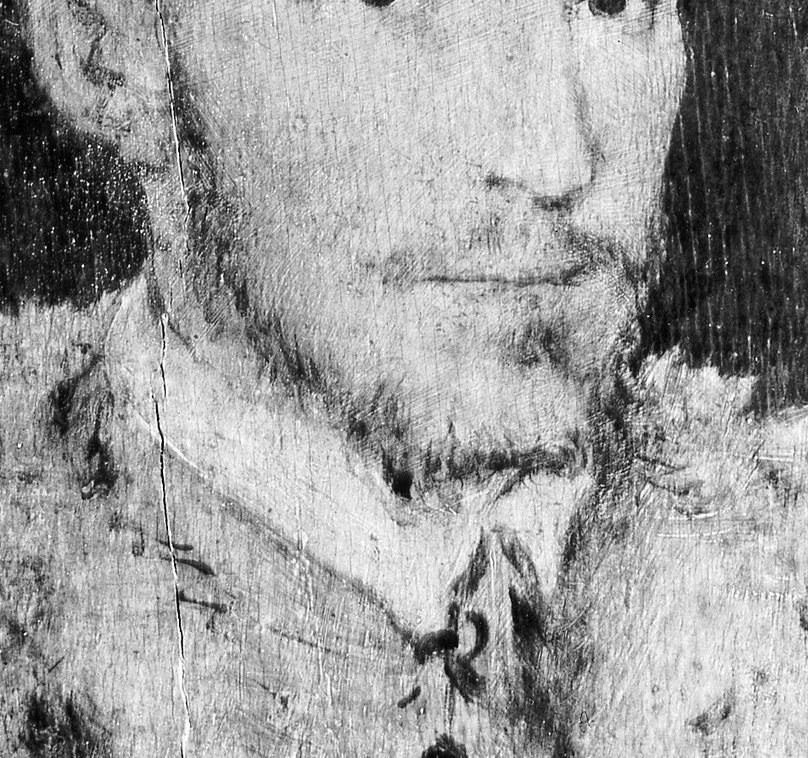
Look closely at the luminous quality of his skin, sharply highlighted against the dark background, particularly the subtle play of light and shadow on his face and around his eyes. This careful modeling creates a striking three-dimensional effect.
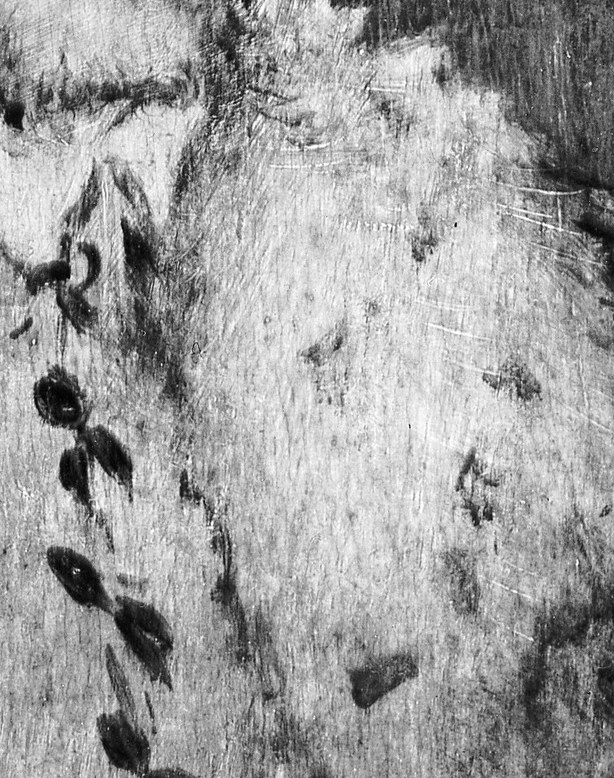
The true brilliance, however, lies in the rendering of the white fur coat. Dou uses thick, visible brushstrokes to mimic the texture of the fur, making the paint itself appear shaggy and soft. This tactile illusion, achieved through painterly texture rather than smooth blends, is a testament to the artist's skill.
What other textures can you discern in the painting?
Details
Transcript
This painter uses dramatic light and shadow, called chiaroscuro. See how light falls across his face, sculpting it from the dark. His eyes, though in shadow, seem to follow us. But the real trick is the fur of his coat. The painter used thick, visible brushstrokes to create its texture. The rough paint itself becomes the fur.