Plucked Clean by Harnett, William Michael
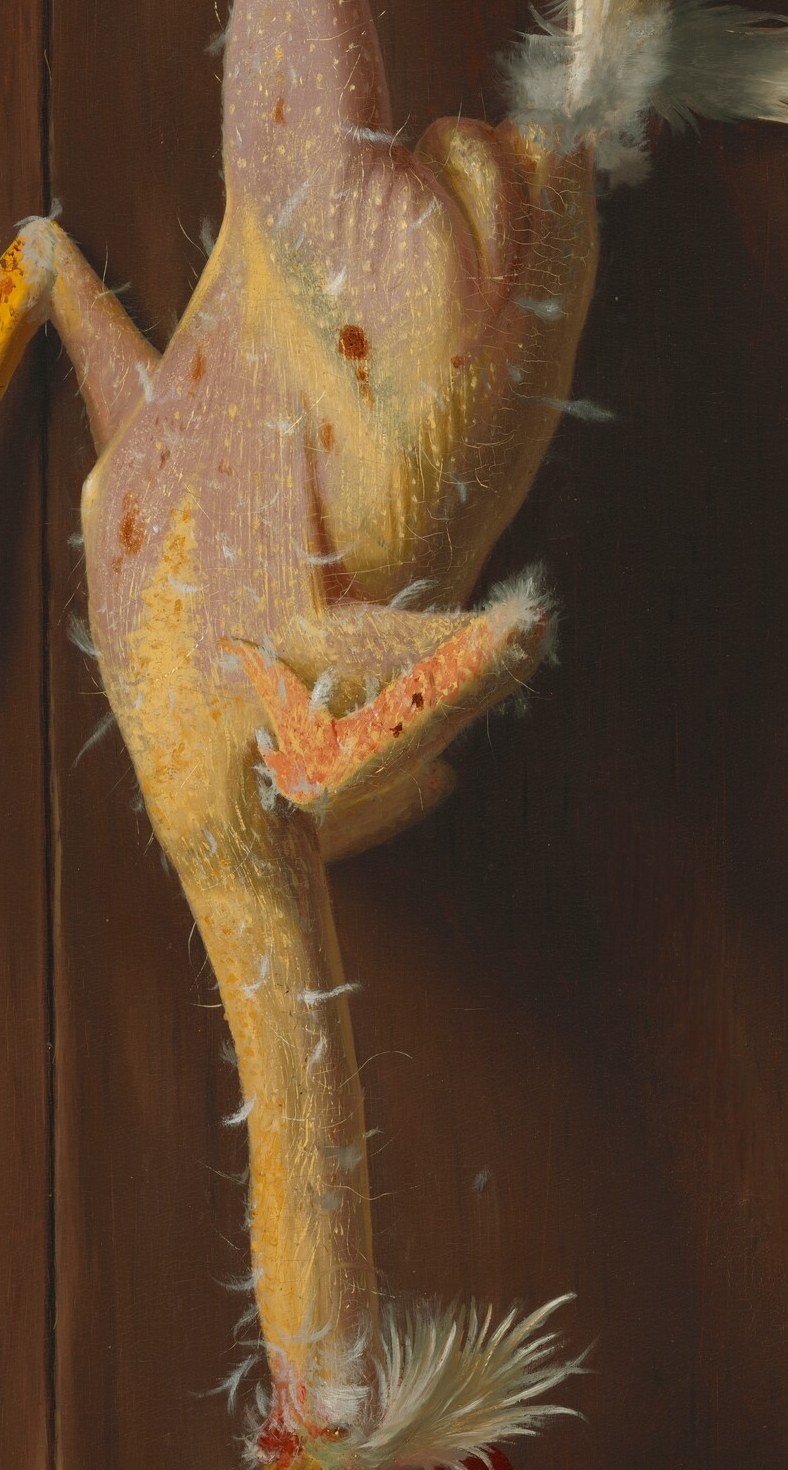
William Michael Harnett’s 1882 oil on canvas, "Plucked Clean," is a masterful example of trompe l'oeil, designed to fool the eye into believing it's a real object or a photograph. Harnett was renowned for his ability to render everyday objects with stunning realism.
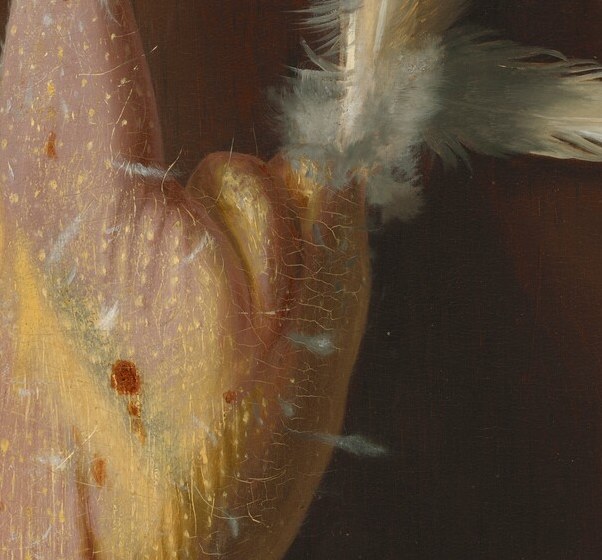
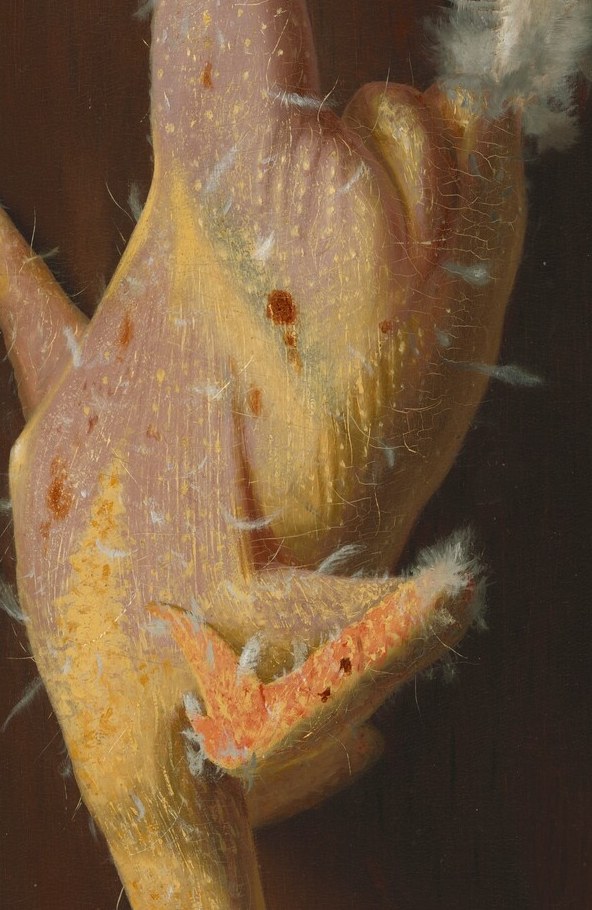
Notice the meticulous brushwork on the chicken's body, capturing every texture from the pale flesh to the scattered remnants of feathers. Even a single feather on the wooden background is rendered with such precision, it looks as if you could reach out and pick it up.
During the height of his career, Harnett's highly detailed still lifes like this one captivated audiences. They invited contemplation of the physical reality of things, blurring the lines between art and life. The artist's signature, visible in the lower left, serves as a testament to his careful attention to every detail.
What other small details do you notice in the painting that contribute to its lifelike quality?
Details
Transcript
This painting looks like a photograph, but it is not. The artist specialized in "trompe l'oeil", to fool the eye. Look closely at the chicken's body, the plucked feathers. Even a single feather on the wood looks incredibly real. Such detail was a signature of this American painter.