The Fable of the Miller, His Son, and the Donkey by Elihu Vedder
This is Elihu Vedder's 1867 painting "The Fable of the Miller, His Son, and the Donkey," now at The Metropolitan Museum of Art. Vedder is best known for his mystical illustrations for the Rubaiyat of Omar Khayyam, but here he tackles an ancient fable with a realist's eye. The story is simple: a miller and his son can't agree on how to travel with their donkey without drawing criticism, and in trying to please everyone, they please no one.
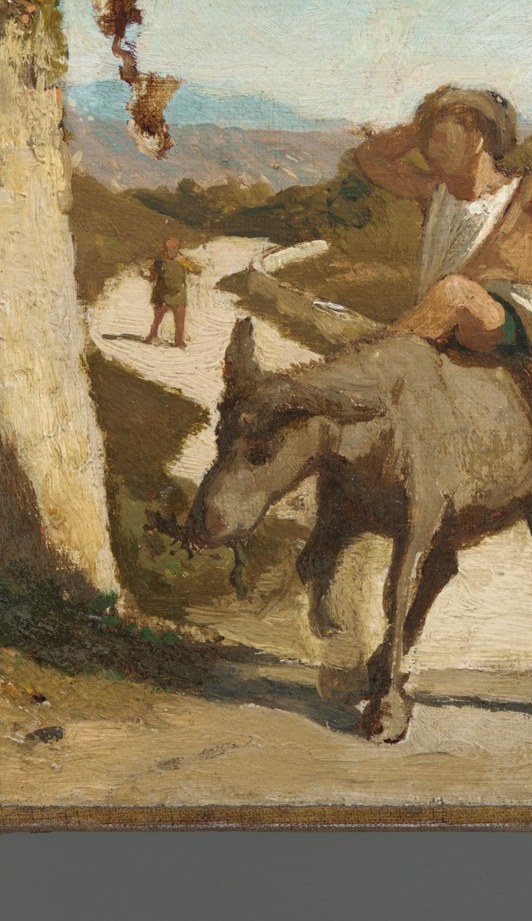
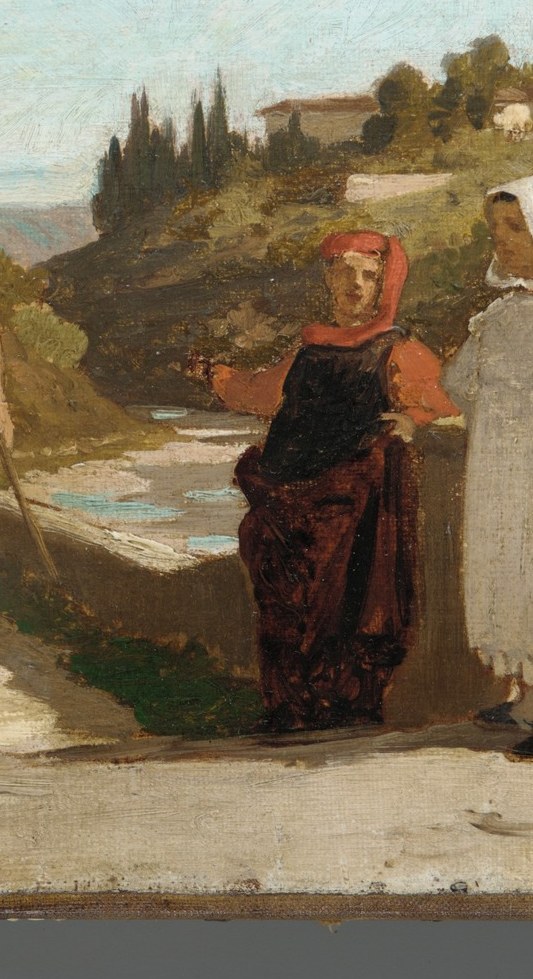
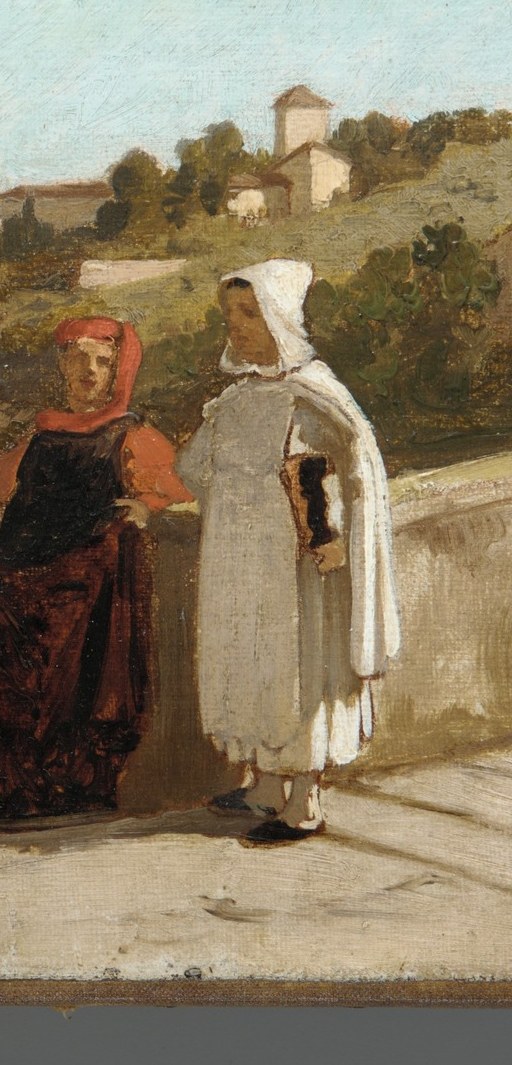
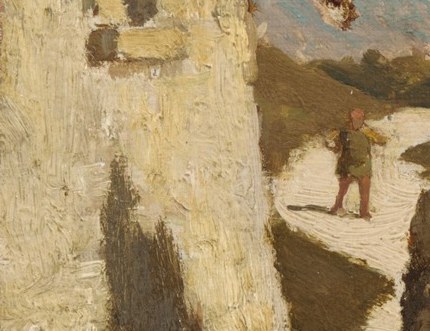
The scene unfolds on a dusty Italian road. A boy leads the gray donkey on foot while a woman in a reddish-orange dress gestures toward them, the first of several bystanders whose unsolicited opinions drive the fable's tension. Behind her, an older woman in white joins the silent chorus of judgment. Vedder places them against a stone parapet, turning the road into a stage where private decisions are exposed to public scrutiny.
Vedder painted this work in 1867, early in his career, during a period when many American artists lived and worked in Italy. The terraced hilltop town in the background is not a generic backdrop, it reflects the Italian rural landscapes Vedder observed directly. The painting entered the Met's collection as part of a broader appreciation for his narrative and genre pictures, long before the Rubaiyat illustrations made him famous.
Look at the donkey's face. It alone has no opinion, and it suffers anyway. That quiet irony is the painting's visual punchline and the fable's lasting truth.
Details
Transcript
A man, a boy, and a donkey walk a dusty road. The fable is ancient. Everyone has advice for them. This woman in red thinks they are doing it wrong. Behind her, another voice joins the chorus of judgment. The boy leads. Soon they will be told to ride together. The donkey has no opinion. It suffers anyway. Vedder painted this in Italy, far from American critics.