Argenteuil by Monet, Claude
This is Claude Monet's 'Argenteuil,' painted around 1872, now in the collection of the Musée d'Orsay. It captures a specific moment of calm one year after the end of the Franco-Prussian War, in the suburban town where modern painting would radically change.
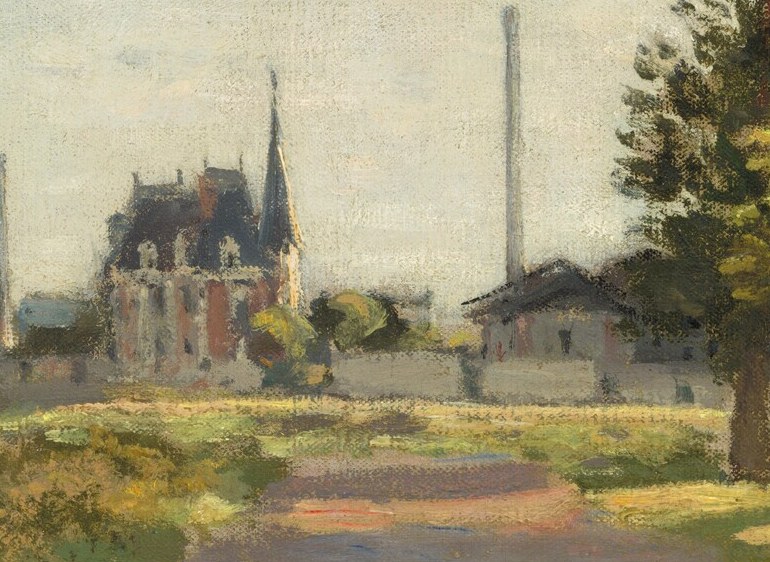
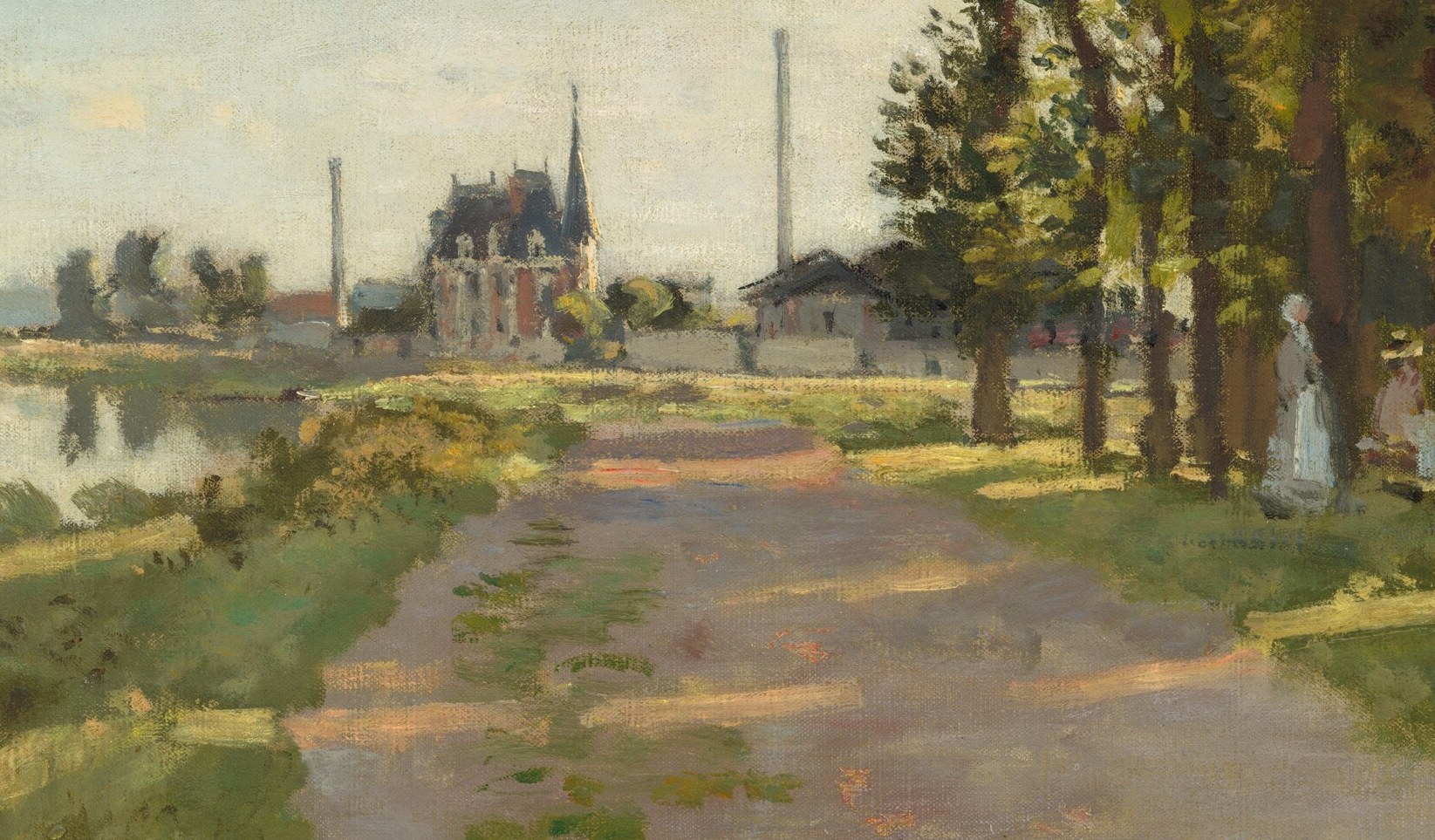
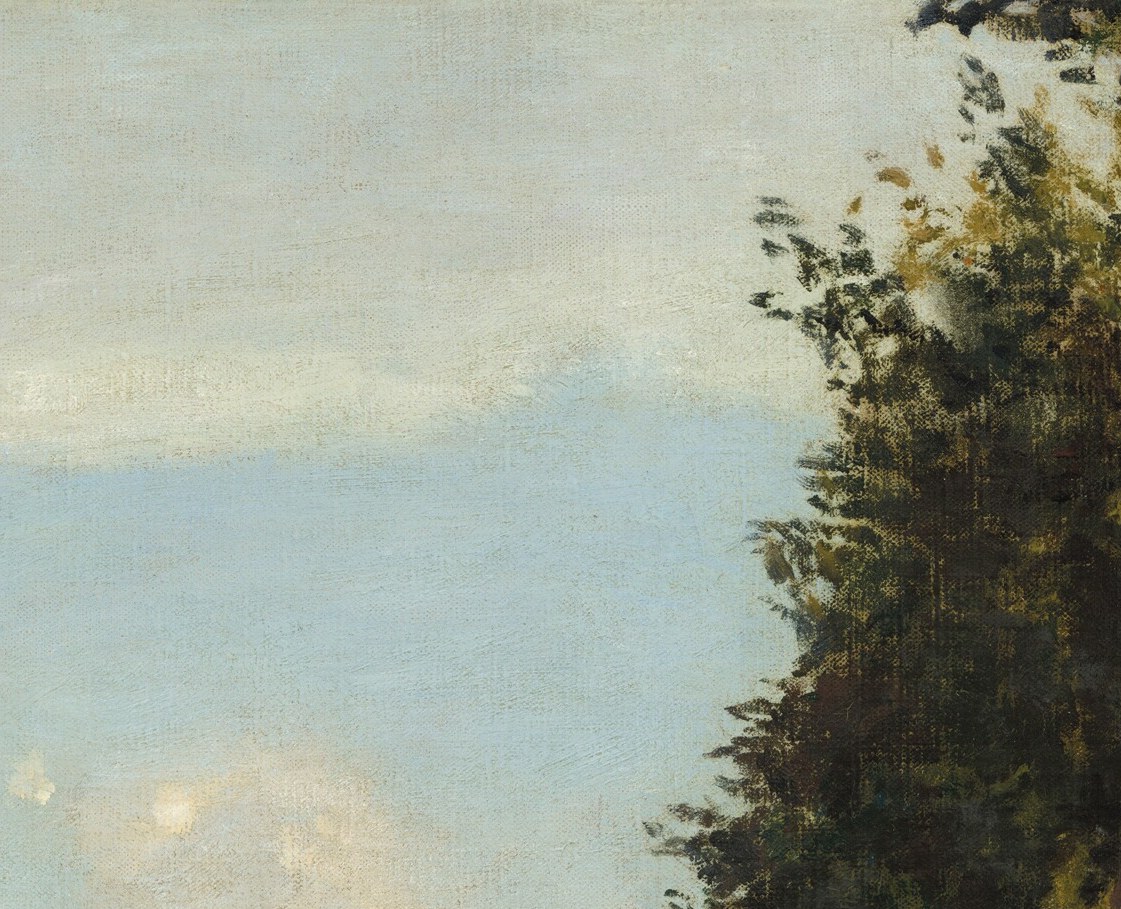
Look first at the thin, luminous horizon band where the pale sky meets the far bank. It creates an unusually wide, breath-catching sense of space. Then notice the small figures on the right-bank towpath: barely discernible pedestrians, a reminder that this is a lived-in social space, not a depopulated ideal. Finally, shift your eye to the far left edge, where factory chimneys rise just beyond the church steeple. Monet quietly included the smokestacks of Argenteuil's growing industry, a pastoral scene already shadowed by modernization.
Monet moved to Argenteuil in December 1871, as France began rebuilding after a devastating war. The town was a leisure suburb reachable by train from the Gare Saint-Lazare, and its river, promenades, and sailboats became the laboratory for a new kind of painting. This canvas shows him testing how much form can be sacrificed to light. The tree reflections in the water already dissolve into loose strokes, and the dappled foliage at the upper right is made of individual broken brushstrokes that anticipate the full Impressionist technique. Two years later, in 1874, Monet, Renoir, Sisley, and others would stage their first independent exhibition in Paris, naming a movement almost by accident.
A quiet declaration: the modern world, with its factories and leisure-seekers, was now the proper subject of painting. What do you notice first, the church or the smokestacks?
Details


Transcript
One year after the Franco-Prussian War, Paris was healing. Its citizens found peace just west of the city. The towpath here was a new social stage for the middle class. The church steeple anchors the town of Argenteuil across the water. But Monet didn't edit out the factories. They're already here. Two years later, he would help stage the first Impressionist show. This is where he learned to see.