The Finding of Moses by Veronese
Paolo Veronese's "The Finding of Moses," painted around 1581-1582, is a masterclass in rendering luxurious fabrics through the art of glazing. Housed at the National Gallery of Art in Washington, D.C., this painting exemplifies the artist's ability to create visual splendor.
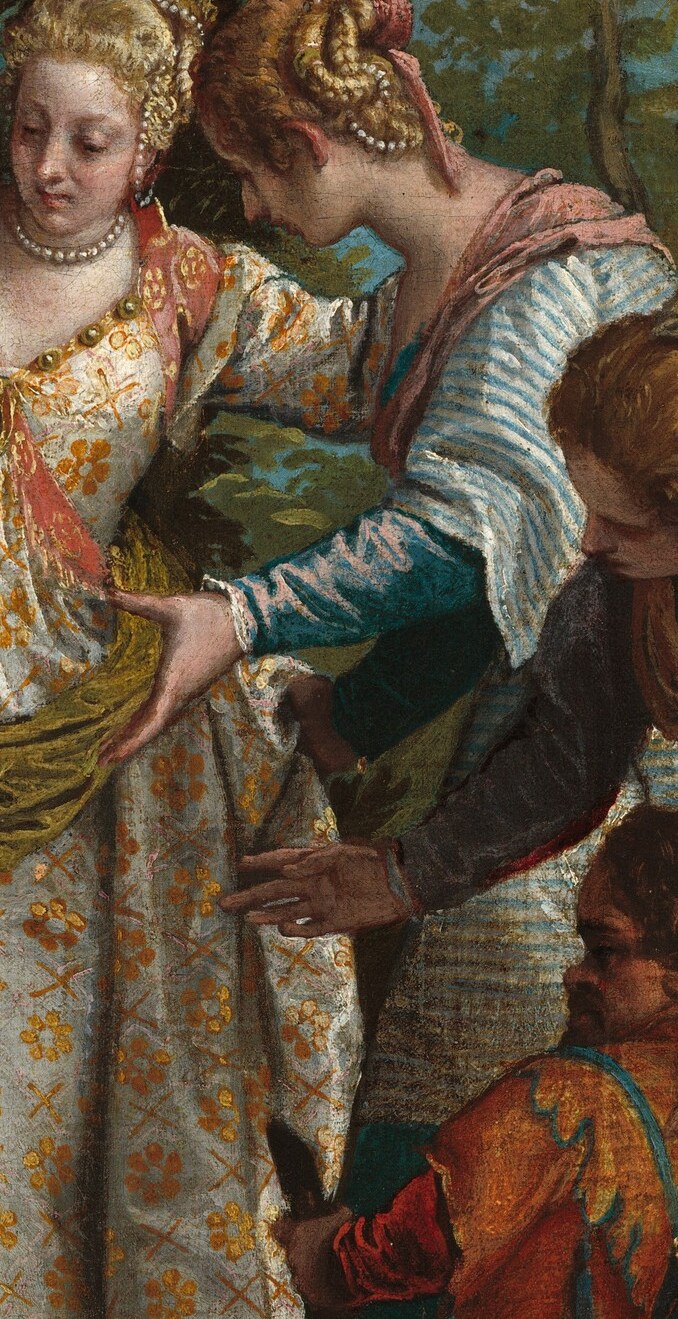
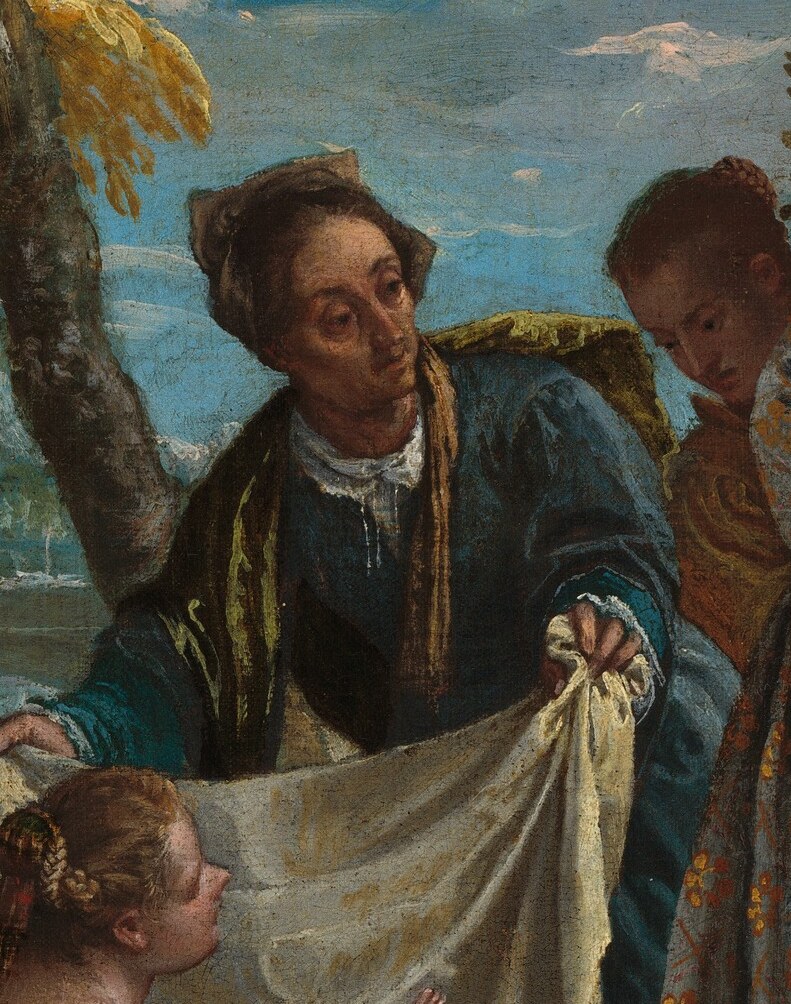
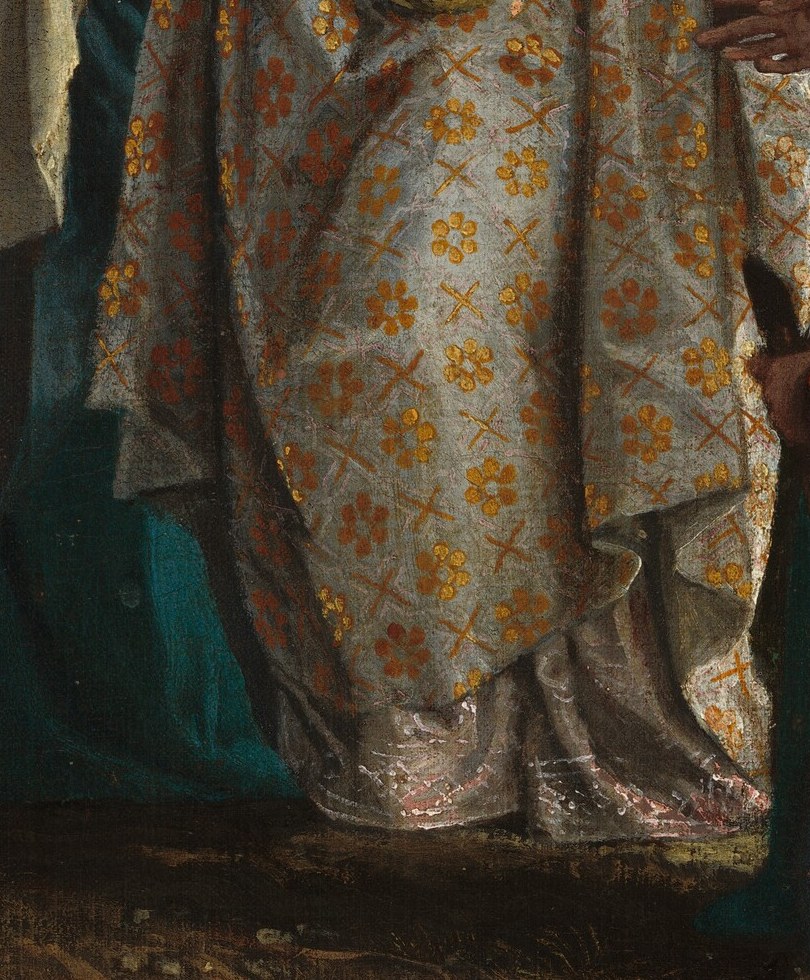
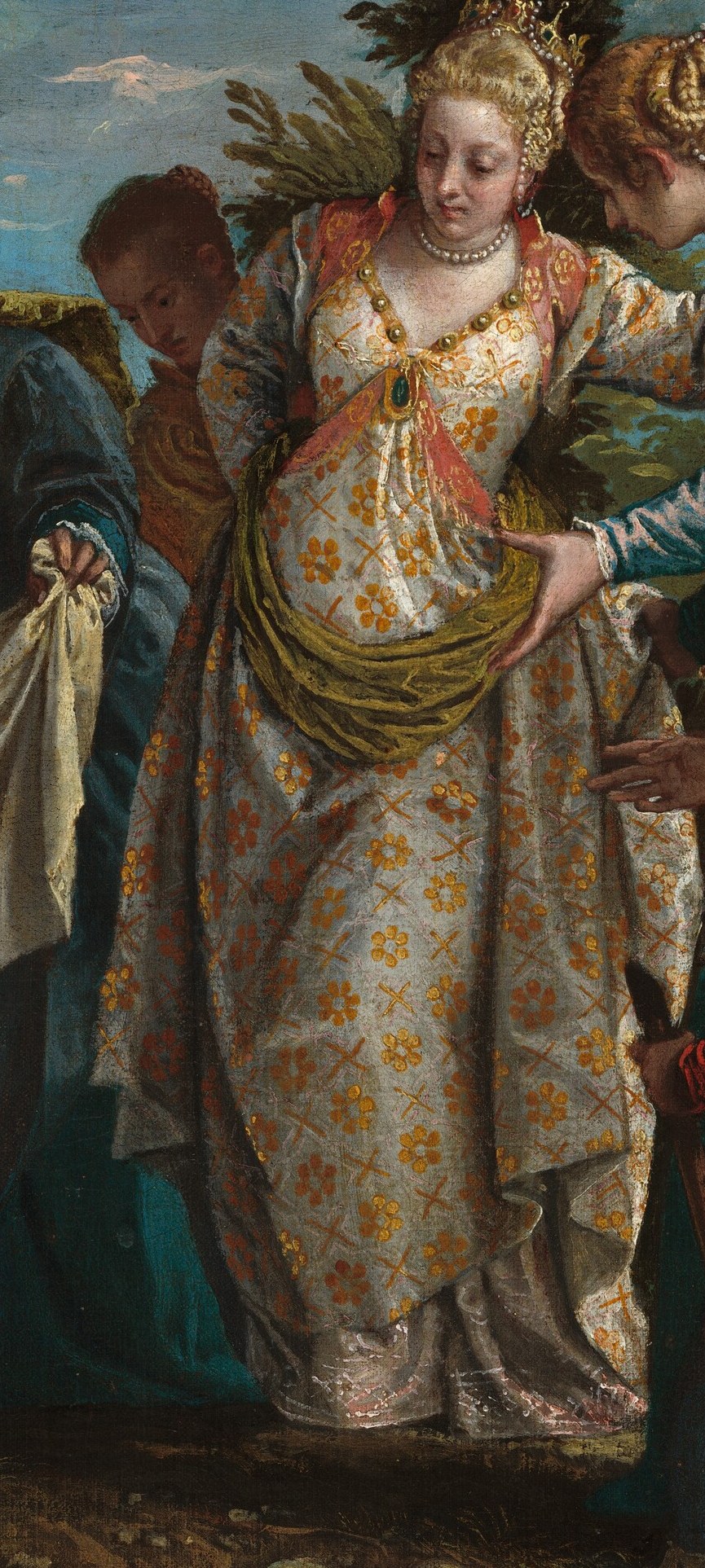
Look closely at the elaborate costumes, particularly the princess's gown and the garments of the attendant figures. Veronese used a technique involving multiple thin, transparent layers of oil paint, known as glazes, to achieve their luminous colors and rich textures. This allowed him to create subtle transitions of light and shadow, making the fabrics appear incredibly lifelike and three-dimensional.
The painting illustrates the Old Testament story of the infant Moses being discovered in the Nile River. Veronese, a prominent Venetian Renaissance artist, envisioned this biblical event as a grand, theatrical spectacle. The work was once part of Catherine the Great's collection in the Hermitage Museum before being acquired by Andrew Mellon in 1930 and later gifted to the National Gallery of Art.
Veronese's skill with paint elevates the everyday into something extraordinary. Can you almost feel the texture of the silk and brocade?
Details
Transcript
This painter, Veronese, made fabric look impossibly real. His secret was layering thin, transparent paint, or glazes. Look at the folds and shimmering highlights on this dress. He used glazes to build luminous colors and subtle transitions. The light seems to catch the intricate patterns and folds. This technique gives the fabric its rich, textured appearance.