Henry, Duke of Gloucester by Hanneman, Adriaen
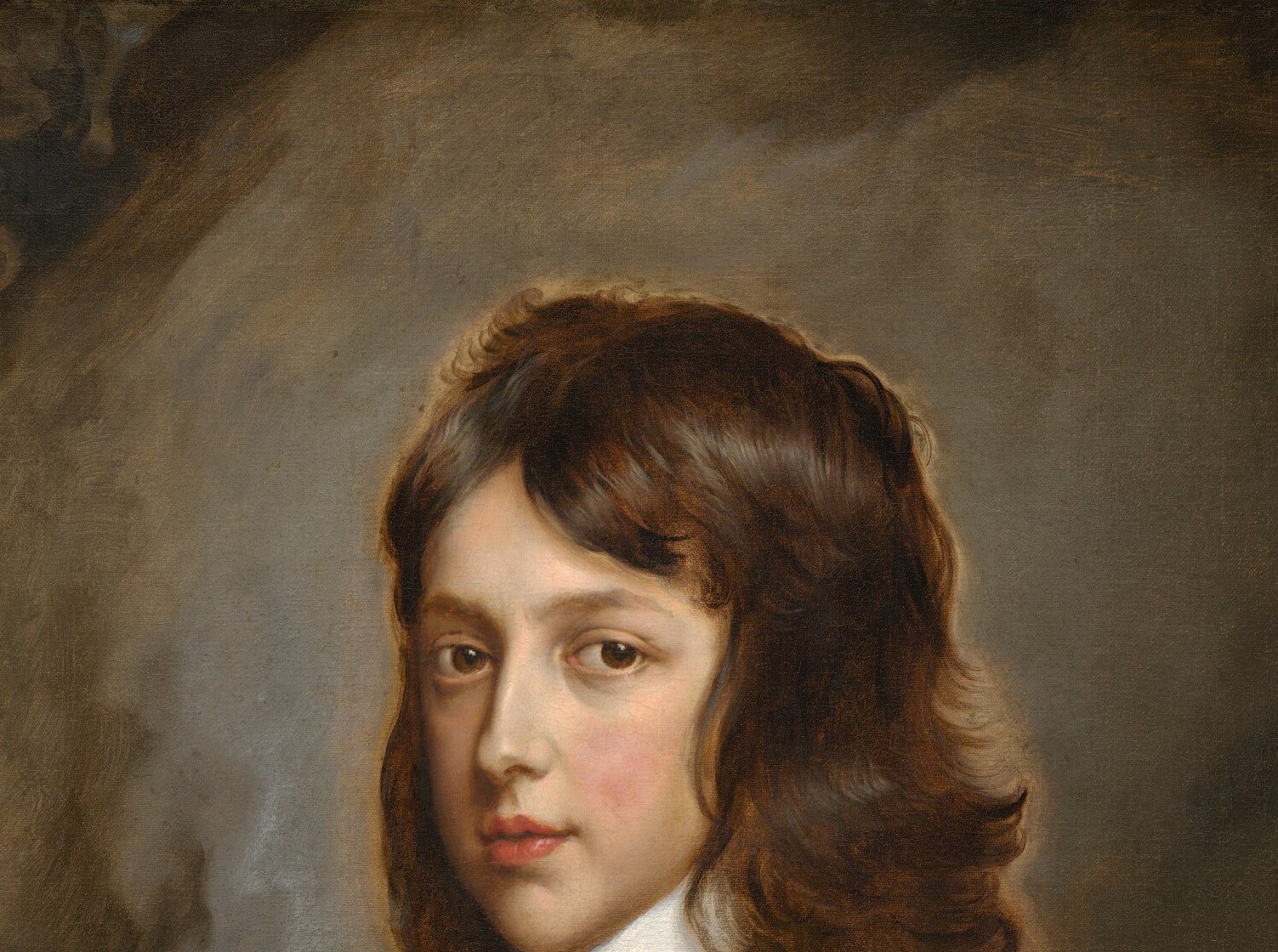
This is "Henry, Duke of Gloucester," painted by Adriaen Hanneman around 1653. It's a portrait of a teenage prince who had been driven from his country, yet every detail in the painting argues he was born to rule.
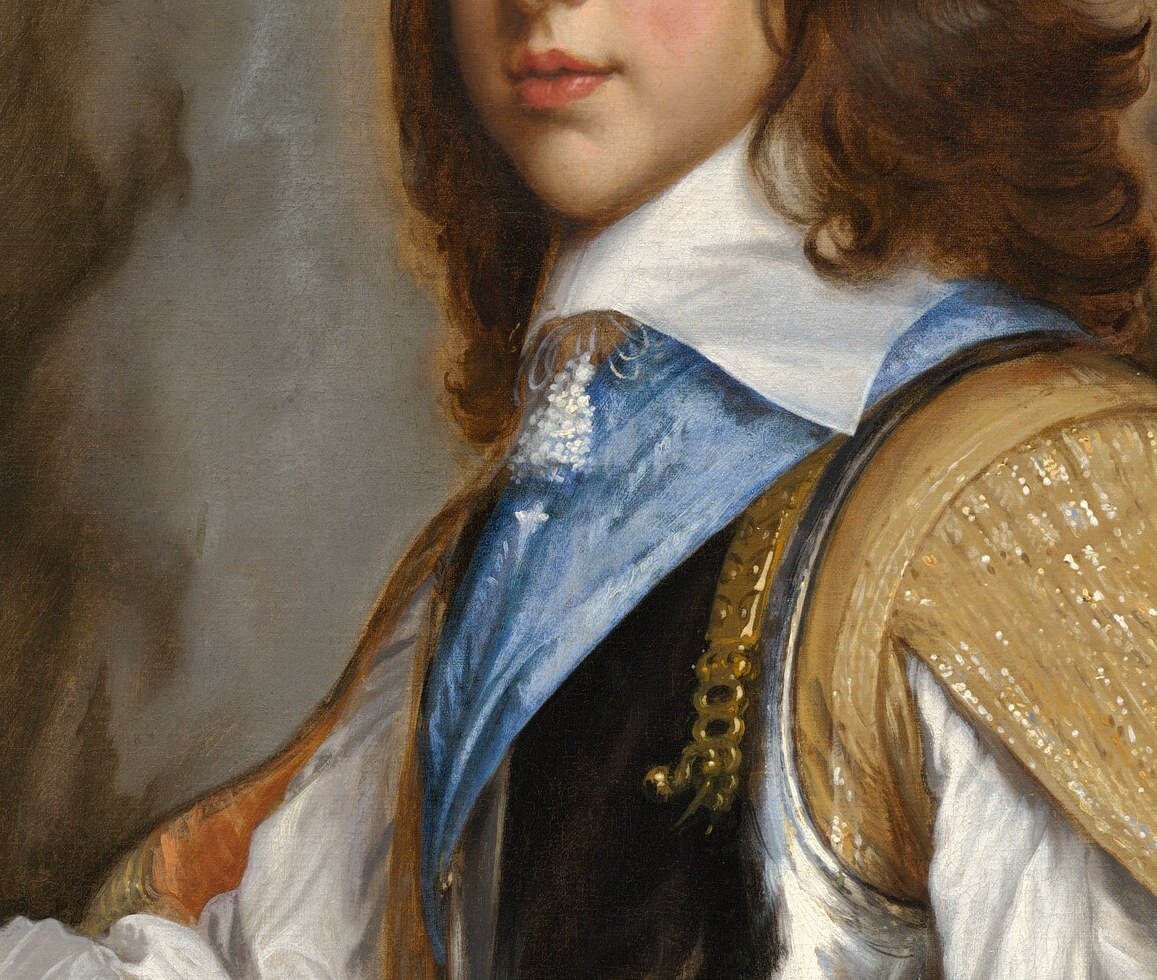
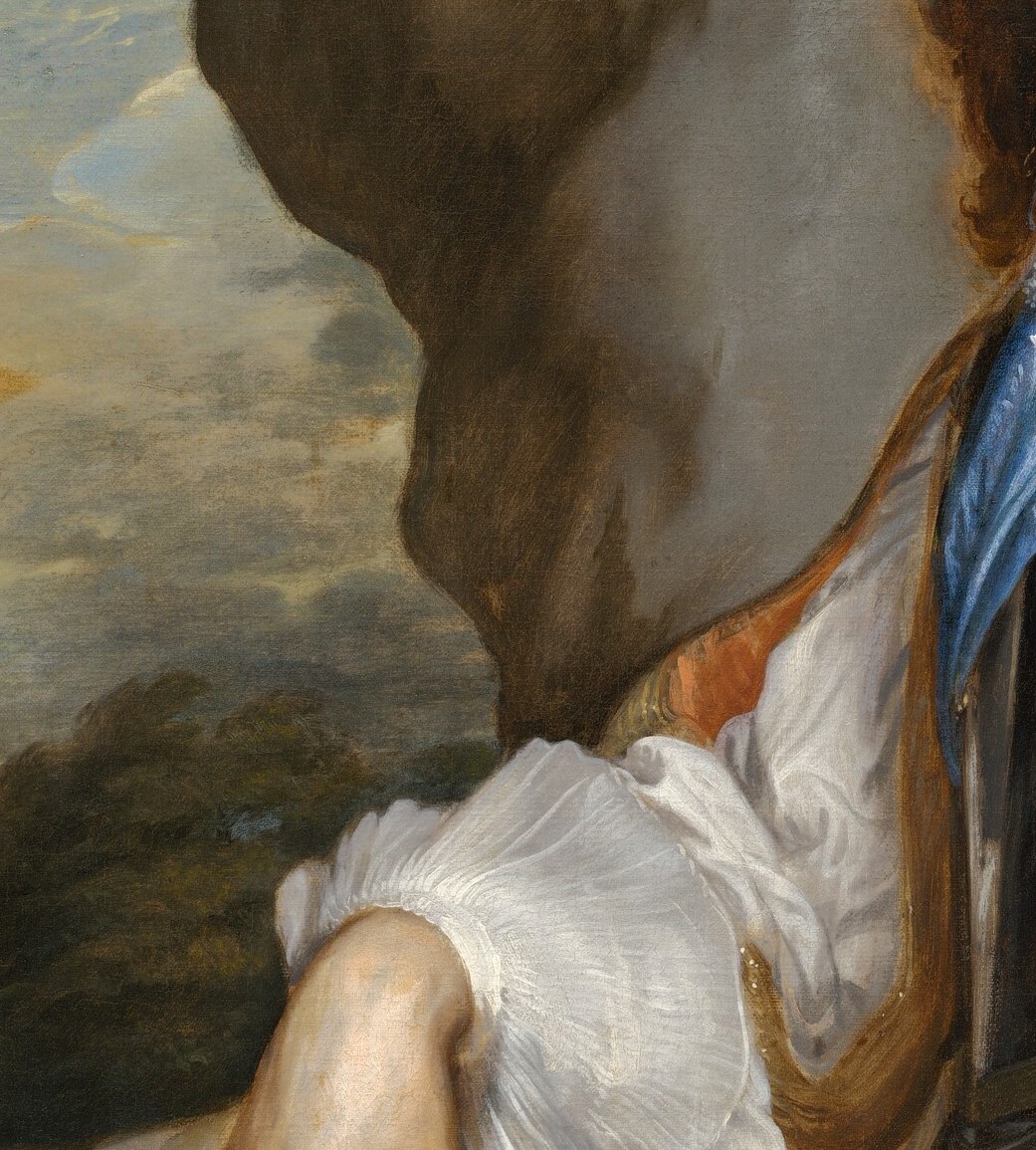
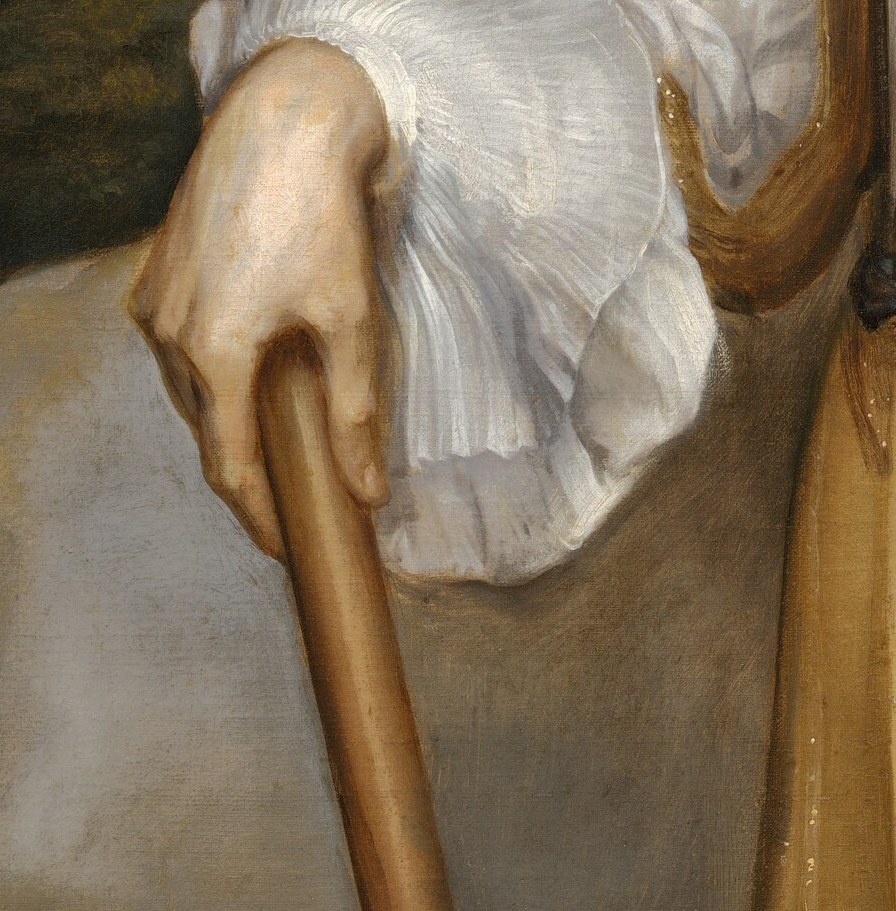
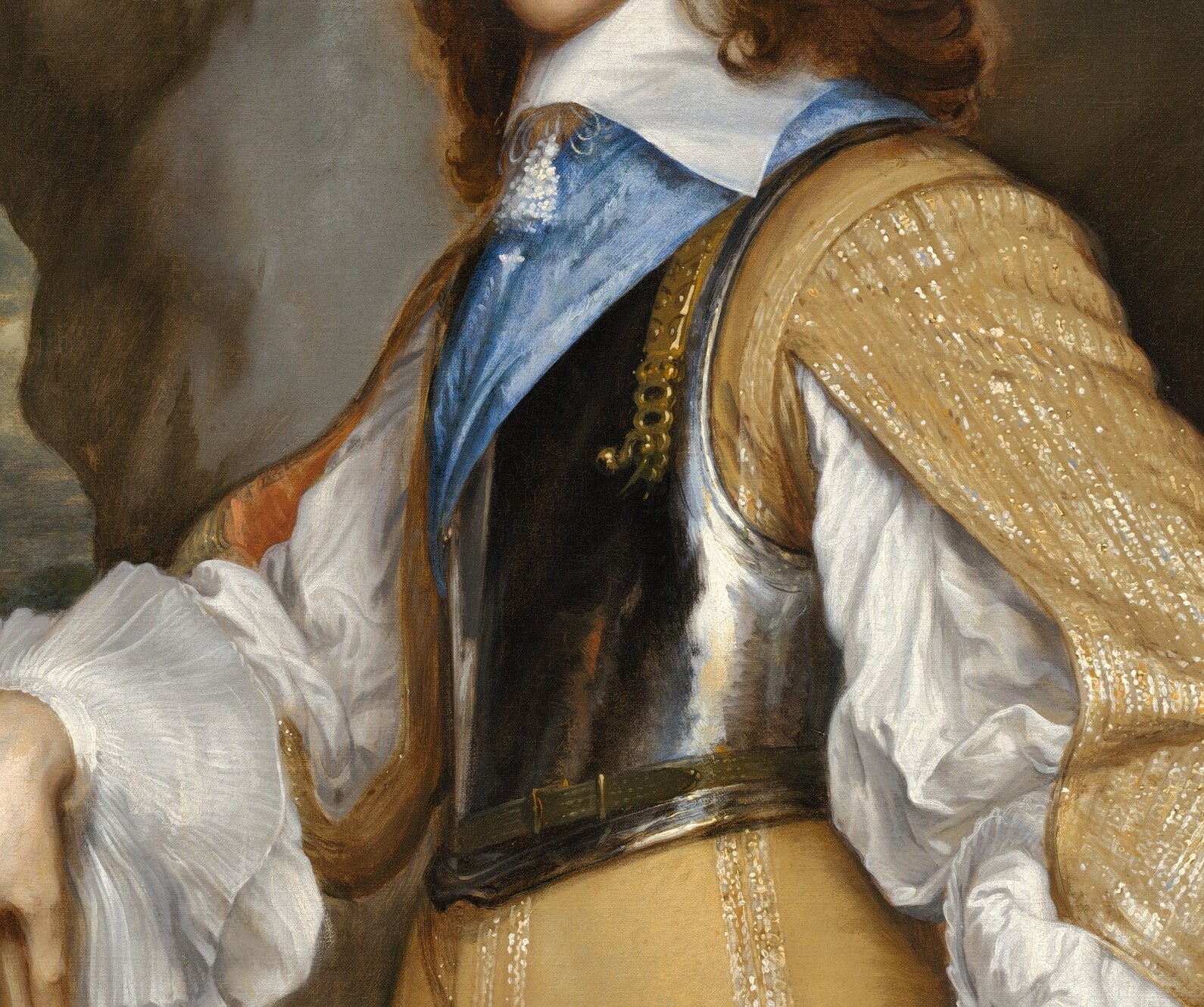
The first thing to look at is the pale blue sash crossing his chest. That is the ribbon of the Order of the Garter, the highest chivalric honour in England. Then notice the split in his clothing: one arm is dressed in polished plate armour, the other in delicate gold brocade. He is presented as both a man of the court and a military commander waiting to reclaim his birthright. In his left hand, following a 17th-century convention, he holds a single pale glove as a mark of gentility.
Hanneman was a Dutch Golden Age portraitist who specialized in painting the exiled British royal court. During the English Civil War, many aristocrats fled to the Netherlands, and Hanneman built a career documenting them. This portrait dates from the final years of that exile, shortly before Henry would return to England. The boy died of smallpox just a few years later, at age 20, never seeing the Restoration.
The storm-lit landscape behind him does the heavy lifting of the story: a dark cloud mass and a single break of light behind his head, a secular halo for a displaced Stuart. What do you notice about the confidence in a fifteen-year-old's face when his entire future was borrowed time?
Details
Transcript
He's barely fifteen, in gold brocade and lace. The blue sash across his chest: the Order of the Garter. England's highest honour, worn by a prince in exile. Armour on one arm, silk on the other. He is both a courtier and a commander ready for war. The single glove: a pledge of gentility. The staff steadies him. This is a claim to a throne. Every stitch insists: he is not meant to be an exile forever.