The Crucifixion by Stefano da Verona (Italian, c. 1375–1438)
View the artwork: The Crucifixion →
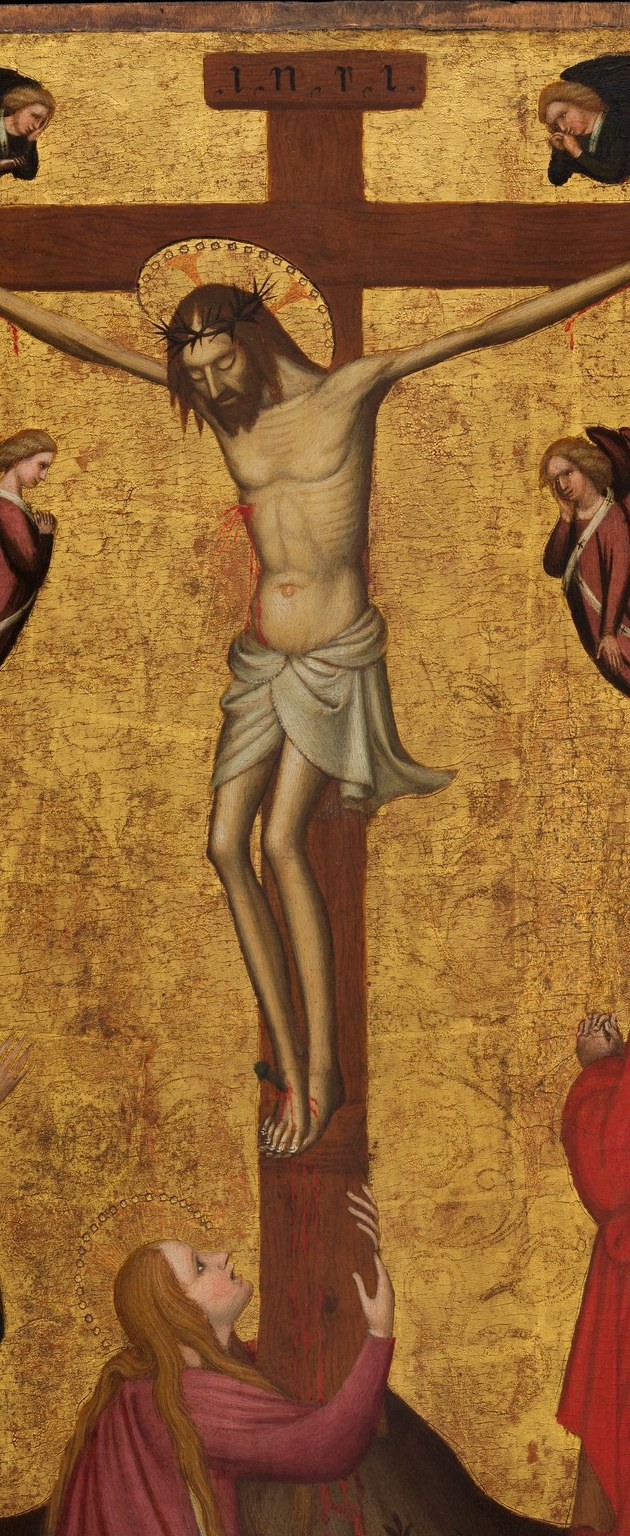
This is The Crucifixion by Stefano da Verona, painted around 1400. It's currently housed in the Metropolitan Museum of Art. Stefano was the son of a French court painter who grew up in Visconti workshops, and you can see that lineage in every inch of this panel: the precision of an illuminator blown up to altarpiece scale. The painting isn't trying to be a realistic scene. It's a theological diagram built to be read, not just seen.
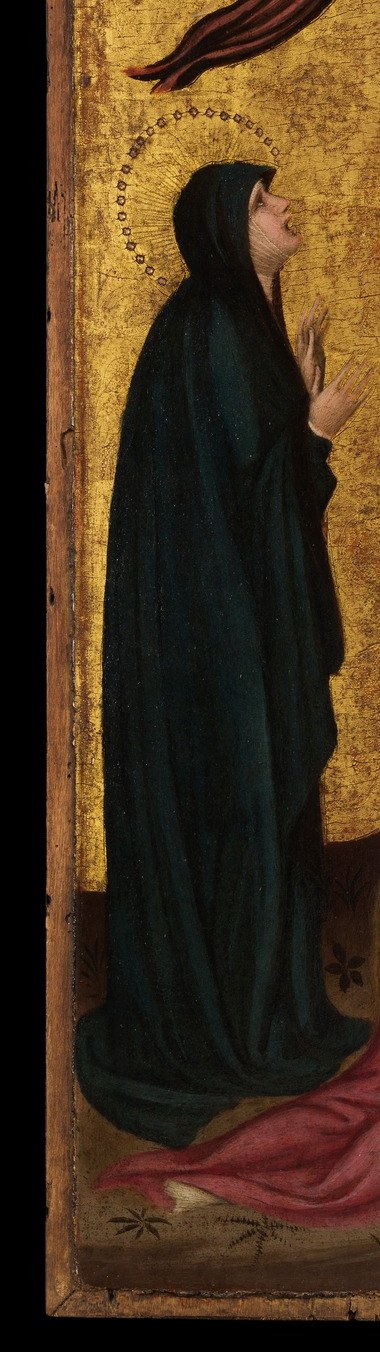
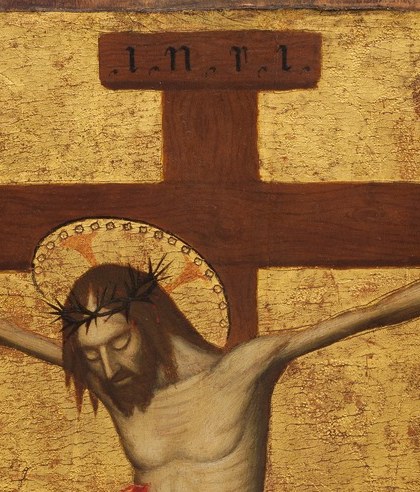
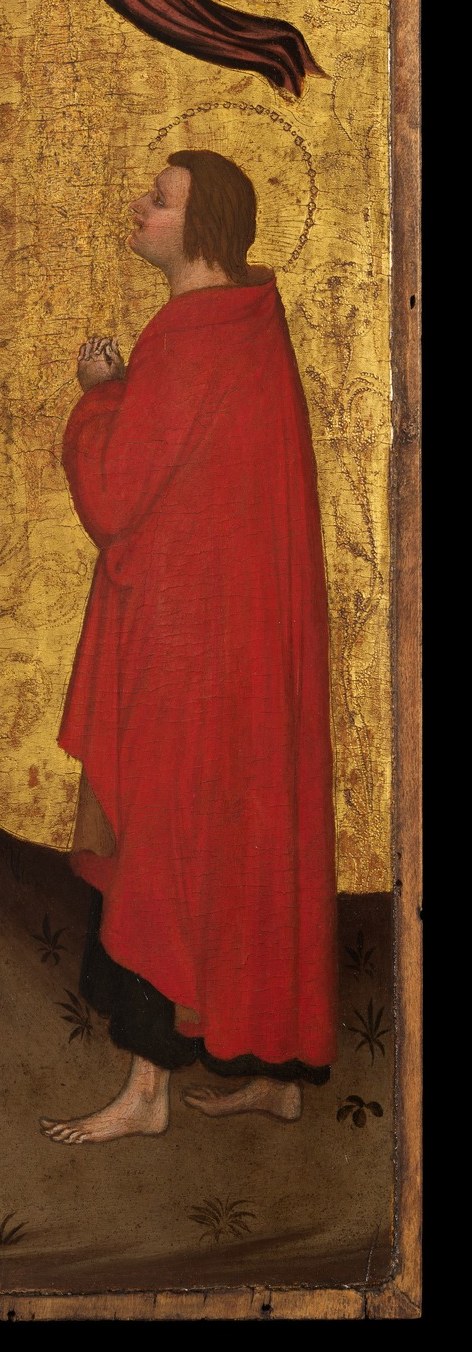
The first thing to notice is the gold. It's not a backdrop. It's tooled with subtle decorative motifs, and in the International Gothic vocabulary, that shimmering gold is the uncreated light of heaven itself. Against it, every human figure becomes a hieroglyph. The Virgin Mary stands at the left in her deep indigo mantle, ultramarine pigment, made from ground lapis lazuli, cost more than gold in 1400. Opposite her, a figure in saturated vermilion: that's Mary Magdalene, her red a traditional symbol of passionate devotion.
The painting's most moving detail is the kneeling figure in pink, reaching upward. This is almost certainly St. Catherine of Siena, the Dominican mystic who received the stigmata, the wounds of Christ, invisibly on her own body. She extends her hands toward the nailed feet of Christ because she knows, by direct experience, what that wound means. The angels hovering above frame the scene as a cosmic event, not a local execution.
Stefano da Verona was a friend of Pisanello, working in the same city at the same time, and you can feel the same courtly elegance in the feathered wings and the decorative line. But here, the elegance serves a purpose: every color, every gesture, every placement is a word in a sentence about sacrifice and witness. What do you notice in the gold once you look past the figures?
#arthistory #internationalgothic #stefanodaverona
Details

Transcript
A man nailed to a cross. Gold everywhere. The gold isn't just decoration. It's the light of heaven itself. Look at the woman in blue. Indigo was ruinously expensive. It signals exactly who she is: the Virgin Mary. The woman in red, opposite her. Vermilion. That's Mary Magdalene. And now the woman in pink, reaching toward Christ's feet. Her gesture is the whole point. This is St. Catherine of Siena, who received the stigmata. She reaches toward the wound she knows.