Artwork
The Crucifixion
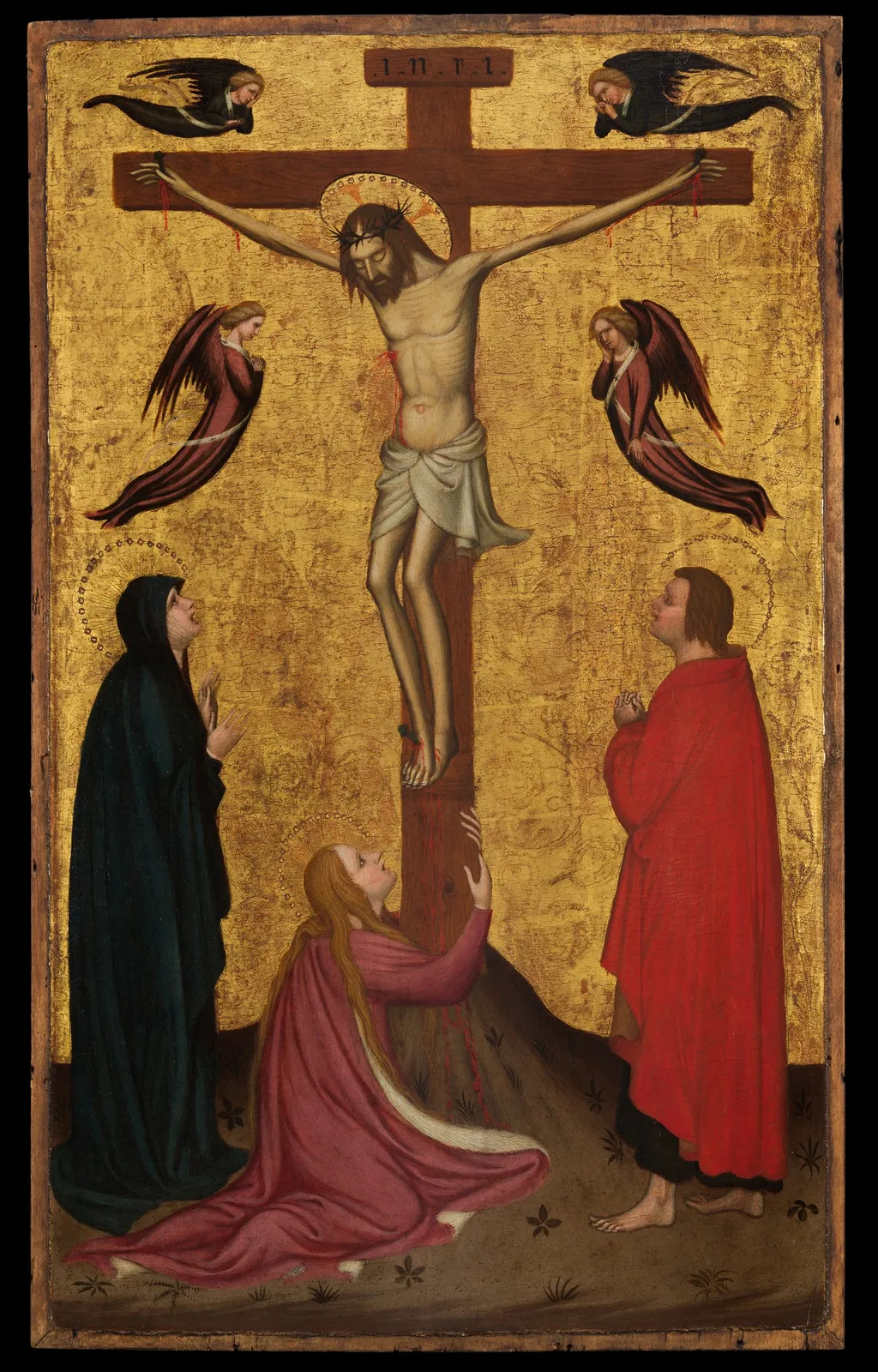
The Crucifixion is an unspecified painting by the Gothic painting artist Stefano da Verona. It dates from 1400 and is held in the collection of the Metropolitan Museum of Art.
About this work
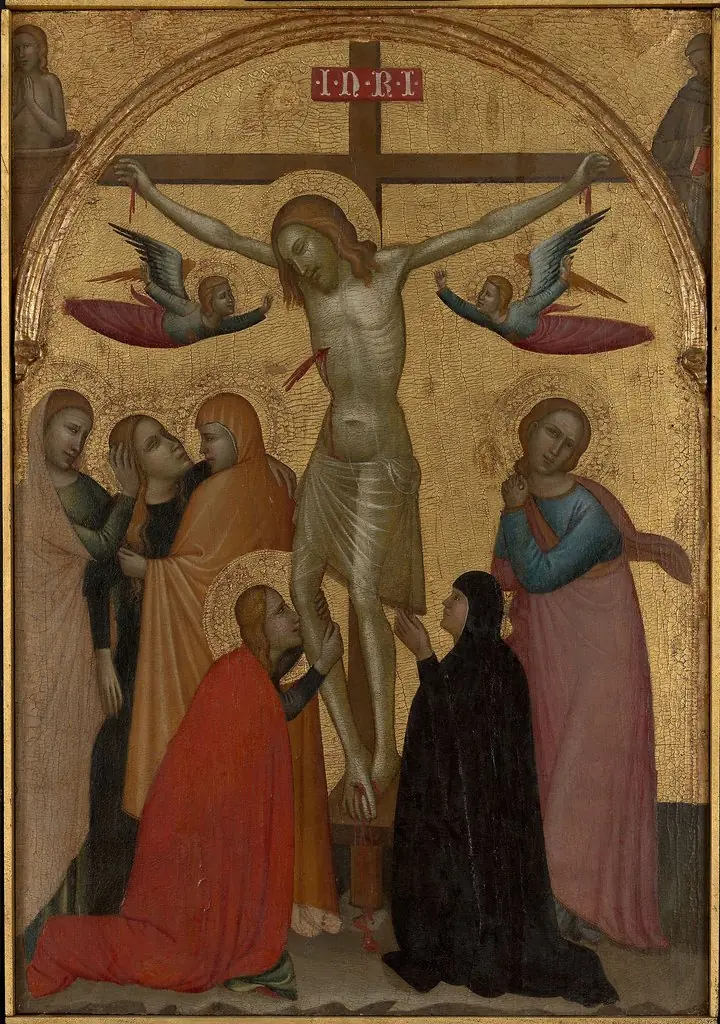
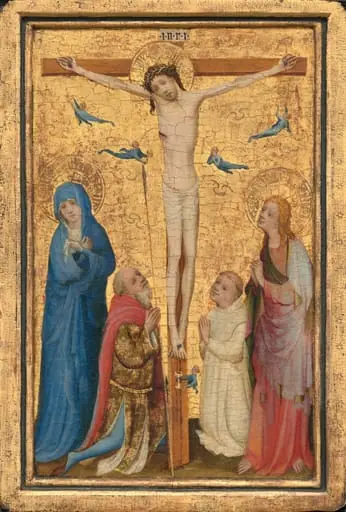
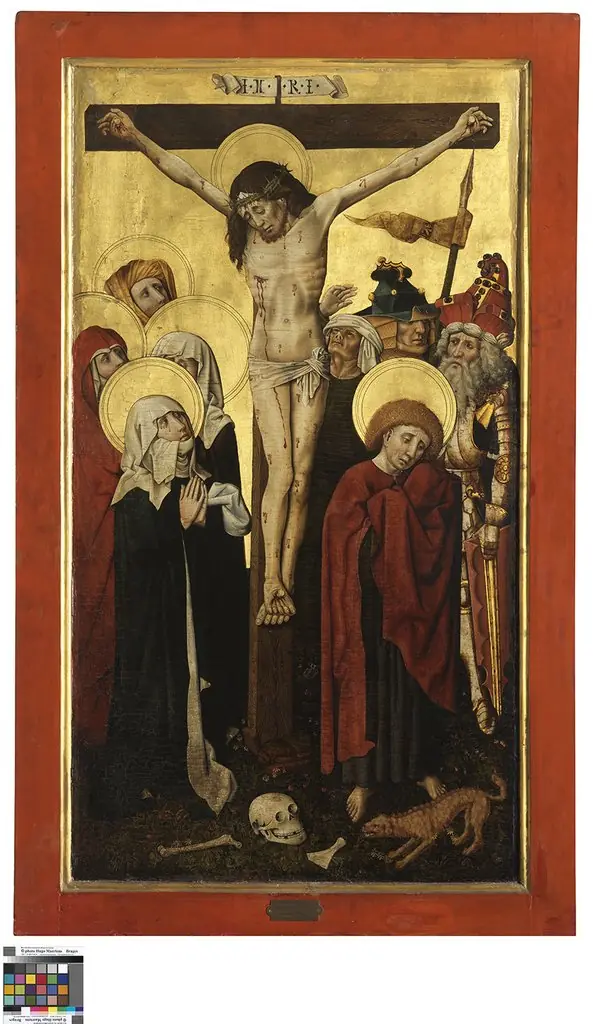
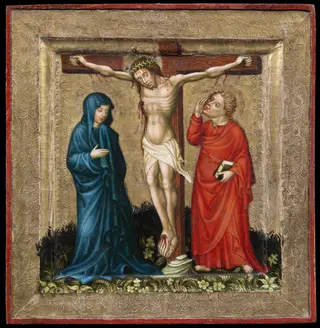
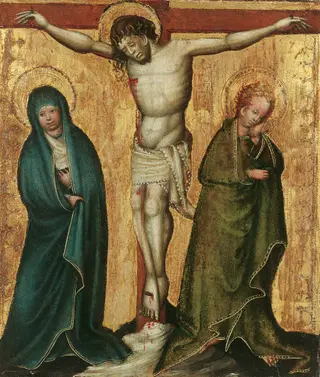
A pale figure hangs on the cross beneath a crown of thorns, three mourners below in blue, red, and pink, and two winged angels overhead. The woman in pink reaches toward him as the others watch. A patterned gold background throws every figure into sharp relief. Stefano da Verona, around 1400.
Subject & Meaning
Stefano da Verona shows Christ on the cross with the Virgin Mary and Mary Magdalene positioned at its base, while Saint John the Evangelist stands nearby.
The painting depicts the crucifixion of Jesus Christ, the central event of Christian faith. Stefano da Verona shows Christ on the cross with the Virgin Mary and Mary Magdalene positioned at its base, while Saint John the Evangelist stands nearby. An angel appears above the cross, emphasizing the heavenly dimension of the scene.
By bringing together these biblical figures, the work conveys both the historical moment of Christ’s death and its theological significance as the sacrificial act that redeems humanity.
History & Provenance
The Crucifixion is attributed to Stefano da Verona and dated to 1400. The painting was created in the early fifteenth century during the artist’s active period. It entered the collection of the Metropolitan Museum of Art, where it remains located.
The work depicts the crucifixion of Jesus Christ alongside figures including the Virgin Mary, John the Evangelist, Mary Magdalene, and angels. Its religious subject and iconography align with Stefano da Verona’s known oeuvre from this period.
Overview
This painting portrays the pivotal moment of the Crucifixion, centering on the figure of Christ on the cross. Surrounding him are several human figures in various states of grief, along with two celestial beings observing from above. The composition is set against a shimmering gold background, which lends a timeless and sacred quality to the dramatic event, drawing the viewer's attention directly to the central narrative.
Technique & Style
The artwork utilizes a striking gold background, subtly embellished with decorative patterns, which serves to isolate and illuminate the figures. This brilliant backdrop creates a sharp visual contrast, causing the pale form of Christ and the richly colored garments of the mourners to stand out distinctly. The deliberate use of gold emphasizes the spiritual significance of the subject, contributing to the painting's reverent and focused atmosphere.
Own this work as a print
Artist & collection

Artist
Stefano da Verona (or da Zevio; c. 1379 – c. 1438) was an Italian painter who was active in Verona. He was the son of the French painter Jean d'Arbois, who had come to Italy at the court for Gian Galeazzo Visconti after…