The Crucifixion by Cossa, Francesco del
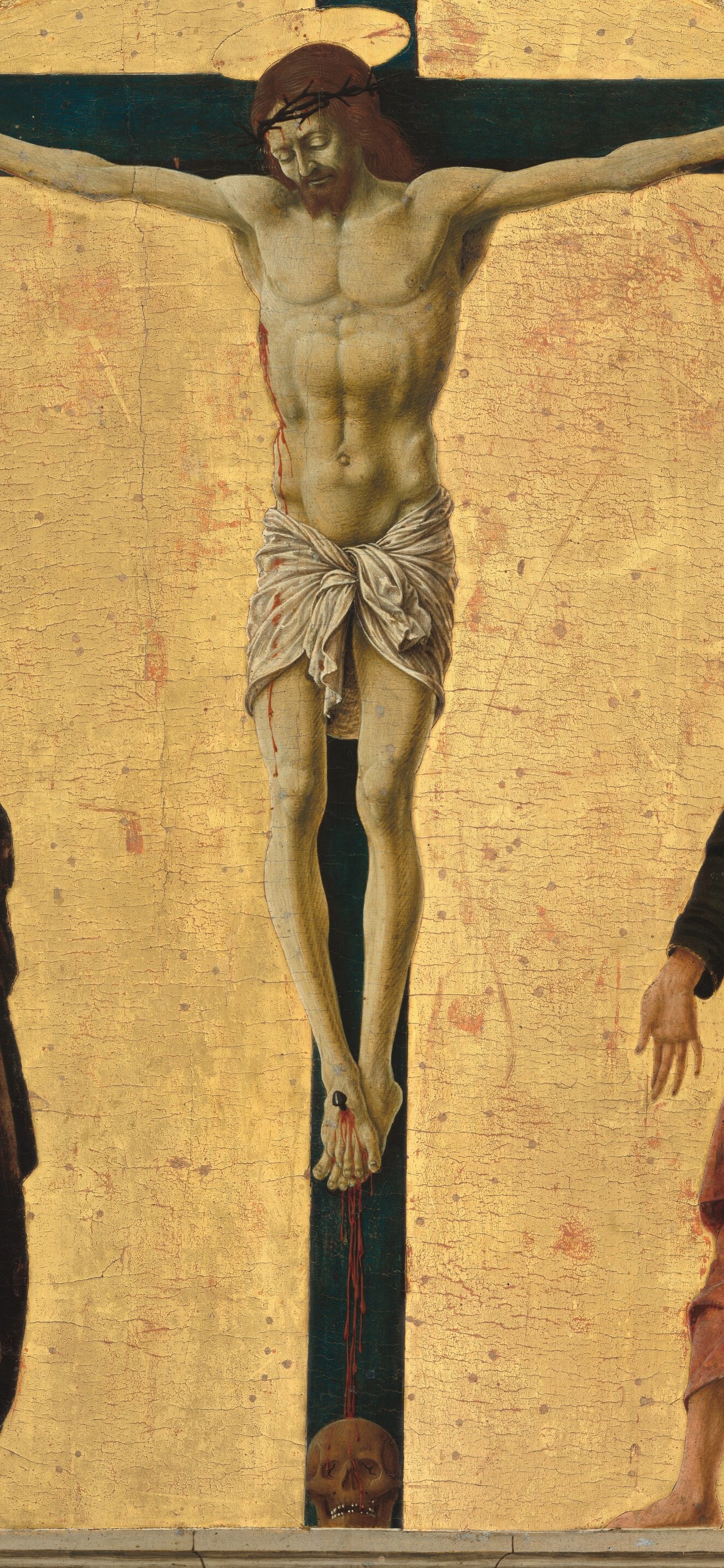
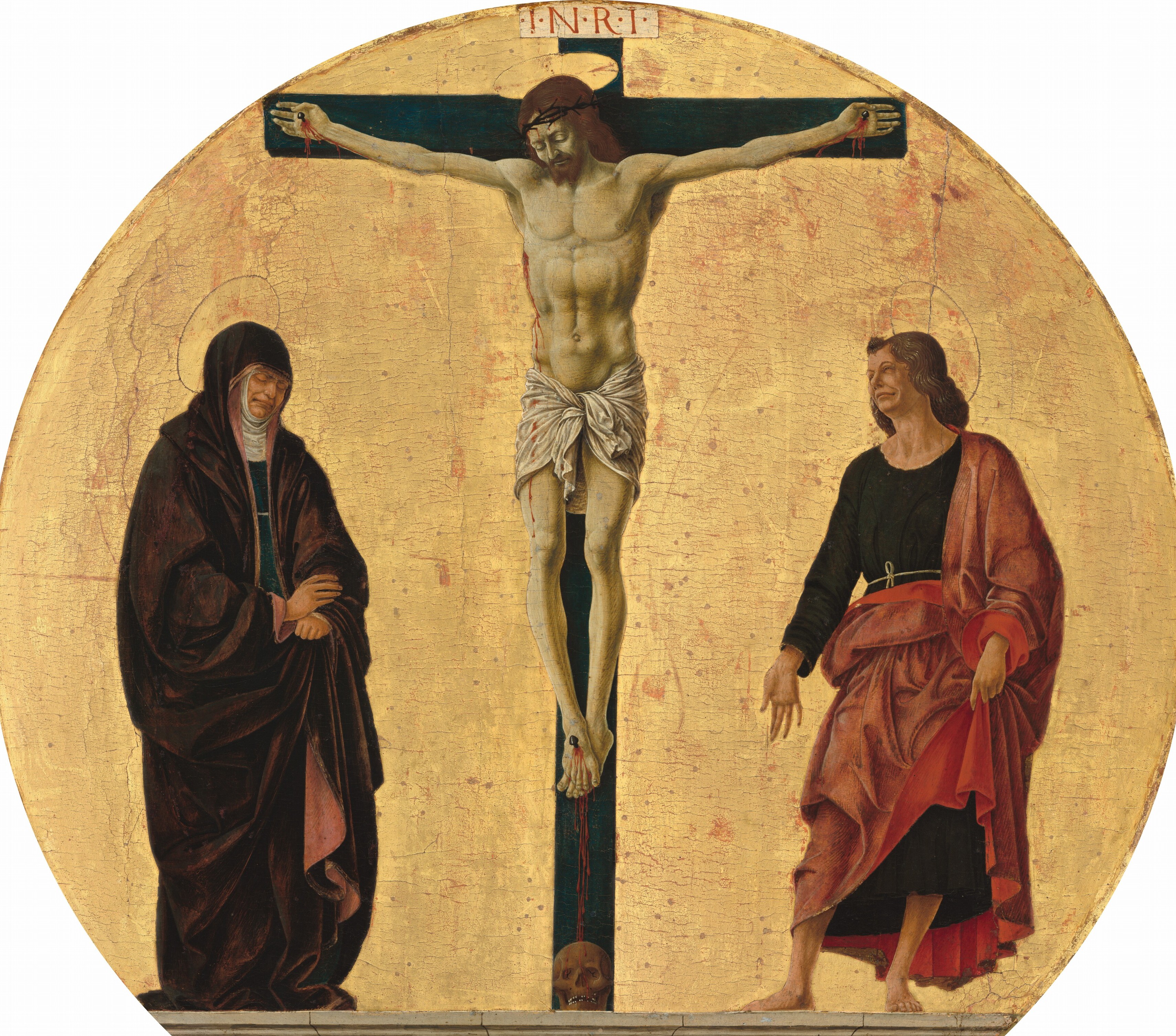
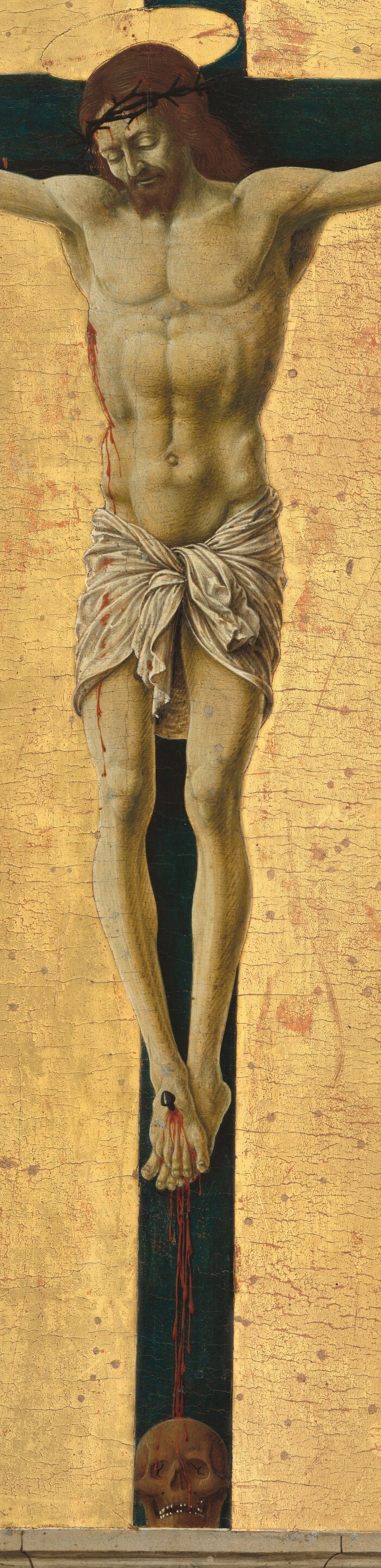
This is Francesco del Cossa's "The Crucifixion," painted around 1474 in tempera on a poplar panel and now held in the National Gallery of Art in Washington, D.C. The painting is a small devotional tondo, but it carries the weight of one of the Renaissance's pettiest artistic grudges.
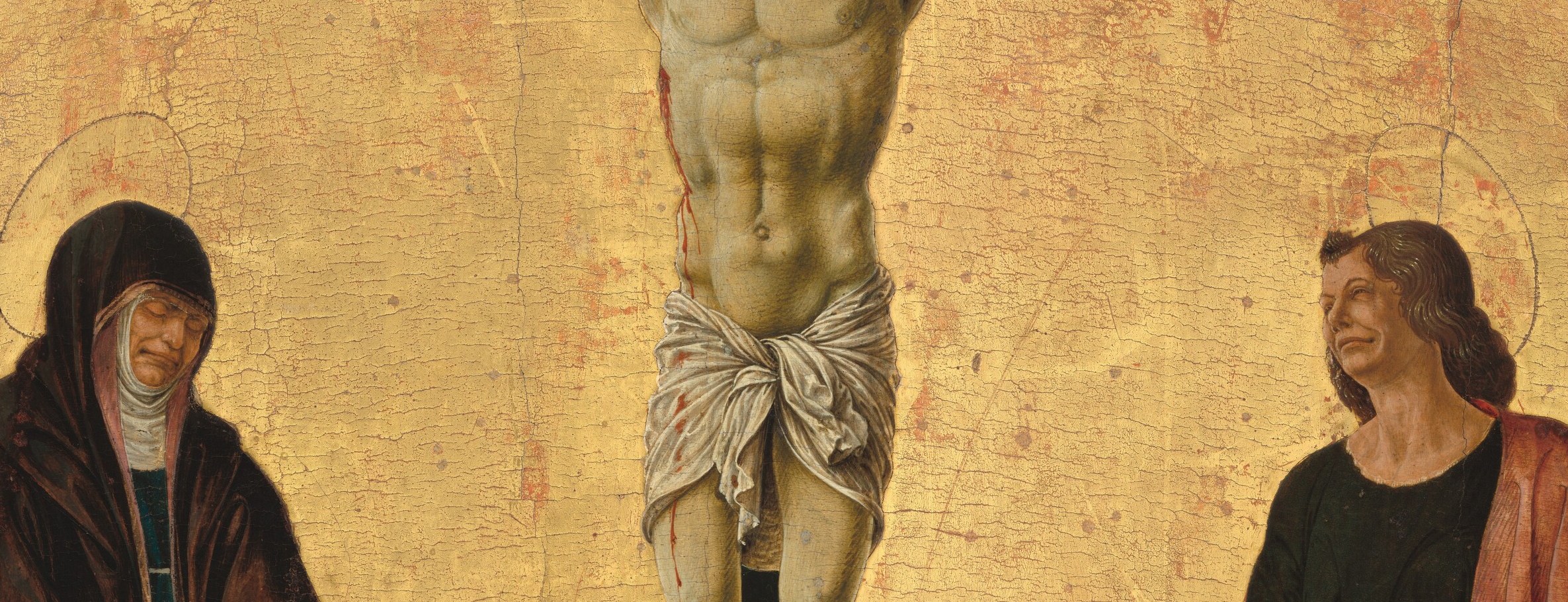
Look at the surface. The gold background is not just divine light; it is a deliberate archaism. By the 1470s, artists across Italy were abandoning flat gold for earthly landscapes and skies. Cossa, trained in Ferrara's sharp, detail-obsessed school, could paint atmosphere and perspective. He chose a medieval gold ground here, and the illusionistic stone ledge at the bottom only emphasizes the clash. You have a sacred, timeless space ruptured by a piece of the real world.
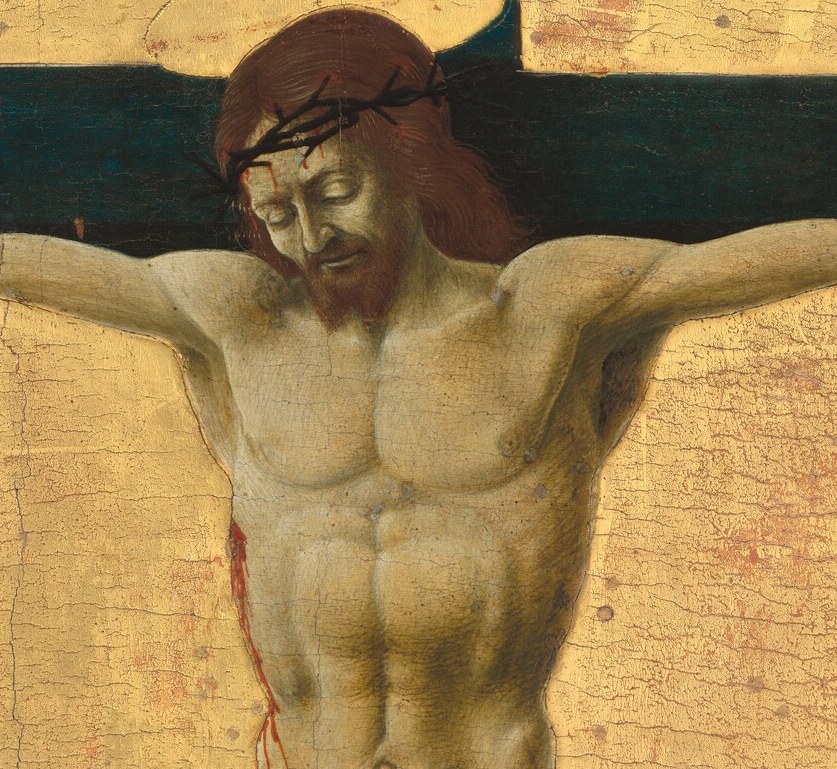
The cross is the hinge. It is painted as a physical object: dark, grained carpenter's wood grounded on that ledge. On it hangs a man whose ribs strain against his skin, his head heavy with thorns. The physical weight of tempera, built up in thin, precise layers of pigment and egg yolk, gives every nail wound and strained tendon a startling clarity. Cossa makes you feel the material world even as he surrounds it with heavenly fire.
The backstory: Cossa was a proud man. In 1469 he completed his ambitious frescoes for Borso d'Este's Schifanoia palace, the "Allegory of the Months." He was paid so little he wrote a furious, sarcastic letter to the Duke, complaining that he was being treated like the "saddest apprentice" in town and demanding a raise. The Duke ignored him. This tondo, painted shortly after, may be Cossa's personal protest: he will give you a sacred image, but he will make you look at brutal reality anyway.
Details
Transcript
You would not guess, standing before this Crucifixion, that its painter was furious. Francesco del Cossa was a leading artist in Renaissance Ferrara. He painted an entire cycle for the duke's pleasure palace, the Schifanoia. But when the duke paid him, Cossa was insulted by the pittance he received. He wrote an angry letter to the duke, demanding fair pay for his genius. Borso d'Este ignored him. So Cossa embedded his fury in paint. Behind Christ, this burnished gold was not ordinary sky. It was a medieval trick. But look at the cross itself. Real, heavy wood, bearing a real, heavy man.