Still Life with Oysters, a Silver Tazza, and Glassware by Willem Claesz Heda
Willem Claesz Heda painted light hitting matter as if seeing it for the first time. His 1635 still life, now at The Metropolitan Museum of Art, gathers five completely different materials on one table and paints each with its own distinct optical logic. The canvas becomes a technical demonstration: glass, polished silver, dull pewter, citrus skin, and oyster nacre all demand a different handling of highlight, shadow, and edge, and Heda delivers all five without a single visible brushstroke of effort.
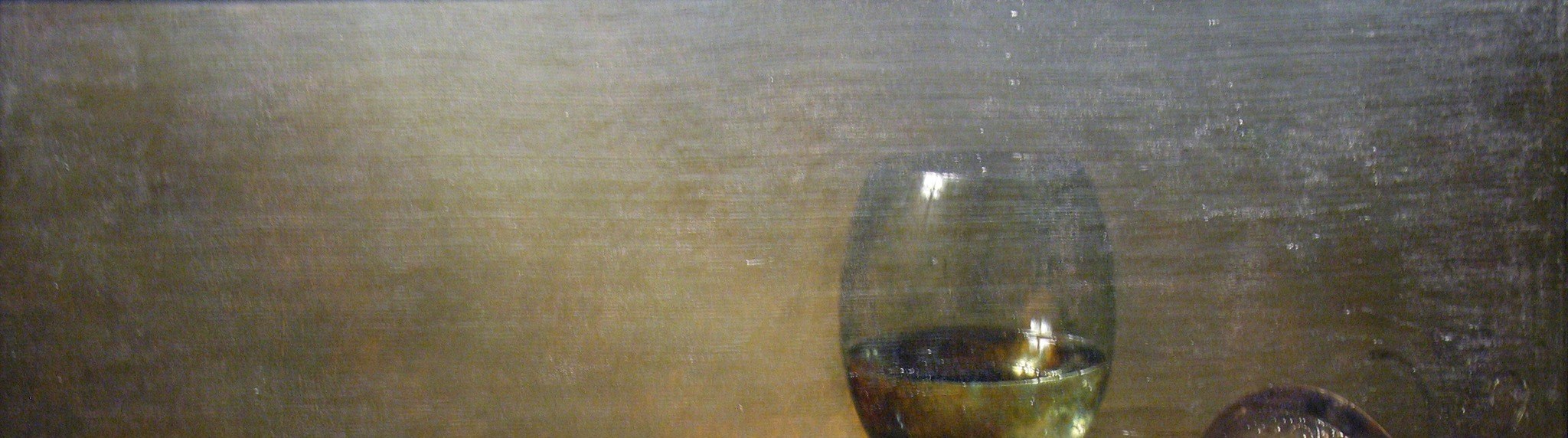
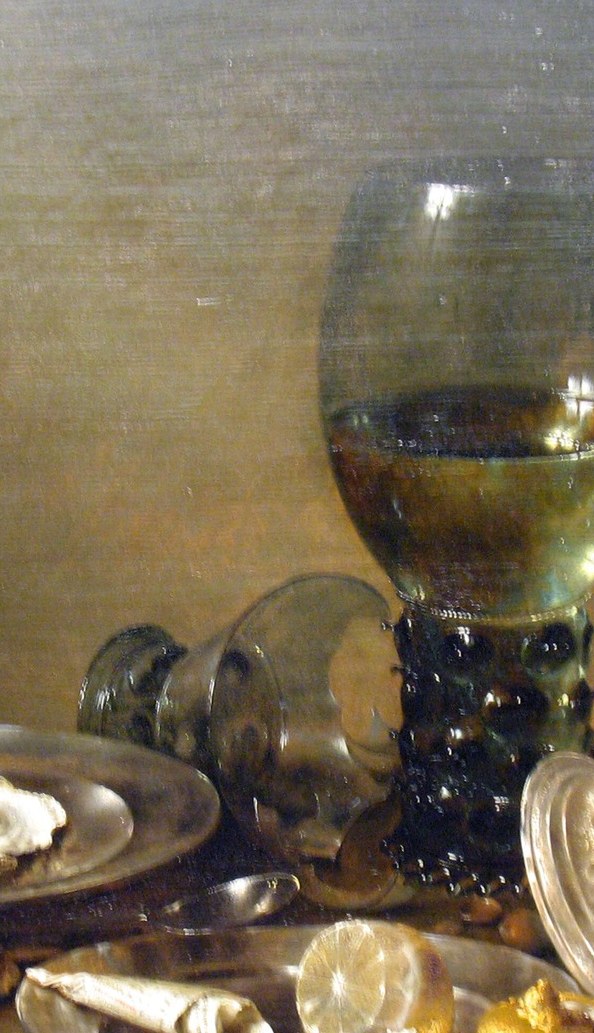
Look at the tall roemer glass standing upright in the center. It is essentially a vertical stack of transparency against a near-black void. The green-tinted bowl holds a shimmer of wine, and the raspberry-shaped prunts on the stem catch tiny individual highlights, each one a little lens bending light. The glass has no outline. It exists only where the dark background stops being dark.
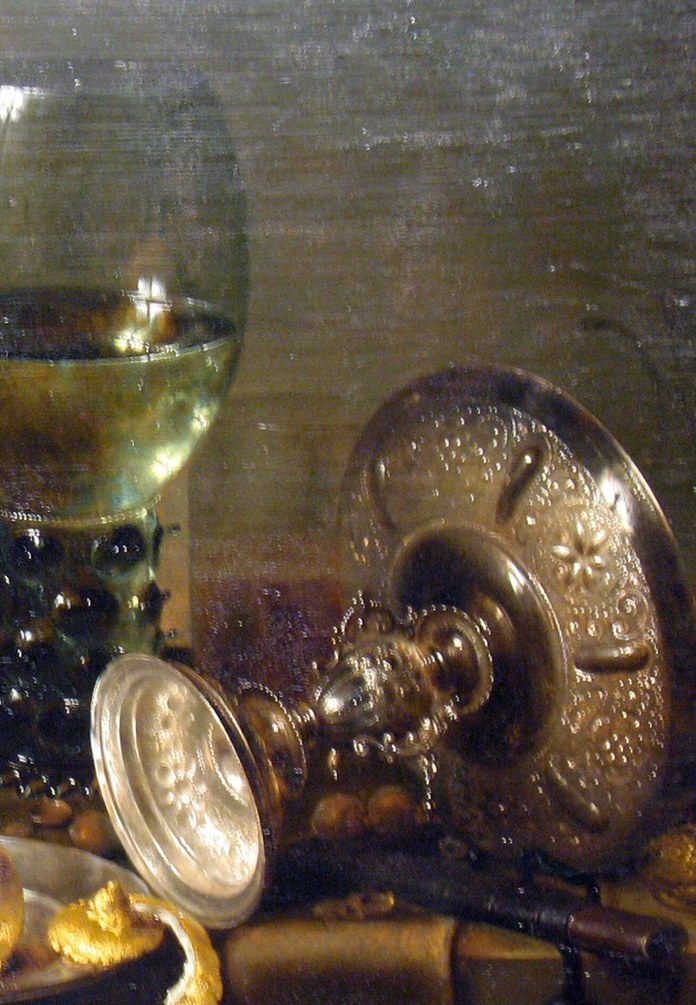
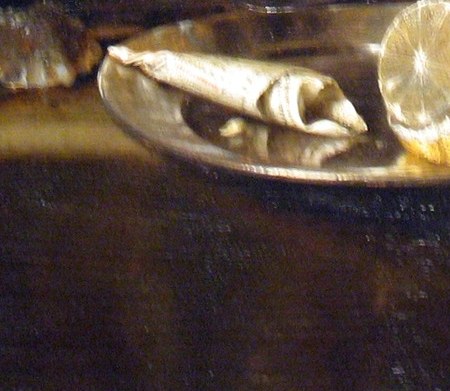
Move right to the silver tazza. This object is a curved mirror. It reflects the lemon, the glass, and the unseen window that lights the scene, all distorted across its hammered surface. Beside it sits a flat pewter plate lid, deliberately matte and non-reflective. Heda placed them together so that polished silver and dull pewter would have to be read side by side, an exercise in describing two different grades of metal with nothing but grey paint and a single light source.
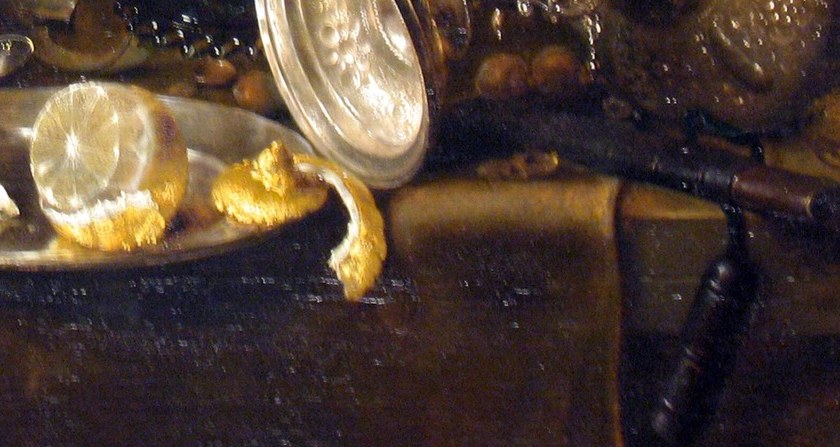
At left, a half-peeled lemon spills its rind in a dangling spiral. The outer yellow is waxy and opaque. The white pith underneath is dry and fibrous. The peeled flesh catches a wet gleam. Three textures from one fruit, and collectors in Heda's time recognized this passage as a signature of his control. The open oyster shell on the pewter plate is the quietest miracle here. Its nacreous interior does not read as one color. Pearlescent greys shift into faint pinks and greens, and the irregular surface means no two shells reflect the same way. Heda spent a career learning what happens when light lands on something slippery and ancient.
He never painted a portrait, a landscape, or a biblical scene. His whole working life was spent in Haarlem, looking at tables. What he found there was enough.
Details
Transcript
This painting is a single, spectacular argument. A dark void contains the entire composition. Out of that darkness, glass becomes almost painfully luminous. Look at the carved silver. It holds a distorted mirror of the whole room. Beside it: matte pewter. Heda forces you to see two grades of metal at once. And then, the peel. Just paint, but distinct from everything around it, waxy, fibrous, unspooling. An oyster shell hides an iridescent secret: grey holding every color. Heda never painted a figure. His subject was light hitting matter, and nothing else.