Portrait of a Monk in Prayer by http://www.wikidata.org/.well-known/genid/21ecadc83fec2c3693461106c56627d5
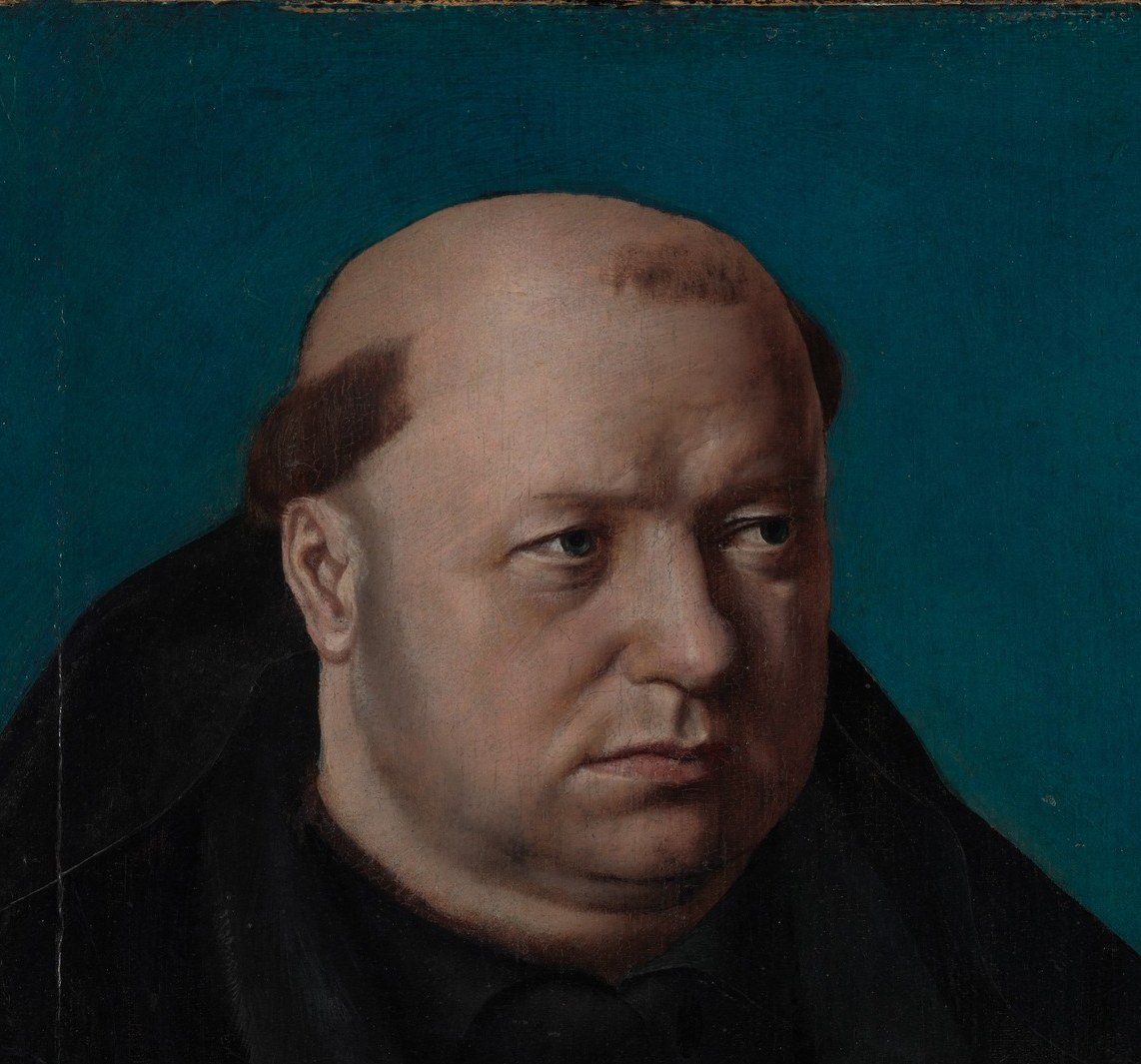
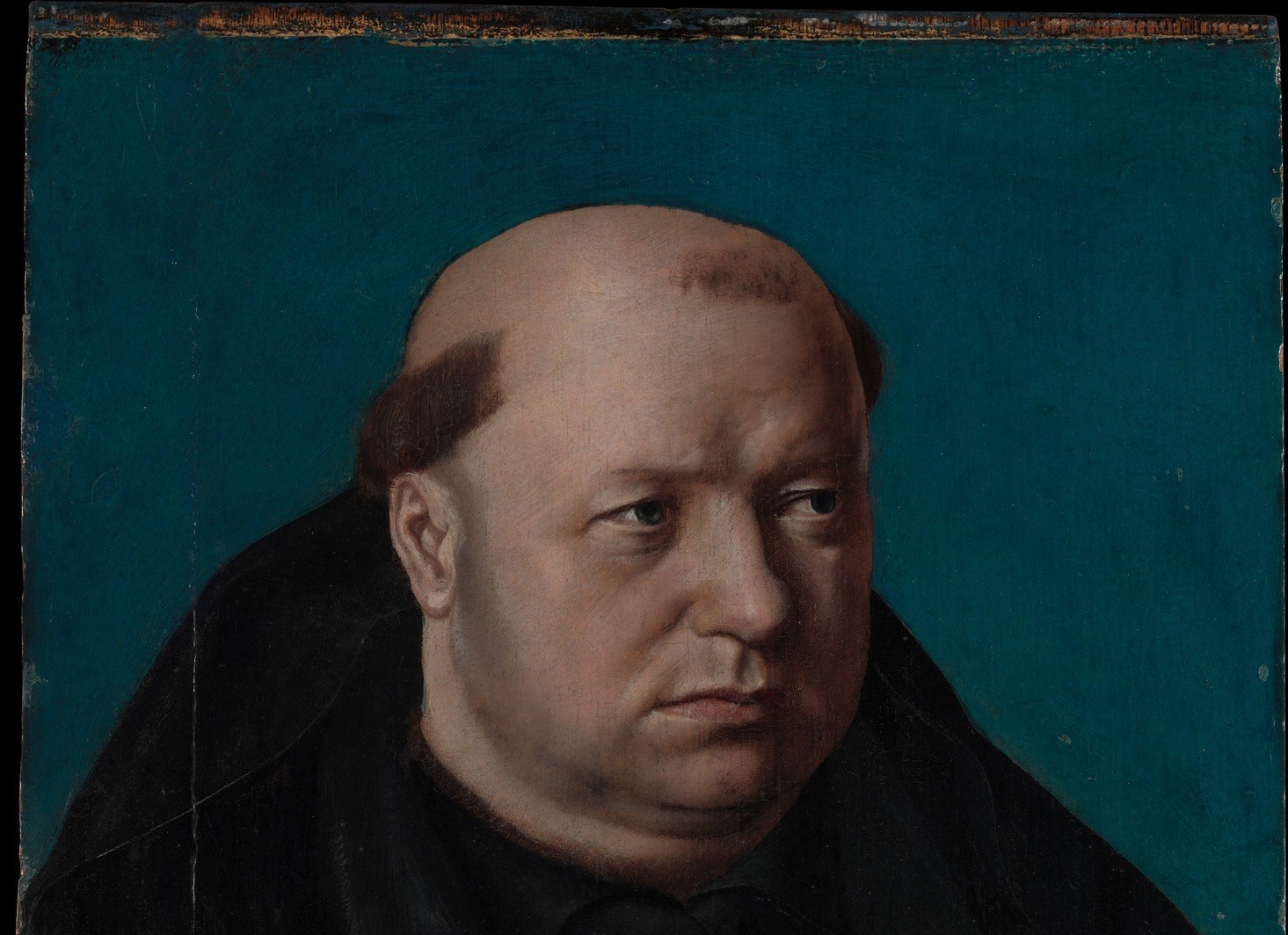
This is the "Portrait of a Monk in Prayer", painted around 1500 by an artist of the Flemish School whose name is now lost. It hangs today at the Louvre, a small panel that does something physically impossible: it makes you feel the weight of a soul by painting only a face, two hands, and a void of black wool.
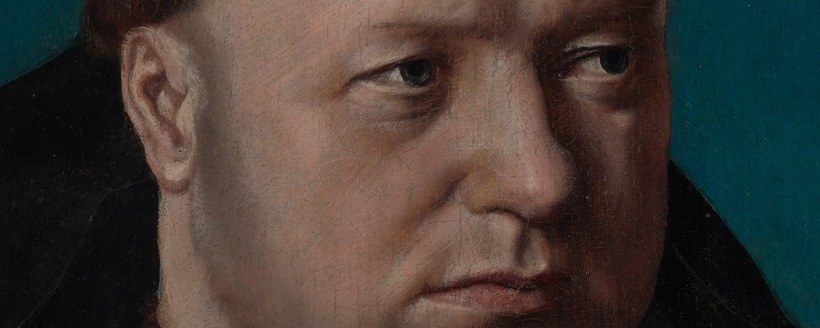
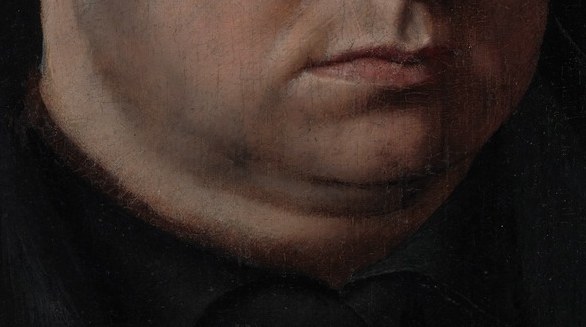
Look first at the shadows beneath his eyes. They are deeper than any real orbital shadow would be, deliberately darkened to suggest fasting, nocturnal prayer, and a life of physical self-denial. Then look at the set of his mouth, neither grim nor serene, it's the posture of silence itself, depicted as a discipline. The monk does not meet your gaze. His eyes are cast down and inward, a choice that transforms what could have been a public portrait into a deeply private moment.
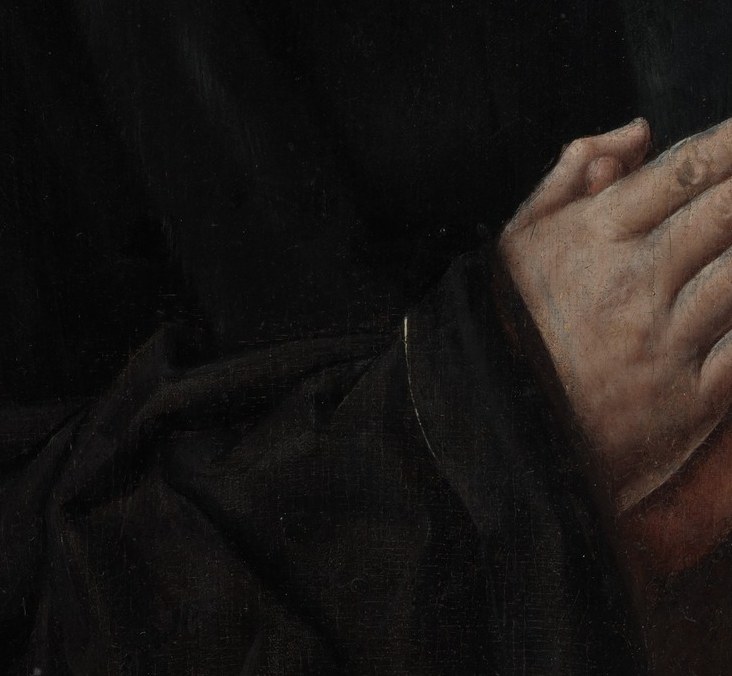
And then there are the hands. The artist gave almost surgical attention to the veins, knuckles, and tendons. They are among the most anatomically candid hands in late-fifteenth-century portraiture, continuing a tradition of optical skin description that runs from van Eyck through to the early Northern Renaissance.
Everything else, the habit, the background, is deliberately featureless. The black wool swallows the body. A teal-green ground plane sits behind the head only to separate the dark robe from total shadow. The painter understood that what you withhold gives meaning to what you reveal. Every technical decision here serves a single end: to make the interior life of this anonymous brother visible in oil and wood.
Details
Transcript
Everything but two points of light is swallowed. His face. His hands. The rest is void. Under his eyes, shadows too deep for nature. The painter modeled ascetic privation directly into the flesh. Look how he painted silence. A mouth neither grim nor serene. Just silence as a posture. Now look at the hands. Every vein, tendon, and knuckle is individually described.