Colonel William Leete Stone by William Page
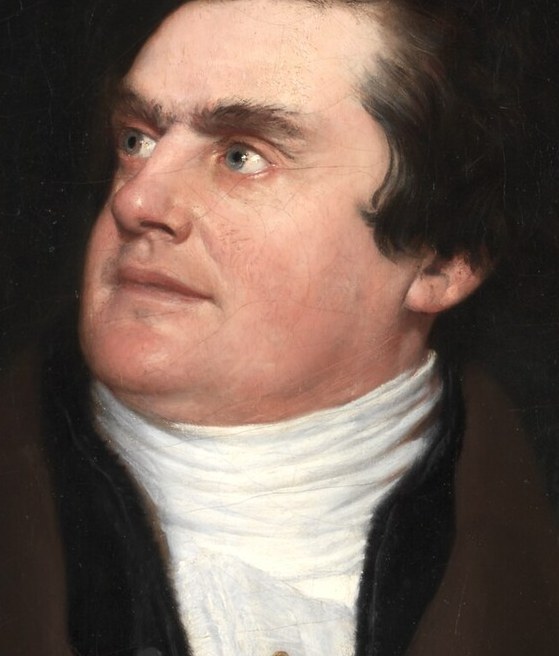
William Page’s 1839 portrait, *Colonel William Leete Stone*, at The Cleveland Museum of Art, reveals more than just a man in thought. It's a striking example of 19th-century American portraiture, capturing both the public figure and subtle hints of his private world.
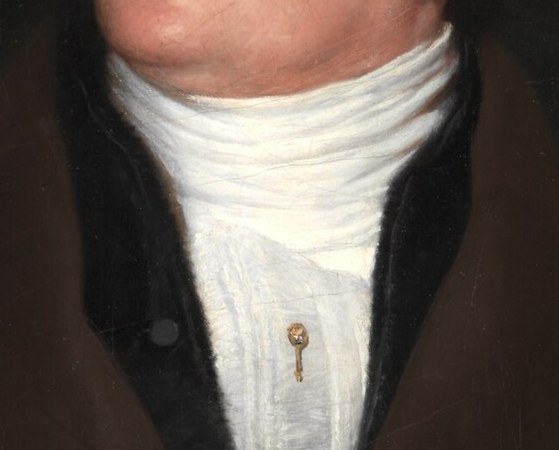
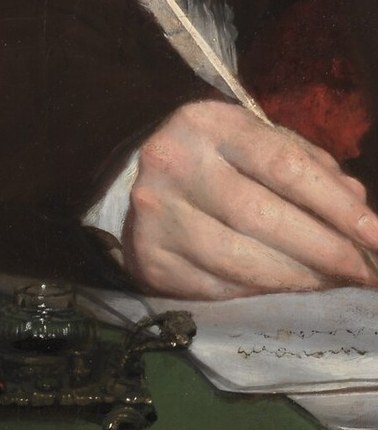
Look closely at the Colonel's composed expression and the delicate grip on his feather quill, suggesting deep concentration. But it's the small key, almost hidden on his cravat, that truly captivates. This symbolic detail transforms the portrait, suggesting themes of authority, knowledge, or hidden narratives beyond the act of writing itself.
Page employed a restrained chiaroscuro, illuminating the Colonel's face and hands against a dark background, a technique that draws the viewer's eye to these significant details. The painting reflects the era's interest in conveying character through subtle symbolic elements rather than overt storytelling.
What do you imagine that small key unlocks for Colonel Stone?
Details
Transcript
This is Colonel William Leete Stone, painted in 1839. He’s captured in a moment of intense thought, about to write. His right hand, poised with a quill, suggests precision and purpose. But look closely at his cravat, by his neck. A small key hangs there, hinting at secrets or authority. It’s a quiet detail, but it speaks volumes about the man.