Christ Asleep during the Tempest by Eugène Delacroix
Van Gogh saw this small Delacroix sketch at a Paris exhibition in 1886 and could not stop thinking about one choice: a dot of lemon yellow for Christ's halo. It is the only warm thing in a painting built almost entirely from cool blues, greens, purples, and reds.
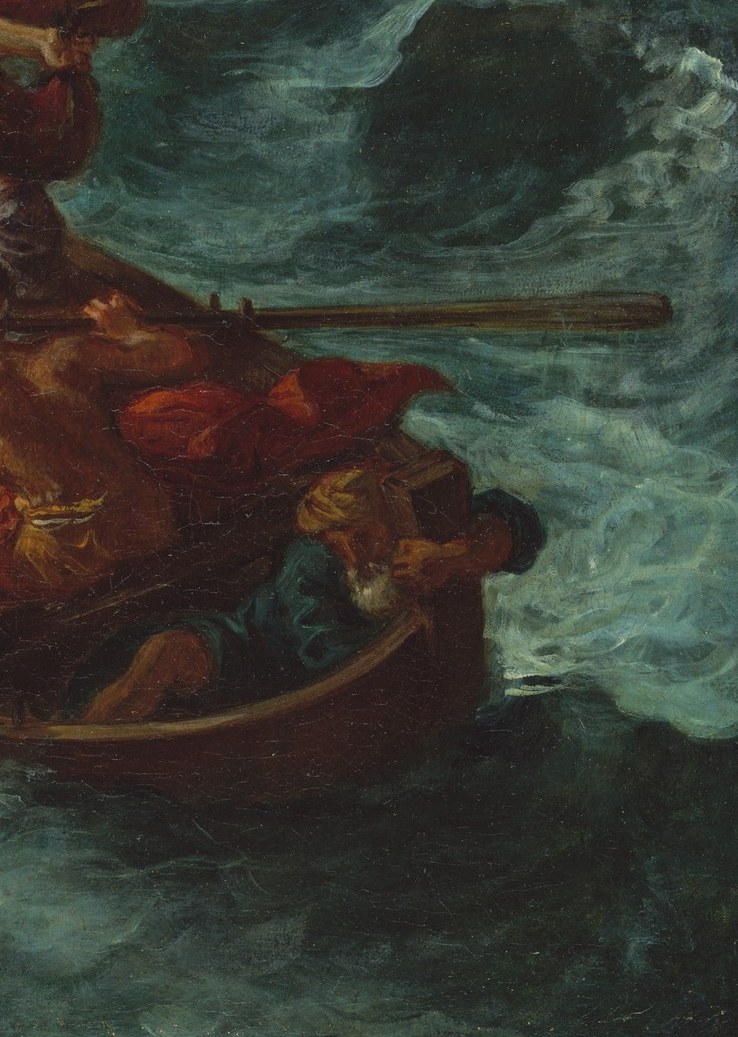
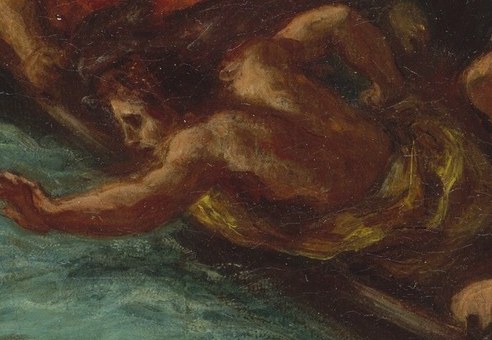
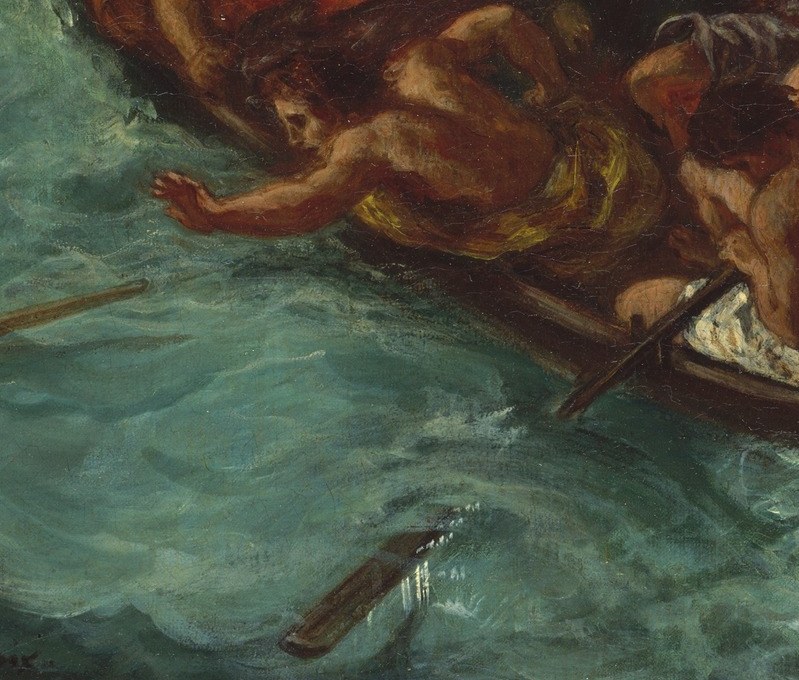
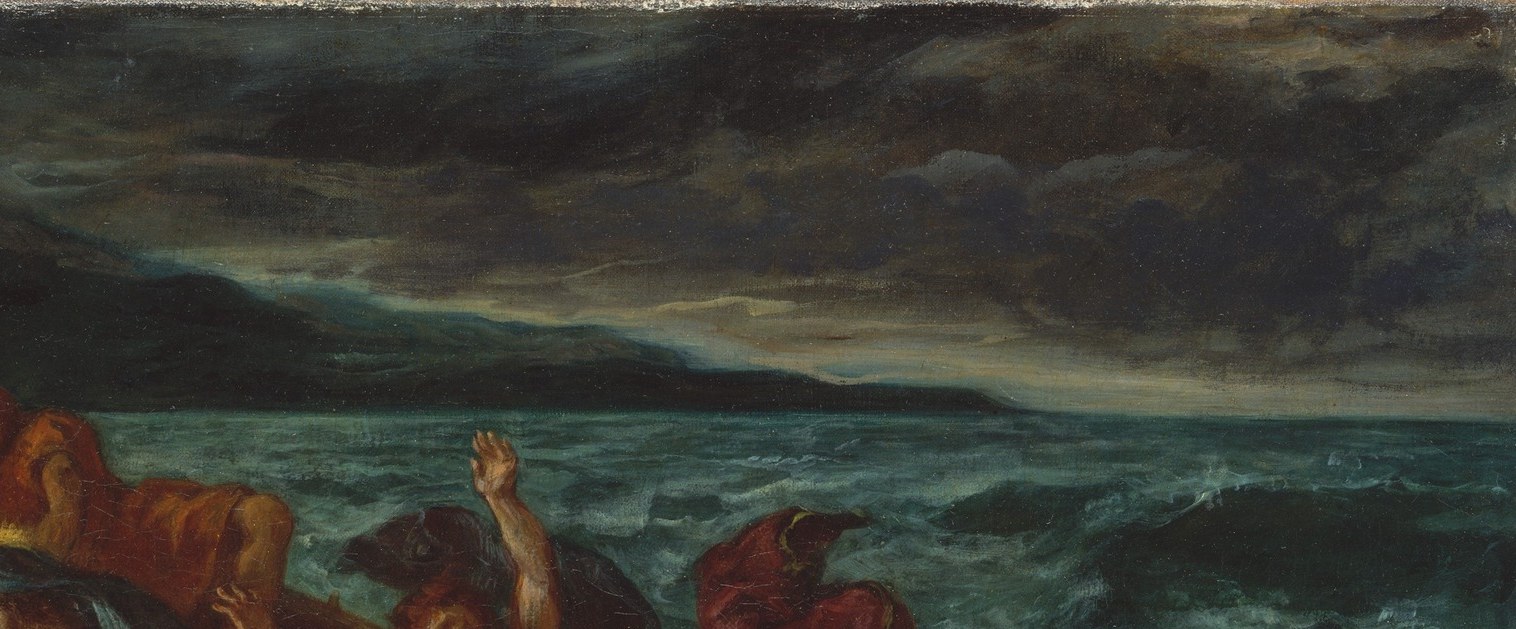
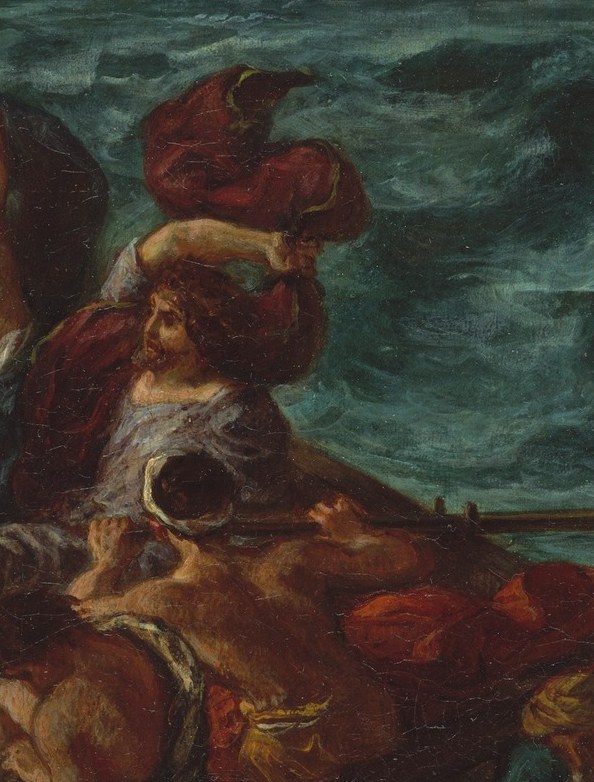
Eugène Delacroix painted at least six versions of Christ asleep on the Sea of Galilee. This one, from around 1853, is one of the smallest and most concentrated. The disciples panic, the waves churn, the sky bruises, and Christ sleeps through all of it, a stillness that feels stranger and more unsettling than any amount of action would.
Van Gogh wrote that Delacroix's color here "speaks a symbolic language through color itself." He was right. Let your eye rest on that halo and feel how the whole composition reorganizes around it. Without that single warm note, the painting would be all chaos and cold water. With it, the storm has an eye.
It hangs now in the Metropolitan Museum of Art. It takes about ten seconds to walk past. Give it sixty.
Details
Transcript
The boat looks like it could capsize any second. Delacroix built the whole scene out of blue, green, purple, and red. Now find the one warm thing in this painting. Christ sleeps through a storm that terrifies everyone else. In 1886, Van Gogh saw this sketch in Paris and wrote about it. He said the lemon-yellow halo speaks a symbolic language through color itself. A single warm dot, and the whole cold painting pivots around it.