The Musicians by Caravaggio
View the artwork: The Musicians →
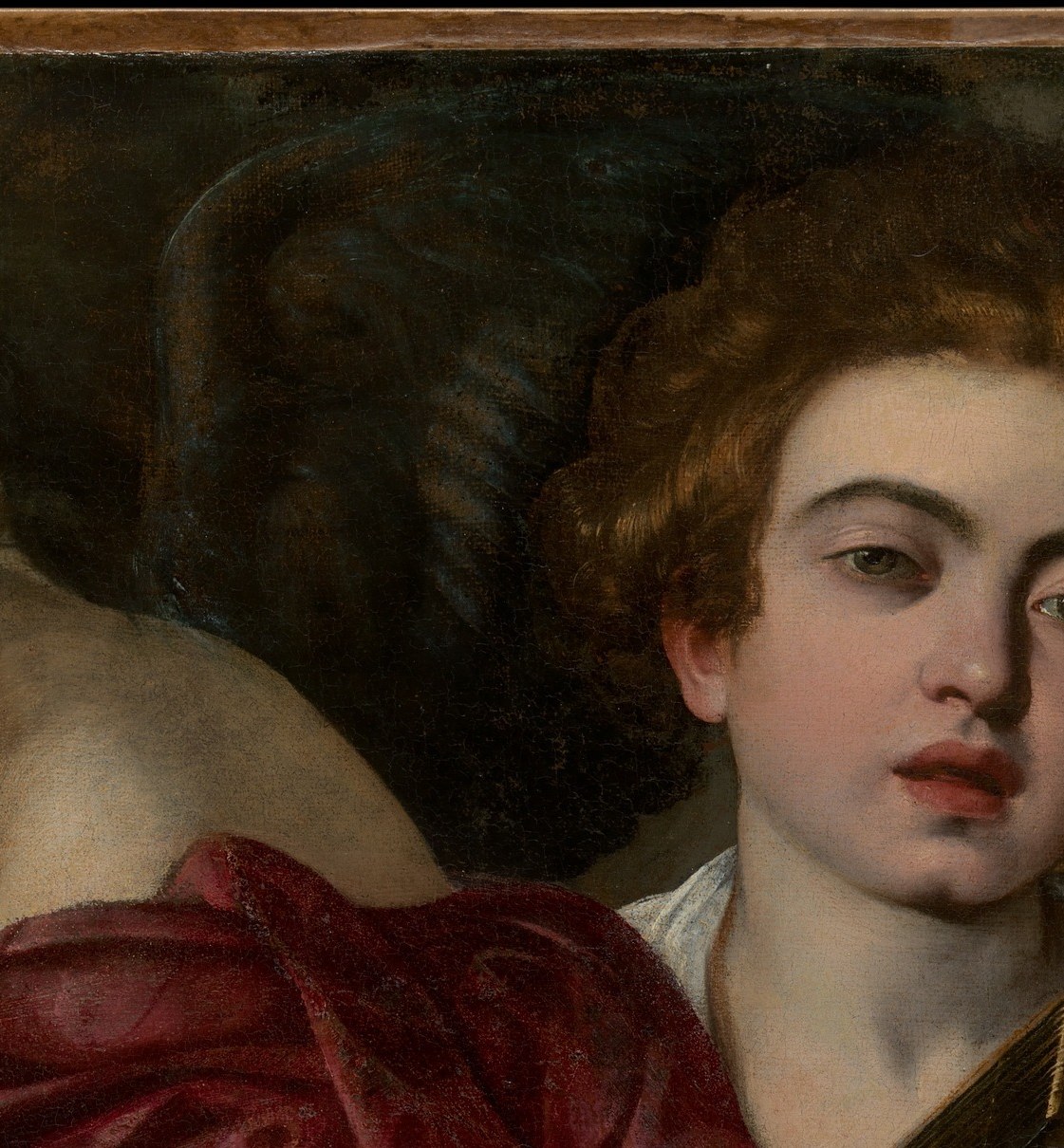
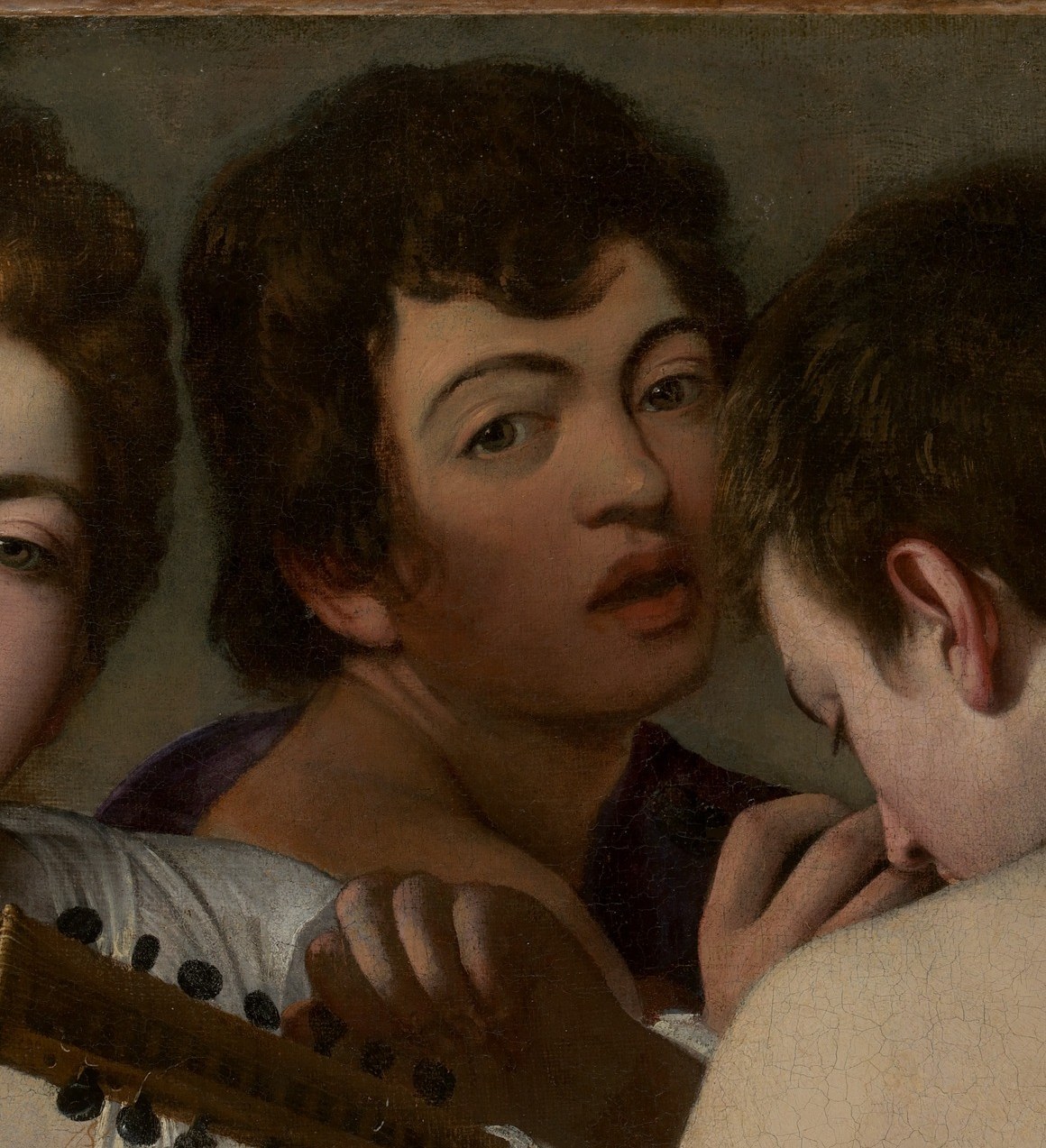
The young man with the lute is likely Caravaggio himself, painted around 1595 in one of his first Roman commissions. The work is called The Musicians, and it hangs in the Metropolitan Museum of Art in New York. It is an early canvas, made before the dramatic darkness and violence that would define his career, but the psychological directness is already there.
Look at the lutenist's face. His eyes are moist, his lips parted, his gaze unfocused. He is not looking at the viewer with a performer's confidence. He seems to be inside the music, or perhaps exhausted by it. This is not an idealized portrait. It is a record of a real person in a real moment, an effect Caravaggio achieved by painting from live models in the studio rather than from drawings.
The painting was commissioned by Cardinal Francesco Maria del Monte, who spotted Caravaggio's work in a Roman shop and quickly became his first major patron. Del Monte was a music obsessive, and he gave the young painter a place to live, a salary, and entry into a world of aristocratic collectors. Caravaggio would go on to infamy and exile, but this picture captures the fragile moment when his whole life turned on someone finally looking closely at his work.
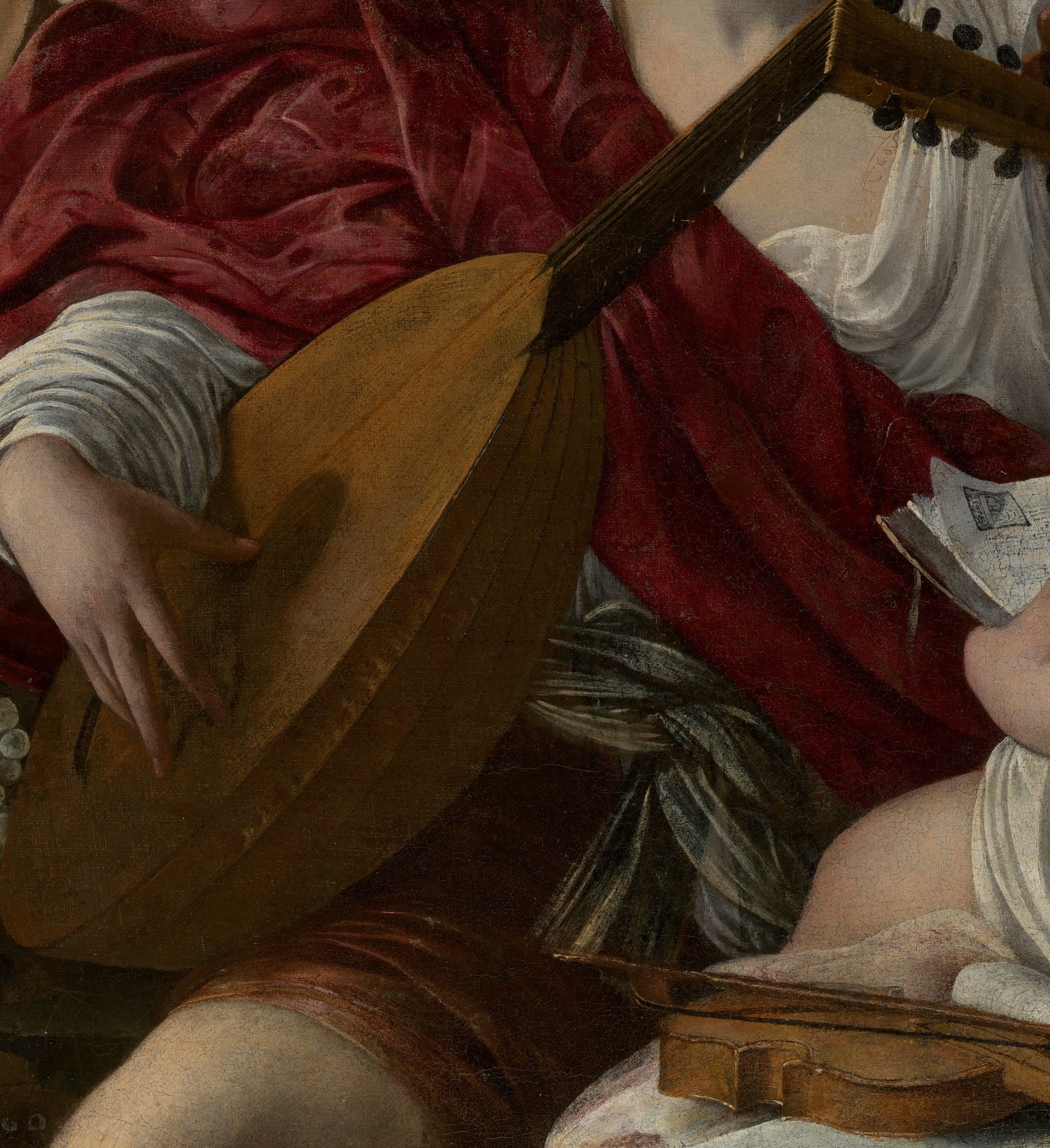
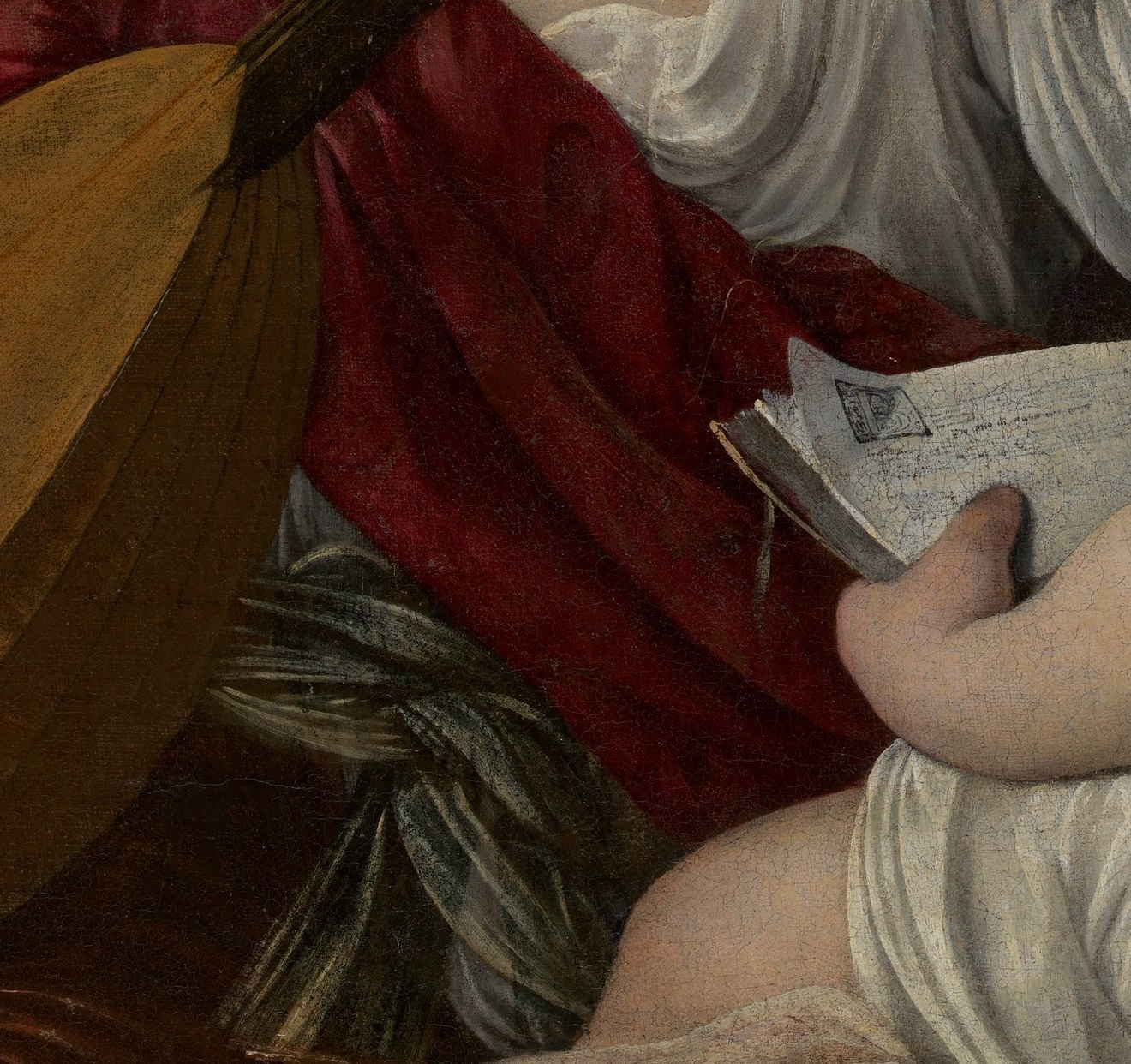
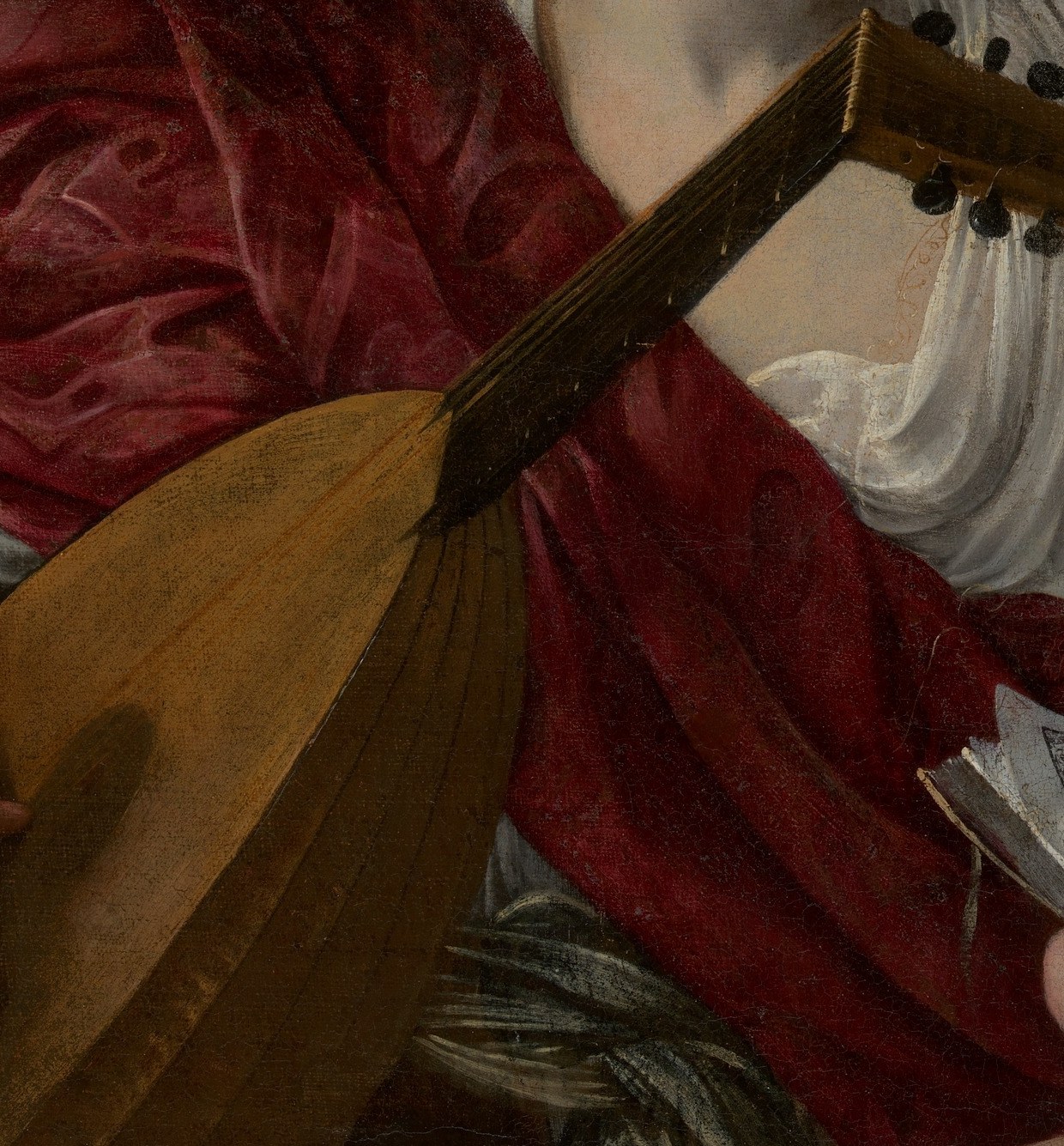
The instruments and sheet music are rendered with an accuracy that still allows musicologists to read the notation. The notes are from real late-16th-century madrigals. The painting is an archive of sound, hidden in plain sight.
#arthistory #caravaggio #baroque
Details
Transcript
Rome, 1595. A young painter from Milan has just arrived. He is unknown, broke, and painting for the open market. Look at the lutenist's eyes. Glistening, unfocused, lips parted mid-song. That face is probably Caravaggio himself. A Cardinal saw this painting and bought it immediately. Cardinal del Monte gave him rooms, a stipend, and protection. A life saved by a lute, a song, and a single truthful face.