Still Life with Fruit by John F. Francis
John F. Francis's "Still Life with Fruit," painted around 1857, is a prime example of American trompe-l'œil. This technique, French for "deceive the eye," aims to create an illusion of three-dimensional reality on a flat canvas, a skill Francis mastered.
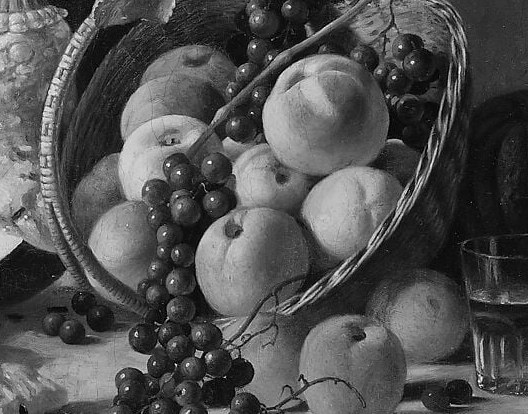
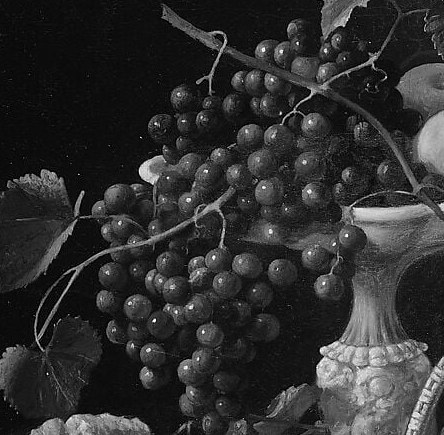
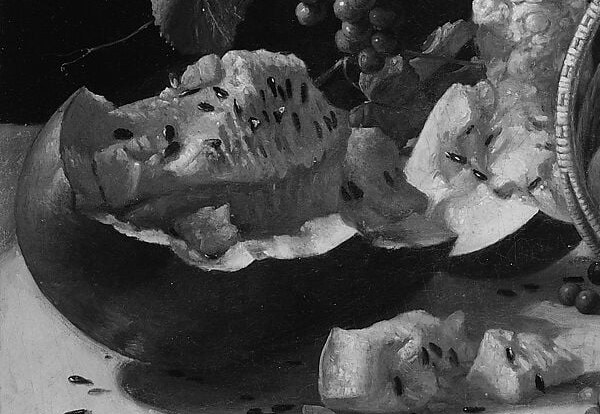
Look closely at the basket of peaches, the glistening watermelon slices, and the bunches of grapes. The artist meticulously captured varied textures and the play of light, making each piece of fruit seem tangible and almost ready to be picked from the table.
Francis, a self-taught painter from Philadelphia, was a prominent figure in the mid-19th century still life genre. He elevated common, domestic subjects into works of art that conveyed a sense of abundance and quiet richness. This painting is now held in The Metropolitan Museum of Art.
What details do you find most convincing in this illusion?
Details
Transcript
This painter was a master of illusion. He made everyday fruit look incredibly real. Notice the fuzzy texture on these peaches. The light seems to make the fruit glow. He focused on simple objects to create opulence. A perfect example of American trompe-l'œil painting.