清 石濤(朱若極) 遊張公洞圖 卷|Outing to Zhang Gong's Grotto by Shitao (Zhu Ruoji)
This is 'Outing to Zhang Gong's Grotto,' a handscroll by Shitao, painted around 1700. The artist was not born Shitao. He was Zhu Ruoji, a scion of the Ming imperial house. When the dynasty fell and his family was massacred in 1644, a retainer smuggled the four-year-old boy to safety in a Buddhist monastery, where he took the name Shitao and lived out his years as a monk and an artistic radical.
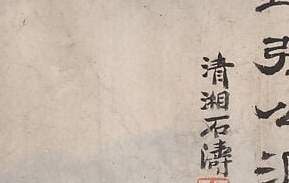
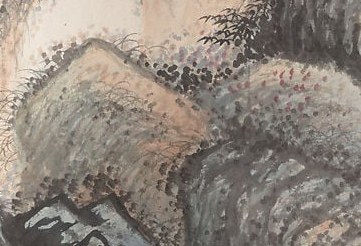
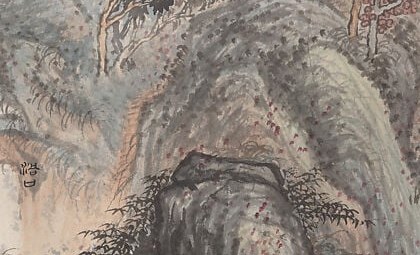
Follow the tiny figures ascending the rocky path in the lower register. Their scale against the cliffs makes the landscape feel sublime, and their destination, the dark cave mouth at center, is the literal Zhang Gong's Grotto. Shitao leaves the cave as pure untouched paper, a void surrounded by dense ink. The red seals below the inscription are his personal marks, studied by collectors to authenticate the work.
Because Shitao painted under an assumed monastic name and worked outside the orthodox schools, this handscroll was not widely canonized for centuries after his death. Its rediscovery recovered a key document of the Individualist movement: painters who fled the old order and encoded their displacement into landscape.
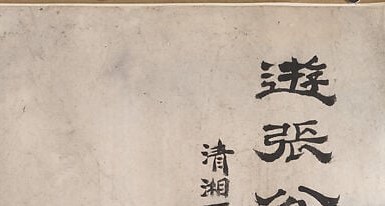
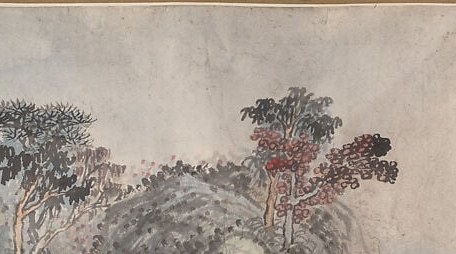
The handscroll shows ink and light color on paper. The calligraphy at the top names the destination and the artist, so the whole journey, physical and biographical, is written right onto the silk.
Details
Transcript
For two centuries, this handscroll was largely forgotten. The inscription writes the destination: Zhang Gong's Grotto. The painter wasn't born Shitao. He was Zhu Ruoji, a Ming prince orphaned at four. His family slaughtered. He took the name Shitao and became a Buddhist monk. He painted with a calligraphic violence his era found unorthodox. A void at the center: the grotto, rendered as untouched paper. A prince hidden in plain sight as a radical monk, painting a journey into the dark.