Saint Peter Martyr Healing the Leg of a Young Man by Antonio Vivarini
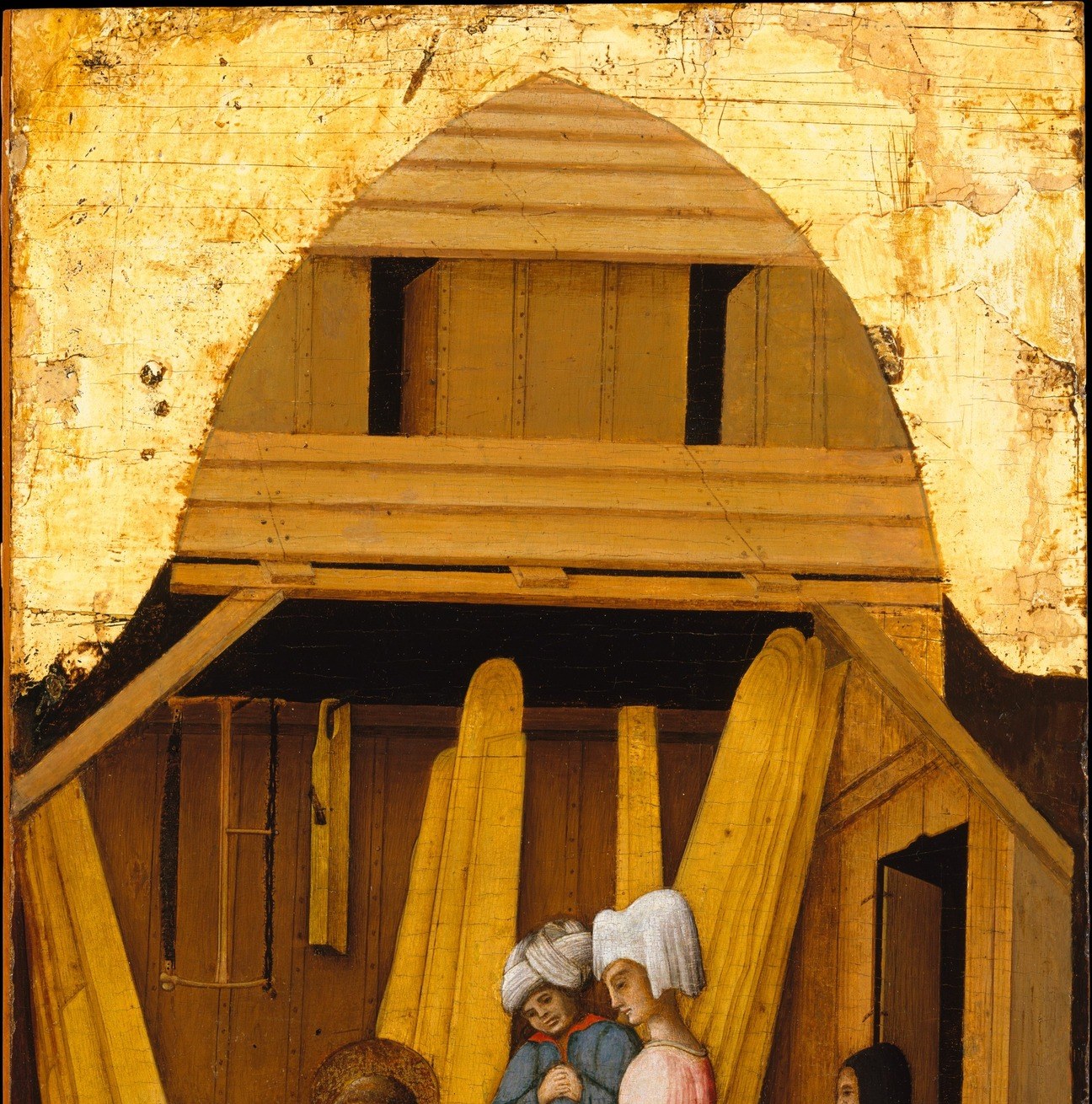
This is Saint Peter Martyr Healing the Leg of a Young Man, painted around 1450 by the Venetian artist Antonio Vivarini. It now lives in the Metropolitan Museum of Art. The subject is a miracle worked by a Dominican friar, but the real argument of the painting is spatial: Vivarini places sacred gold inside a rough-planked poorhouse and insists the two belong together.
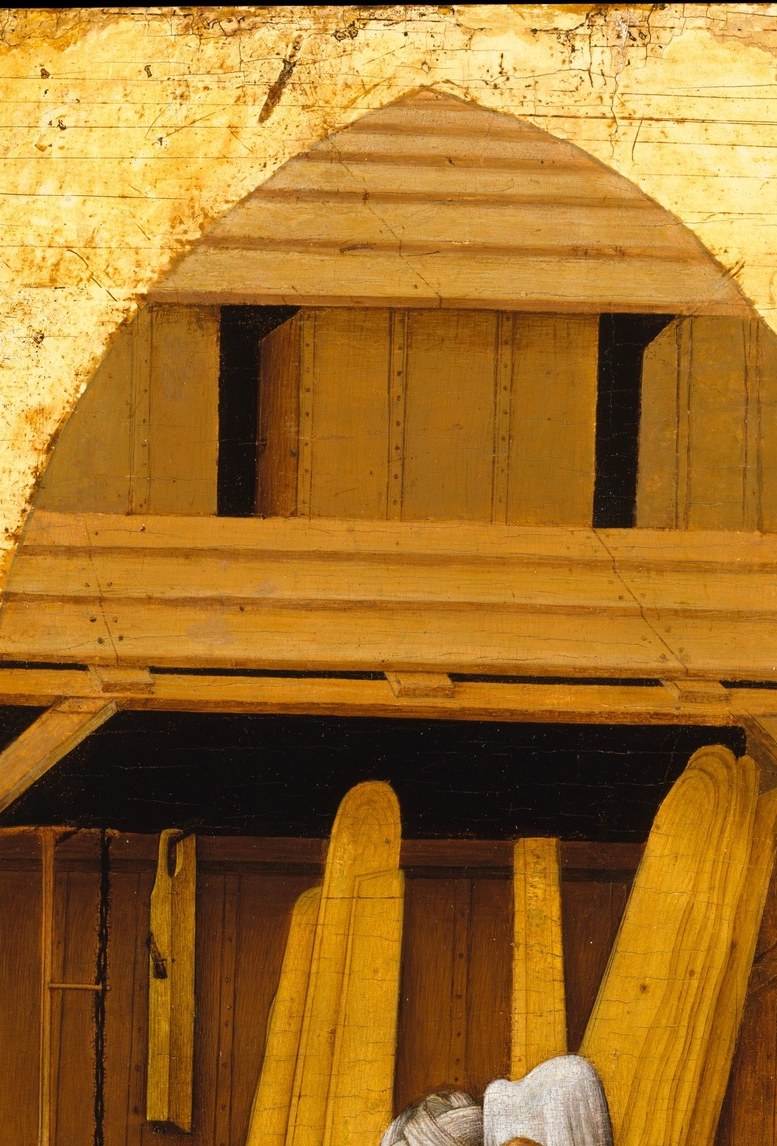
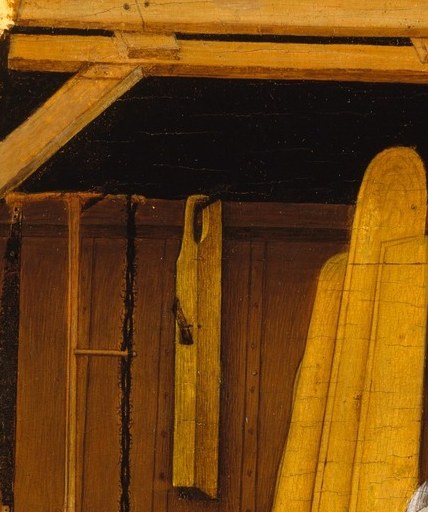
Look first at the architecture. The walls are vertical timber, the ceiling dark and unadorned. This is not a church. Then look at the gold: the saint's halo and the arch above him are the exact same material. Early Renaissance viewers would understand the equation immediately, the person of the saint sanctifies the room he occupies, not the other way around.
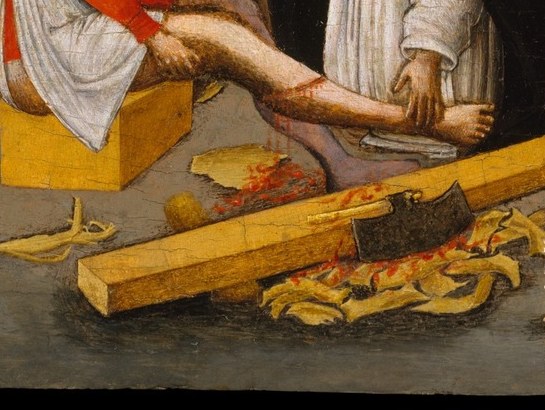
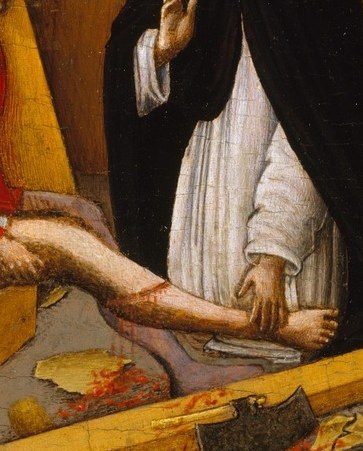
The young man's leg occupies the lowest register of the painting. Vivarini pushes the miracle down to the floorboards, locating divine power not in a high altar but in the place a body falls when it cannot stand. The witnesses circle above, but the healing happens at ground level.
Antonio Vivarini came from a family of Murano glassworkers and founded a painting dynasty that included his brother Bartolomeo and his son Alvise. His work sits at the hinge between late Gothic gold-ground convention and an emerging interest in the material world, here, he keeps the gold but surrounds it with ordinary carpentry, as though testing whether the two can hold.
What other details anchor this miracle in the everyday?
Details
Transcript
You'd miss it if you only looked at the gold. The setting is a poor wooden room, not a church. Vivarini insists: holiness enters ordinary life. The saint's halo and the golden arch are the same gold. His sainthood sanctifies this rough room. The healing happens at the very bottom. Divine power touches the lowest, most broken place.