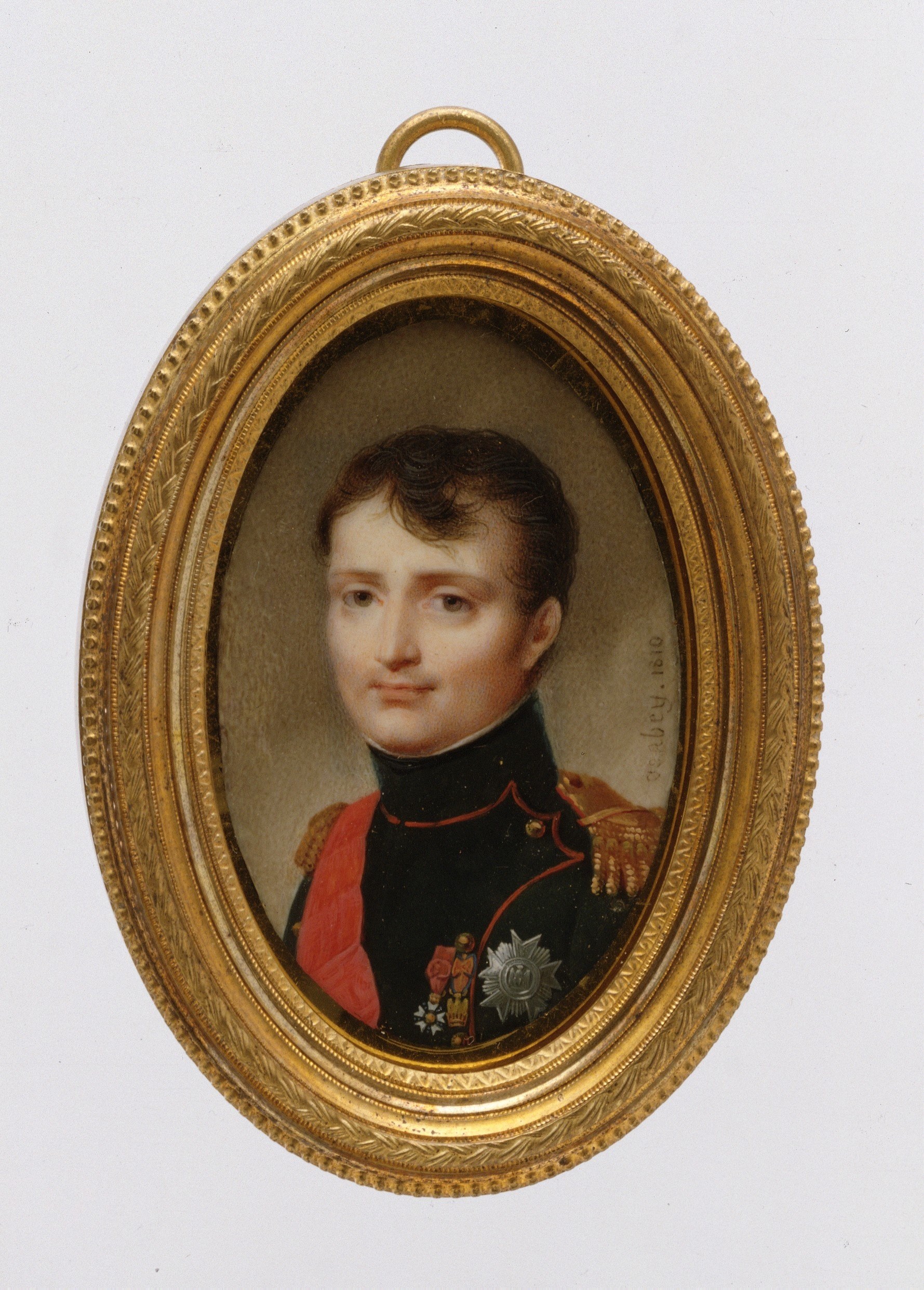
Napoléon I (1769–1821) by Jean-Baptiste Isabey (French, 1767–1855)
This is Jean-Baptiste Isabey's 1810 portrait of Napoleon, now in the collection of the Metropolitan Museum of Art. It's not a painting meant for a wall. It's a miniature, framed in a gold case with a suspension ring at the top, designed to be worn or presented as a personal gift. That small detail reframes everything about the image.
Look at the emperor's face first. The expression is level, direct, and completely composed. No warmth, no invitation. The close-cropped unpowdered hair was itself a political choice, rejecting the aristocratic wigs of the old regime and aligning Napoleon with Roman republican ideals. His eyes are slightly asymmetrical, which gives the stare an unsettling psychological weight.
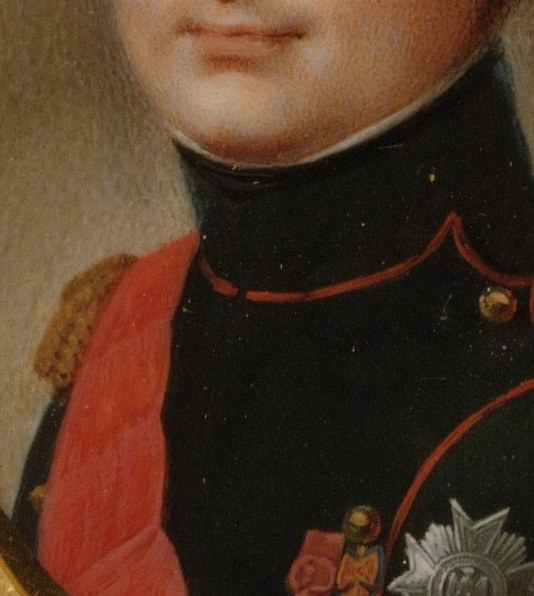
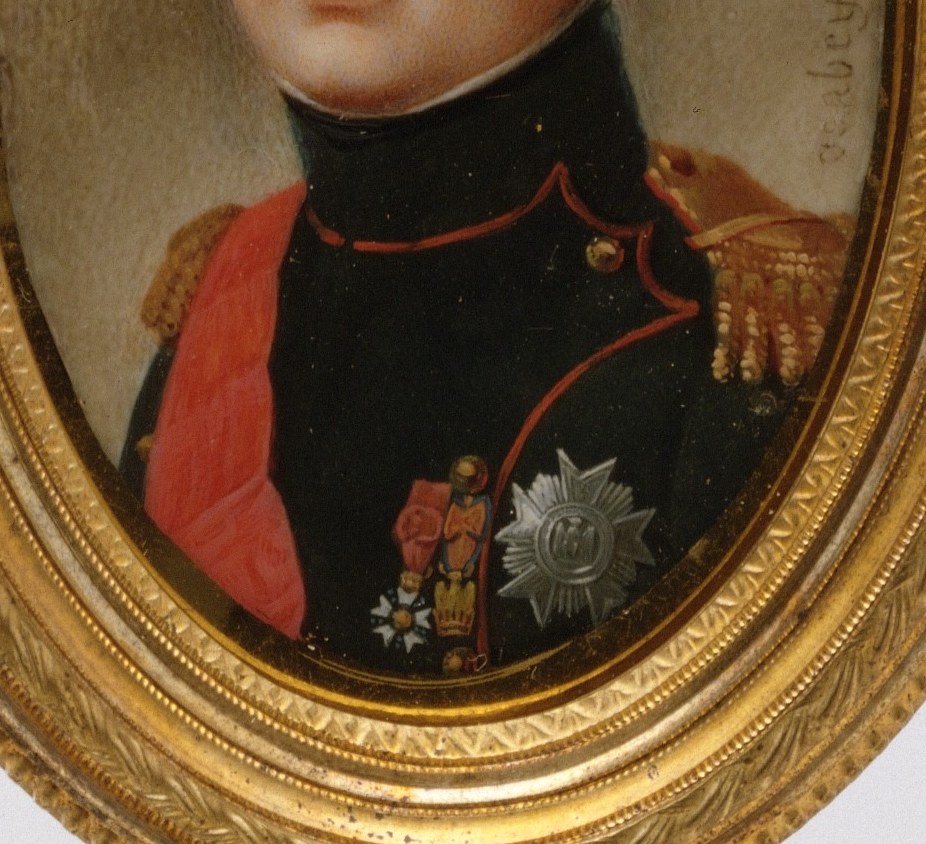
The Legion of Honor star on his left breast was an order Napoleon founded himself in 1802. He's wearing his own creation as a credential. The red trim on the collar marks him as colonel-general of the Imperial Guard, and the gold bullion epaulettes spread across both shoulders like architectural supports for his authority. Isabey rendered every embroidery thread with a miniaturist's brush.
Jean-Baptiste Isabey served as court painter through the First Empire and into the Restoration, surviving regime change through sheer skill. He painted Napoleon multiple times, and if you compare the portraits, you can watch the jaw grow firmer as power consolidated. This one dates from 1810, near the height of imperial reach. What do you think it would feel like to receive a portrait like this as a gift?
Details

Transcript
He looks exactly as you'd expect an emperor to look. Direct stare. Plain background. Gold on the collar. Napoleon founded this medal himself in 1802. The painter, Isabey, was a miniaturist. Every gold thread is a hair-wide brushstroke. Now look at the very top of the painting. There's a gold ring built into the case. This was not hung on a wall. It was worn, or given as an intimate gift. The official portrait of an emperor, small enough to hold in your hand.