Fruit by Peale, Harriet Cany
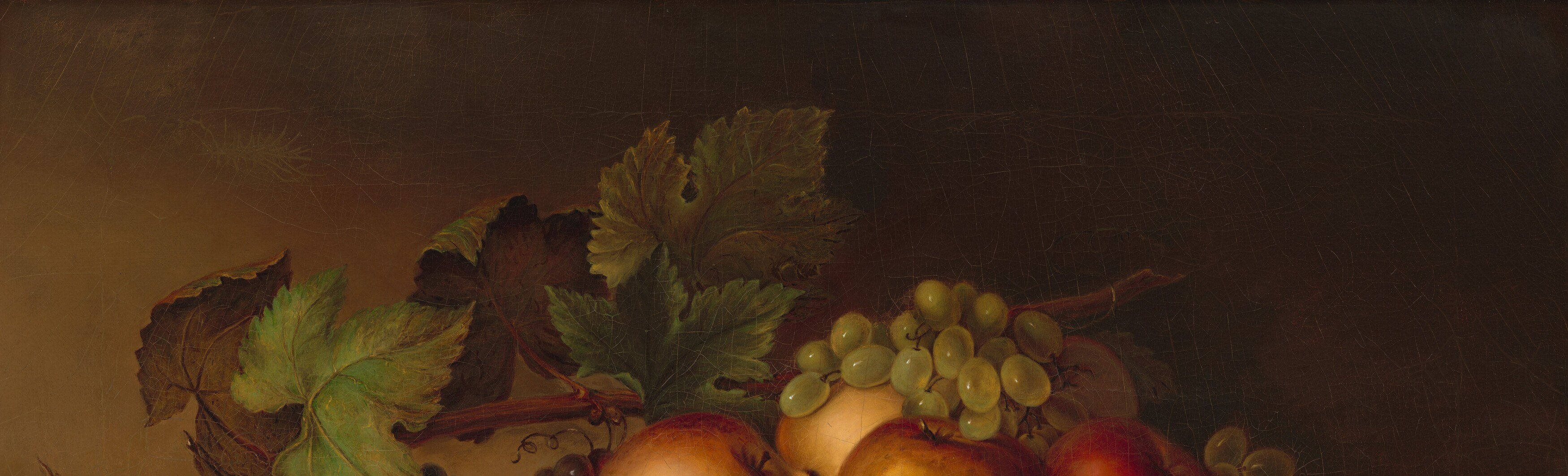
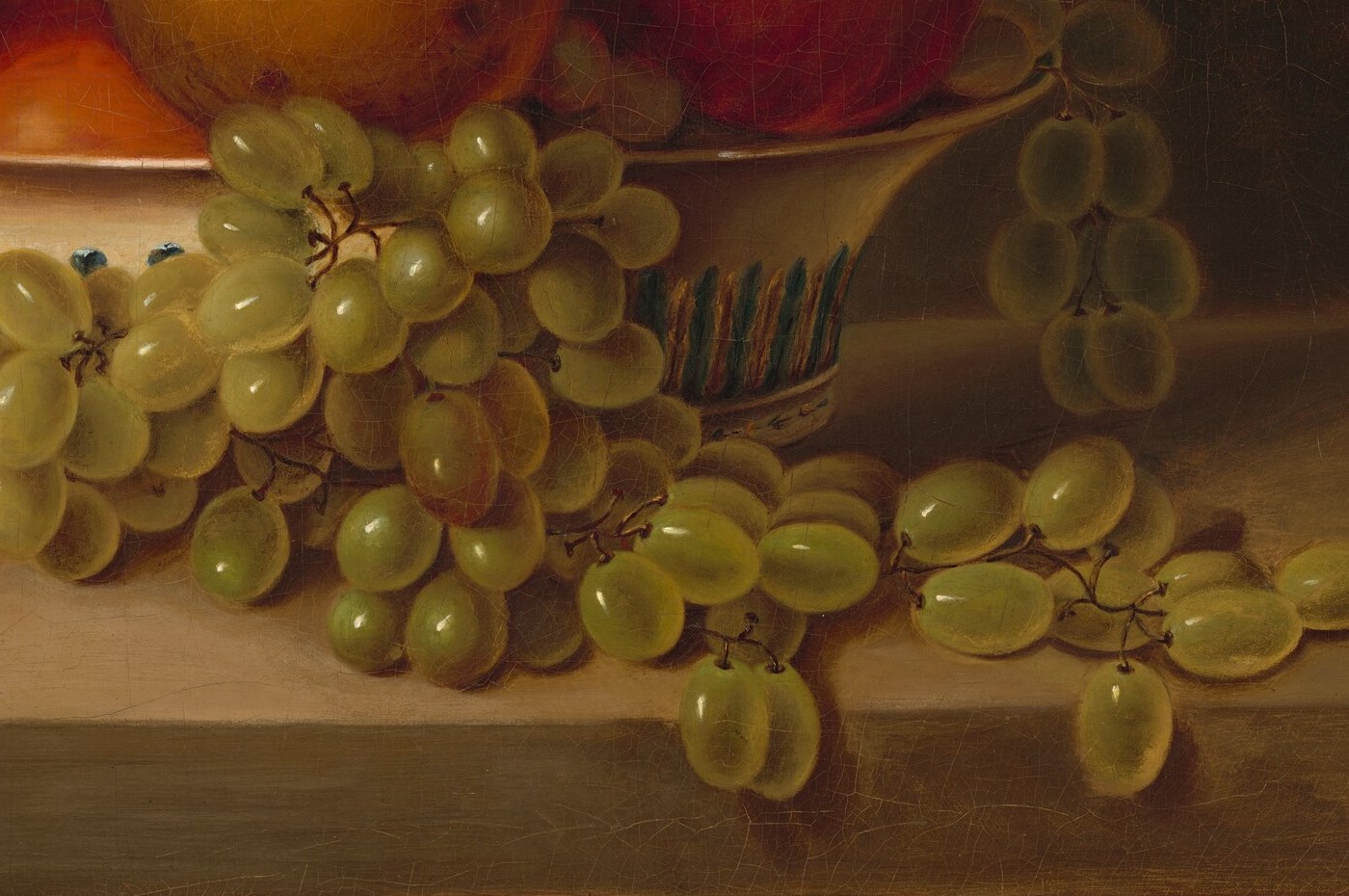
Harriet Cany Peale's 'Fruit,' painted around 1860, is a masterful example of American still-life painting, showcasing an incredible attention to detail that often goes unnoticed. This oil on canvas, held in a private collection, transforms a simple arrangement of produce into a study of realism and the beauty of natural imperfections.
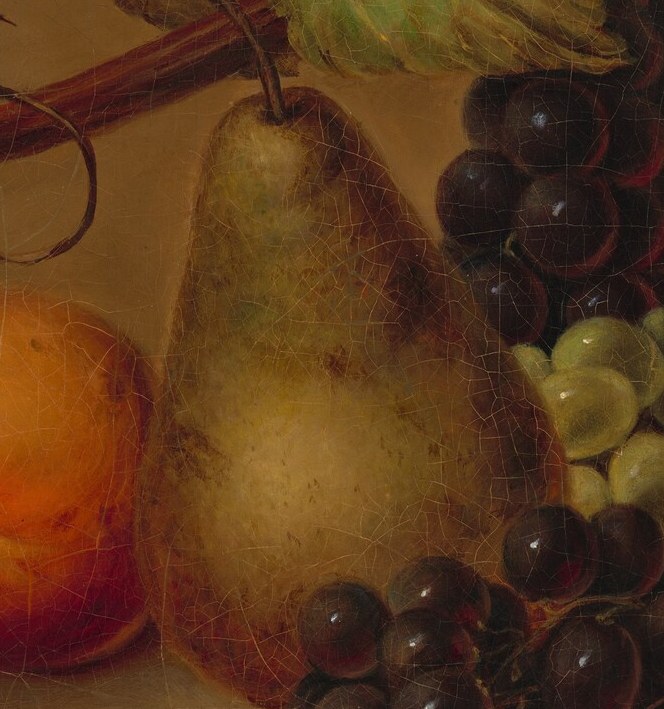
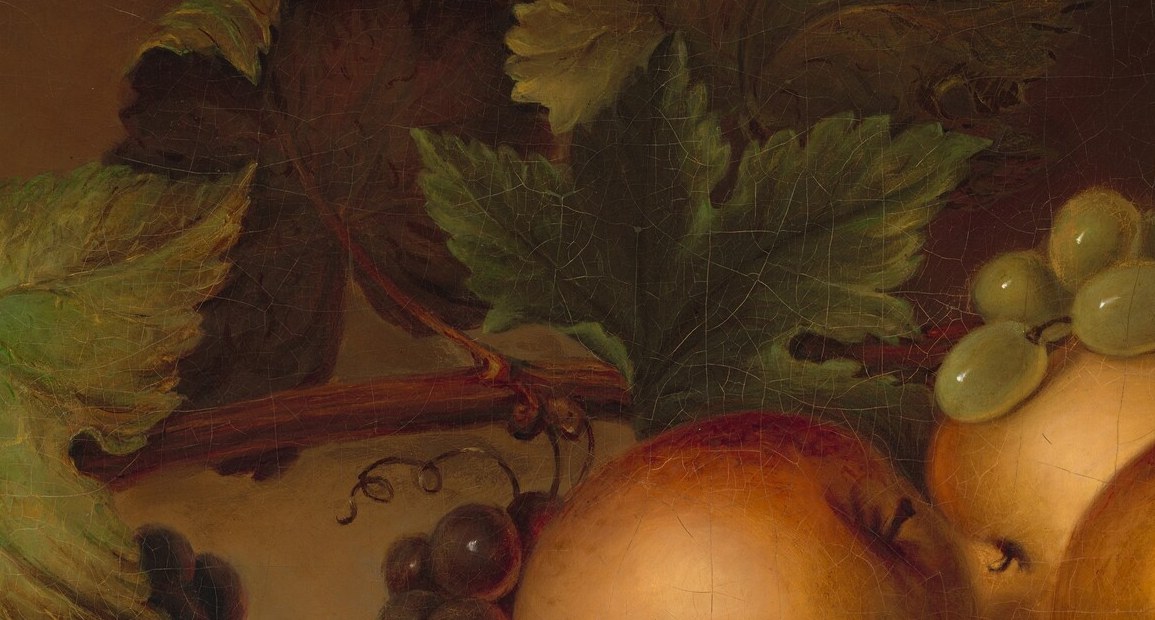
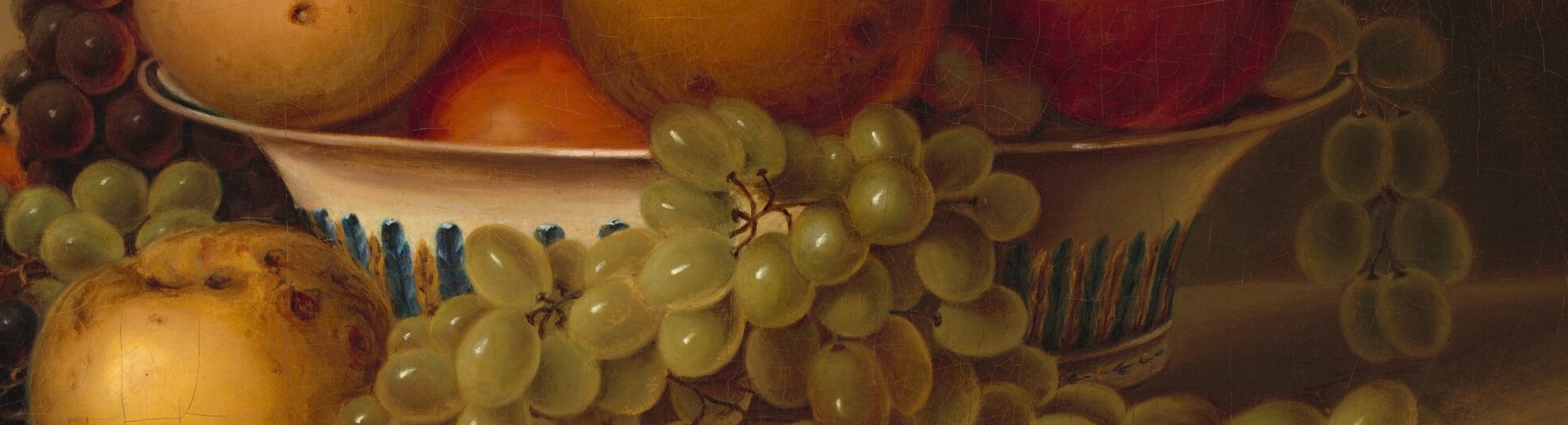
Take a closer look at the pear, the apples, and the grapes. Peale didn't idealize her subjects; instead, she meticulously rendered every subtle bruise, blemish, and variation in color and texture. Even the cluster of leaves shows delicate wilting, adding to the authenticity of the scene.
Peale was a notable figure in the mid-nineteenth century still-life tradition, a genre that allowed artists to explore light, form, and texture without narrative constraints. Her work emphasizes the material qualities of the fruits, inviting contemplation of domestic harvests and the quiet dignity of everyday objects.
What other small details do you notice that bring this still life to life?
Details
Transcript
This painting seems like a simple still life. It was painted by Harriet Cany Peale around 1860. But look closely at the fruit, especially this pear. The artist captured every small imperfection. She included even this tiny, bruised spot. And the leaves show subtle wilting, a touch of realism. It's a quiet celebration of everyday abundance.