Broken Eggs by Jean-Baptiste Greuze
View the artwork: Broken Eggs →
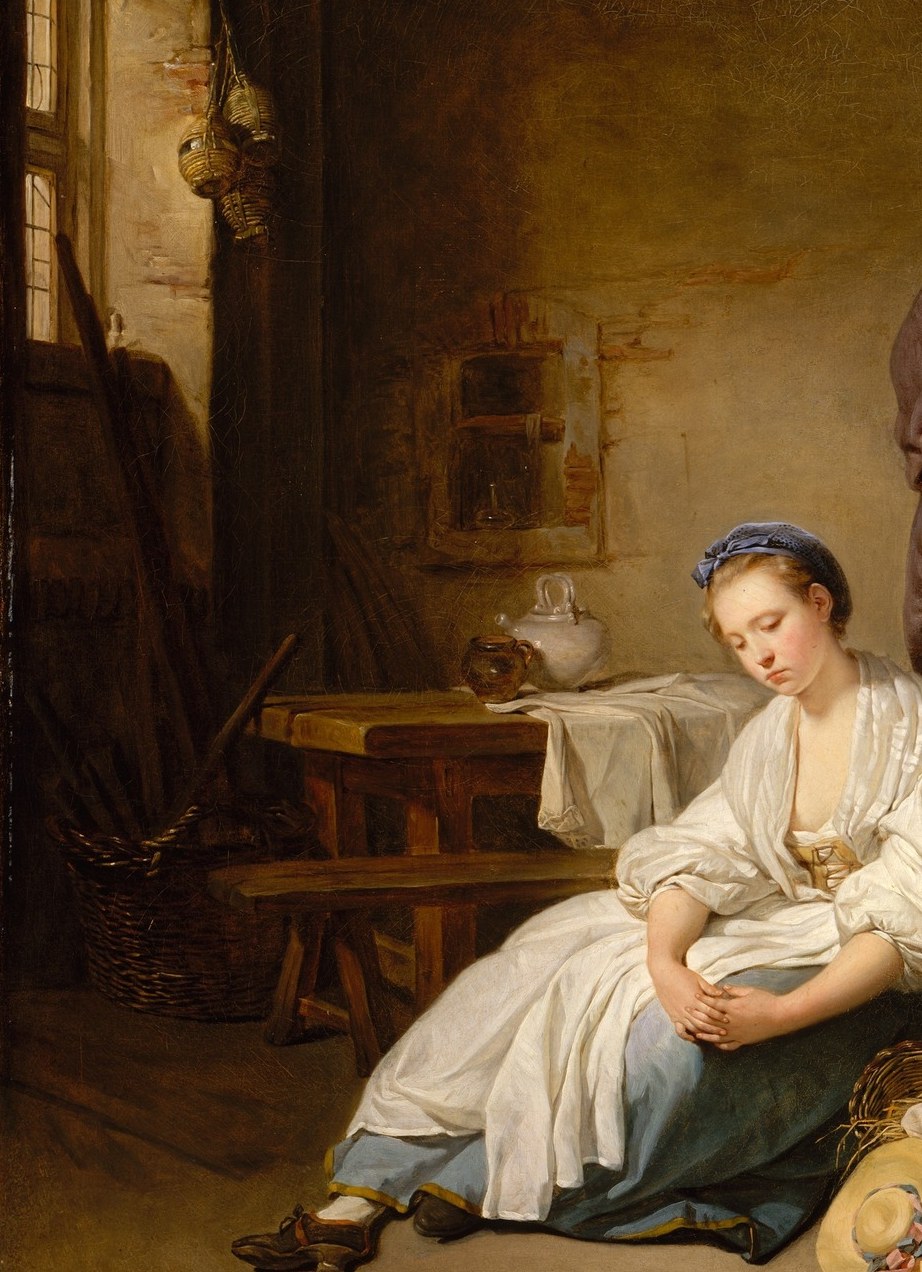
Jean-Baptiste Greuze painted Broken Eggs in 1756, and it hangs today in the Metropolitan Museum of Art. What looks at first like a minor domestic accident is actually a carefully coded moral allegory. Greuze was a master of this, turning genre scenes into visual lectures on virtue and its consequences.
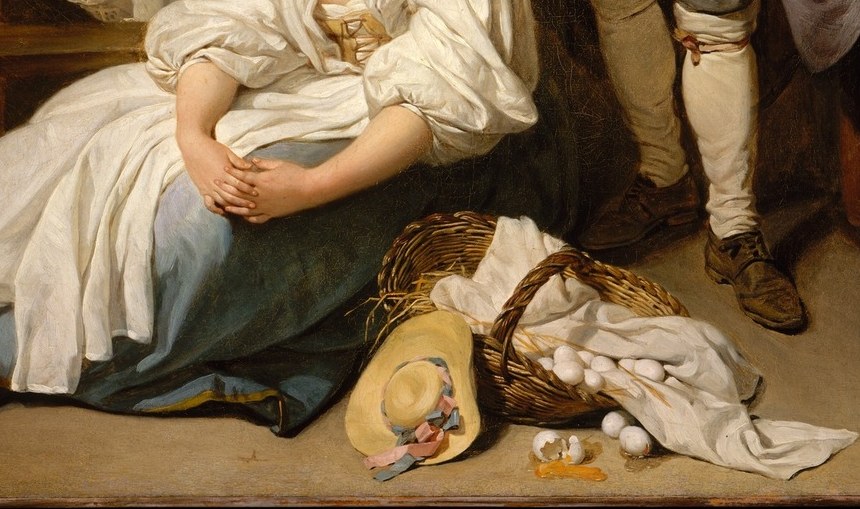
Look at the broken eggs on the floor. In 18th-century French visual culture, a spilled basket of broken eggs was an instantly recognizable euphemism for lost virginity. The overturned wicker basket reinforces the message: this is a state that cannot be undone. At the bottom right, a small dog, the traditional symbol of marital fidelity, sniffs at the evidence. The implication is clear.
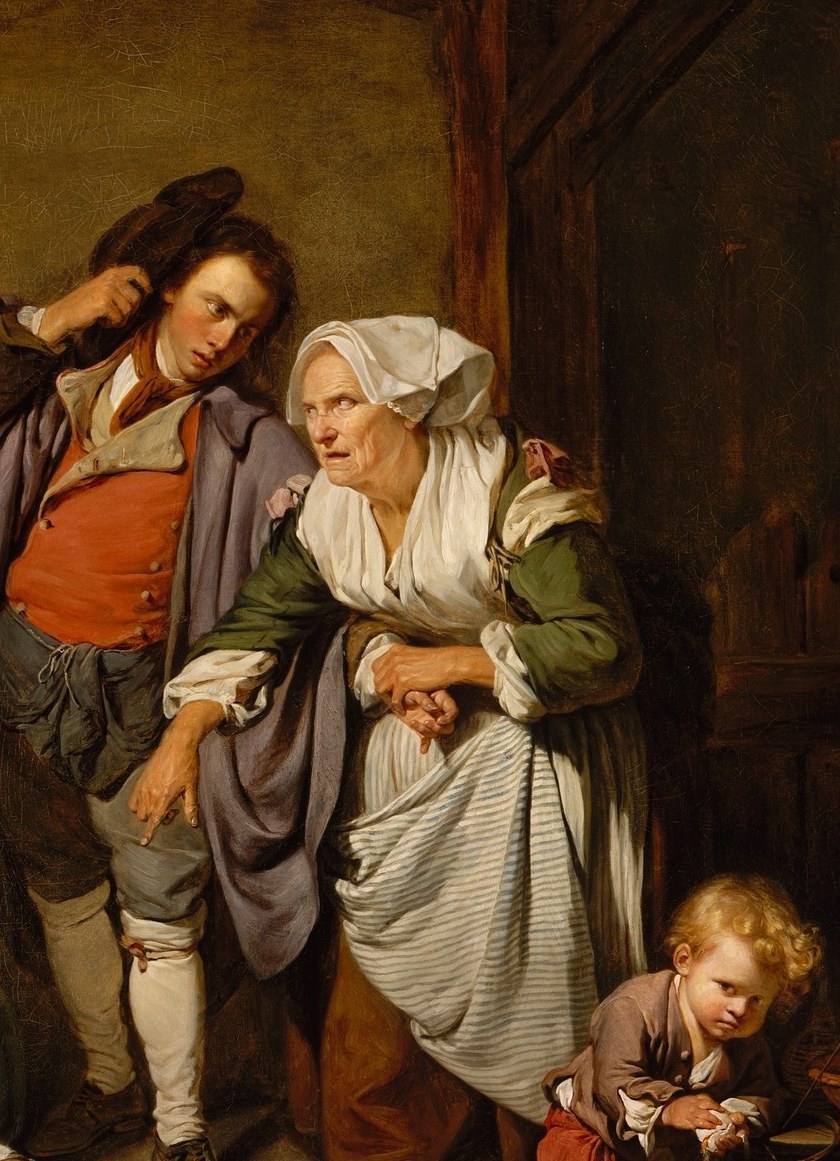
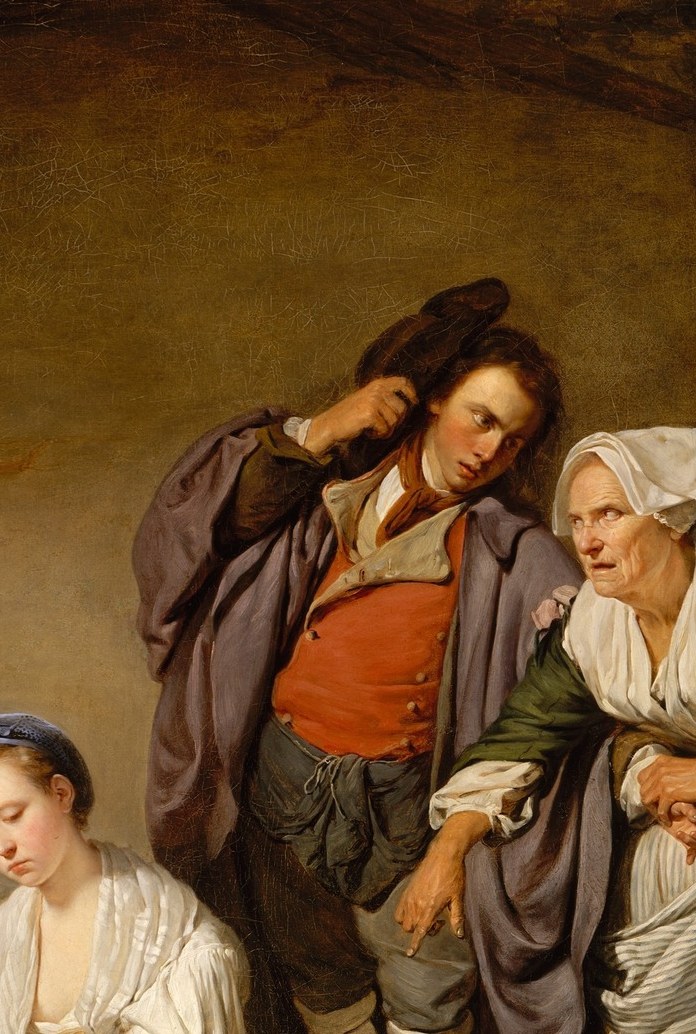
The young woman's downcast face and exposed décolletage mark her as the subject of shame, while the old woman's accusing finger provides the moral voice of the painting. The sheepish young man half-hidden behind her is the seducer, his smirk confirming his role. Greuze exhibited the painting at the Salon of 1757, establishing his reputation as a painter of moralizing domestic dramas that the French public adored.
Every object in this painting was chosen to convict. It is a courtroom in a kitchen.
#arthistory #jeanbaptistegreuze #rococo
Details
Transcript
She isn't just upset about some broken groceries. In 1750s France, a broken egg was a well-known symbol. It meant a young woman had lost her virginity. The tipped basket says this is irreversible. And at the bottom, a small dog sniffs the evidence. A dog like this was a symbol of fidelity. Now broken. Greuze painted a sermon, not a snapshot.