Artwork
Broken Eggs
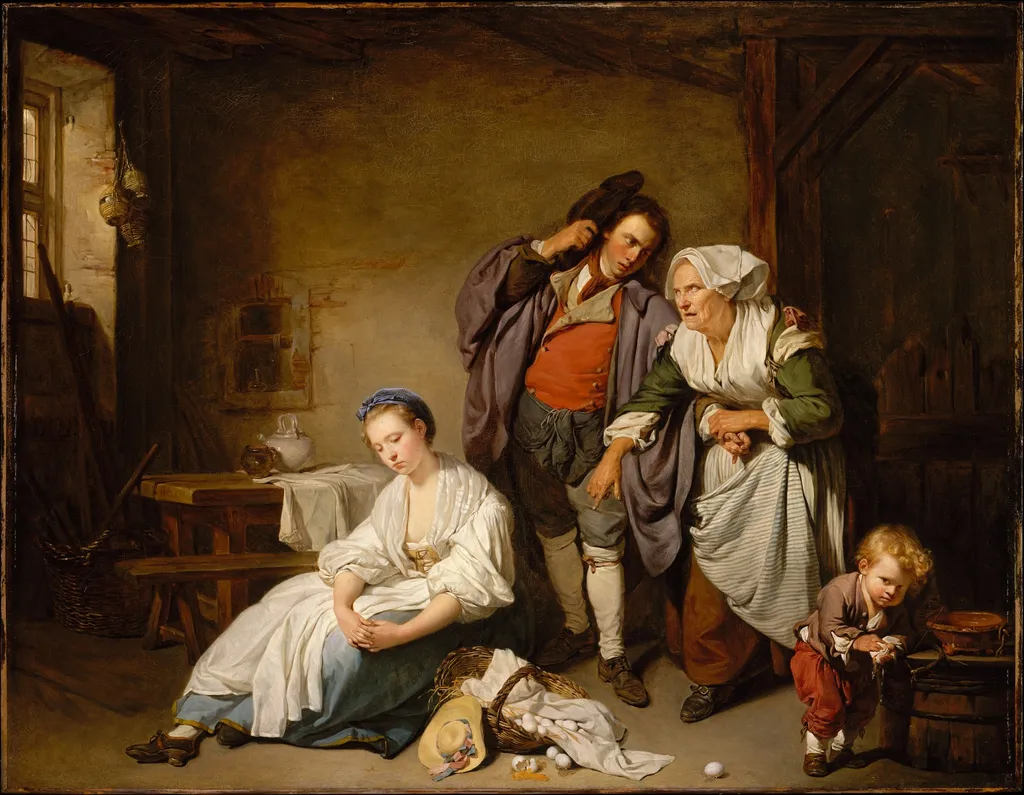
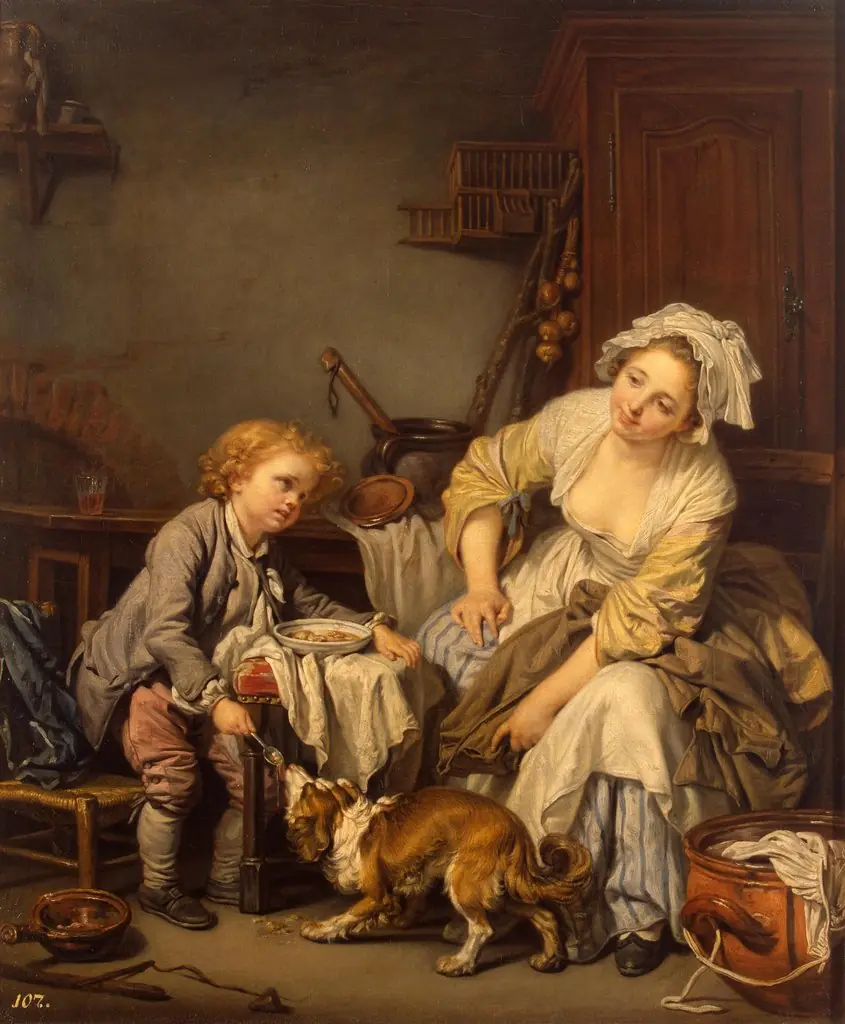
Broken Eggs is an oil painting by the Academic Art artist Jean-Baptiste Greuze. It dates from 1756 and is held in the collection of the Metropolitan Museum of Art.
About this work
An oil painting by the French artist Jean-Baptiste Greuze, dated 1756 and belonging to the late Baroque. The Metropolitan Museum of Art in New York acquired it in 1920 for its collection of eighteenth-century French painting.
Subject & Meaning
While a small child futilely attempts to mend a shattered egg, the composition functions as a moral allegory rather than a simple domestic mishap.
Created in 1756, this genre scene depicts a domestic interior where an elderly woman scolds a young man for overturning a basket of eggs carried by a dejected servant girl. While a small child futilely attempts to mend a shattered egg, the composition functions as a moral allegory rather than a simple domestic mishap. The broken eggs serve as a potent metaphor for the loss of the young maid's virginity, suggesting that the young man's clumsiness was actually a result of courting her.
Contemporary viewers would have interpreted the sorrowful expressions of the maid and the child as evidence that something far more significant than food was lost. This work marks the first instance in which the artist utilized broken objects to symbolize compromised innocence, establishing a narrative tradition where physical damage represents moral transgression.
Technique & Style
Broken Eggs is an oil painting on canvas, a medium and support consistently noted across sources. The work exemplifies French academic genre painting of the mid‑18th century, featuring a multi‑figure narrative scene rendered with careful brushwork and clear, detailed forms. Its composition centers on a moralizing anecdote, a young man’s clumsiness causing broken eggs, while a child attempts to mend one, using the broken objects as a metaphor for lost innocence.
The painting’s formal qualities include a balanced arrangement of figures within an interior, subtle chiaroscuro that highlights the textures of fabric and skin, and a restrained palette typical of Greuze’s genre works.
History & Provenance
Broken Eggs was commissioned in 1756 by Abbé Gougenot and painted by Jean‑Baptiste Greuze during his stay in Rome. The work was first shown at the Salon of 1757 at the Louvre under the lengthy title Une Mère grondant un jeune Homme pour avoir renversé un Panier d’Oeufs que sa Servante apportoit du Marché. Un Enfant tente de raccomoder un oeuf cassé.
After Gougenot, the painting passed through the hands of Louis Gougenot, Georges Gougenot de Croissy, the Demidov collectors Nikolai Nikitich and Anatoly Nikolaievich Demidov (1st Prince of San Donato), Richard Seymour‑Conway, 4th Marquess of Hertford, Sir Richard Wallace, the Dudley earls William Ward (1st and 2nd), and William Kissam Vanderbilt I before entering the Metropolitan Museum of Art’s collection, which acquired it in 1920. The painting’s date of execution is firmly established as 1756.
Broken Eggs (Les Œufs cassés) is held by the Metropolitan Museum of Art in New York, which acquired the painting in 1920. It is displayed in the museum's European Paintings galleries, with sources variously citing gallery 630 and gallery 631. The work was first publicly exhibited by Greuze at the Salon of 1757, held at the Louvre in Paris, where it was shown alongside works by Jean Siméon Chardin and received critical praise.
The provenance traces through a notable succession of owners, beginning with the Gougenot family, Louis Gougenot and Georges Gougenot de Croissy, and subsequently passing through the Demidov collection (Nikolai Nikitich Demidov and Anatoly Nikolaievich Demidov, 1st Prince of San Donato), Richard Seymour-Conway, 4th Marquess of Hertford, Sir Richard Wallace, 1st Baronet, William Ward, 1st Earl of Dudley, William Ward, 2nd Earl of Dudley, and William Kissam Vanderbilt I before reaching the Metropolitan Museum.
Context
Jean-Baptiste Greuze painted Broken Eggs in 1756, an oil on canvas genre scene that he exhibited at the 1757 Salon under the title Une Mère grondant un jeune Homme.... The work, recorded in the Metropolitan Museum of Art’s collection, exemplifies the academic genre of moralizing domestic subjects and was praised by contemporary critics for its noble composition. Art historians note that Greuze employed broken eggs as a visual allegory for the loss of a young woman’s virginity, a motif that recurs in his oeuvre.
Influenced by Dutch genre painting and shaped by his Italian sojourn, the painting situates Greuze within the broader Neoclassical movement while retaining a distinctive focus on everyday morality.
Legacy
Broken Eggs established a template that Greuze returned to repeatedly throughout his career: it is identified as the first of his many paintings in which broken objects function as a metaphor for the loss of a young woman's virginity. The work's success at the 1757 Salon, where it drew high praise from critics, helped cement Greuze's reputation as a genre painter of modern, morally inflected subjects rather than the antique and mythological themes favored in contemporary Italian practice. Its subsequent provenance, passing through the Gougenot, Demidov, Hertford, Wallace, Dudley, and Vanderbilt collections before entering the Metropolitan Museum of Art in 1920, secured its place in major collections and ensured its continuing visibility in the museum's galleries.
Overview
Jean-Baptiste Greuze's painting, Broken Eggs (French: Les Œufs cassés), was completed in 1756. Executed in oil on canvas, this work is recognized as a significant example of 18th-century French art. It reflects the artistic sensibilities prevalent during the mid-1700s, showcasing the artist's engagement with genre subjects.
Own this work as a print
Artist & collection
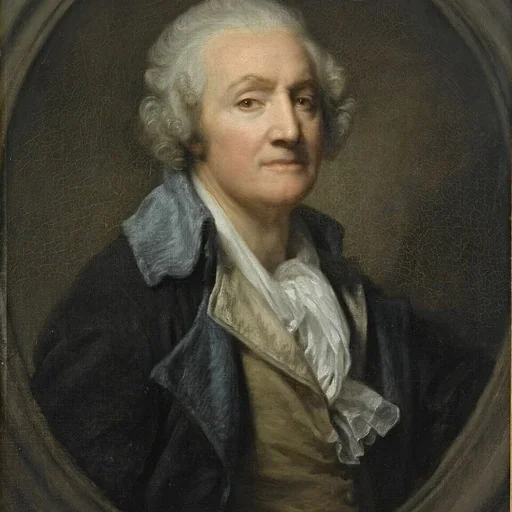
Artist
Jean-Baptiste Greuze (French pronunciation: 21 August 1725 – 4 March 1805) was a French painter of portraits, genre scenes, and history painting.

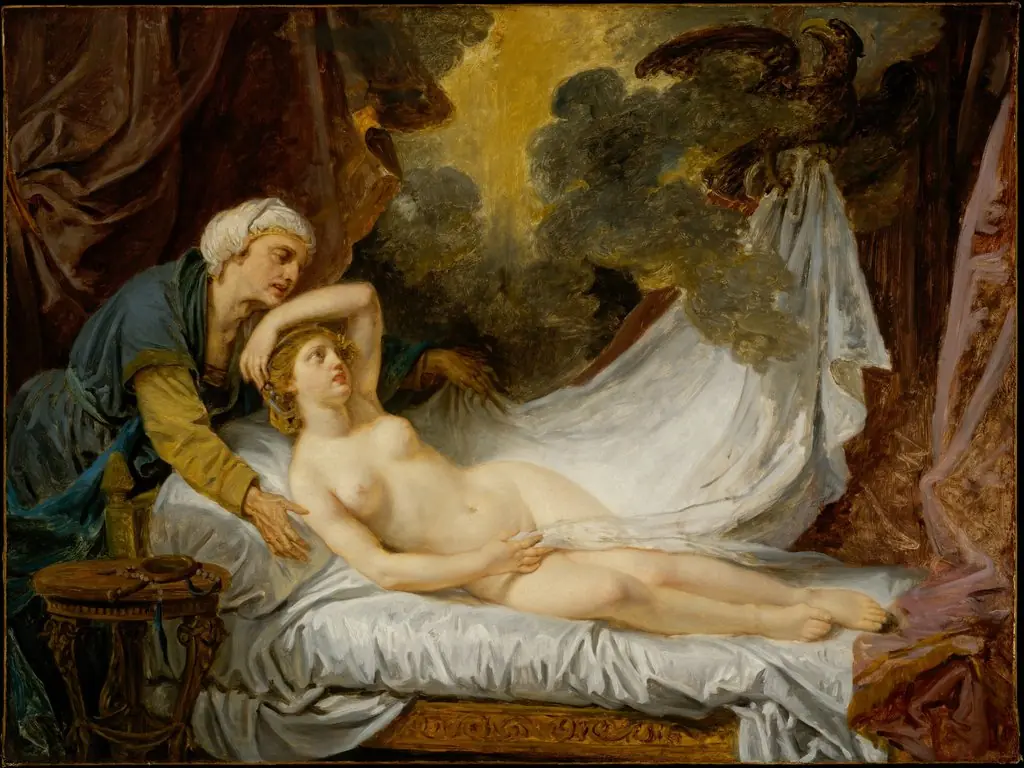 Aegina Visited by Jupiter
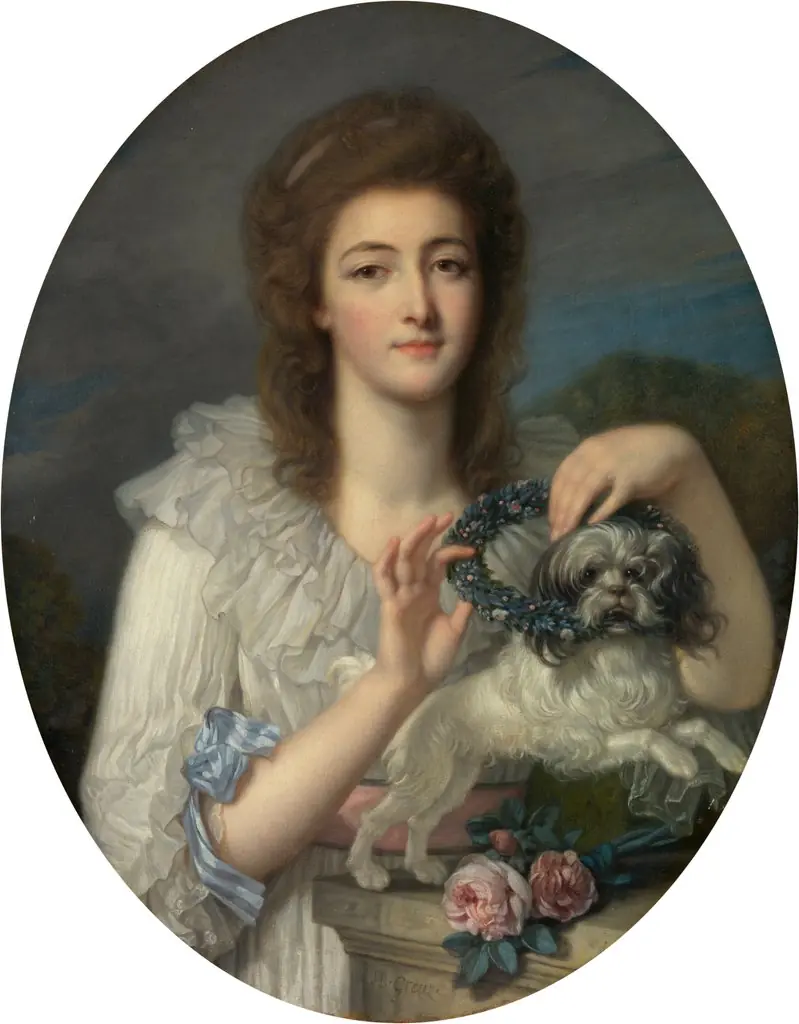 Princess Varvara Nikolaevna Gagarina (1762–1802)
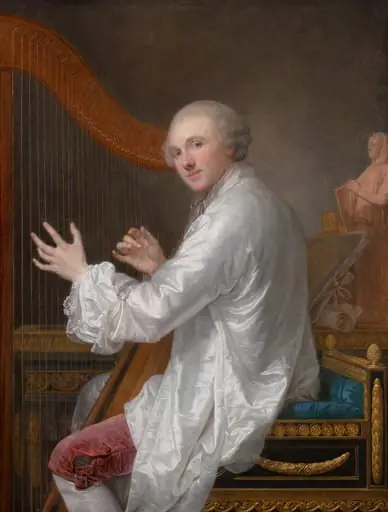 Ange Laurent de La Live de Jully
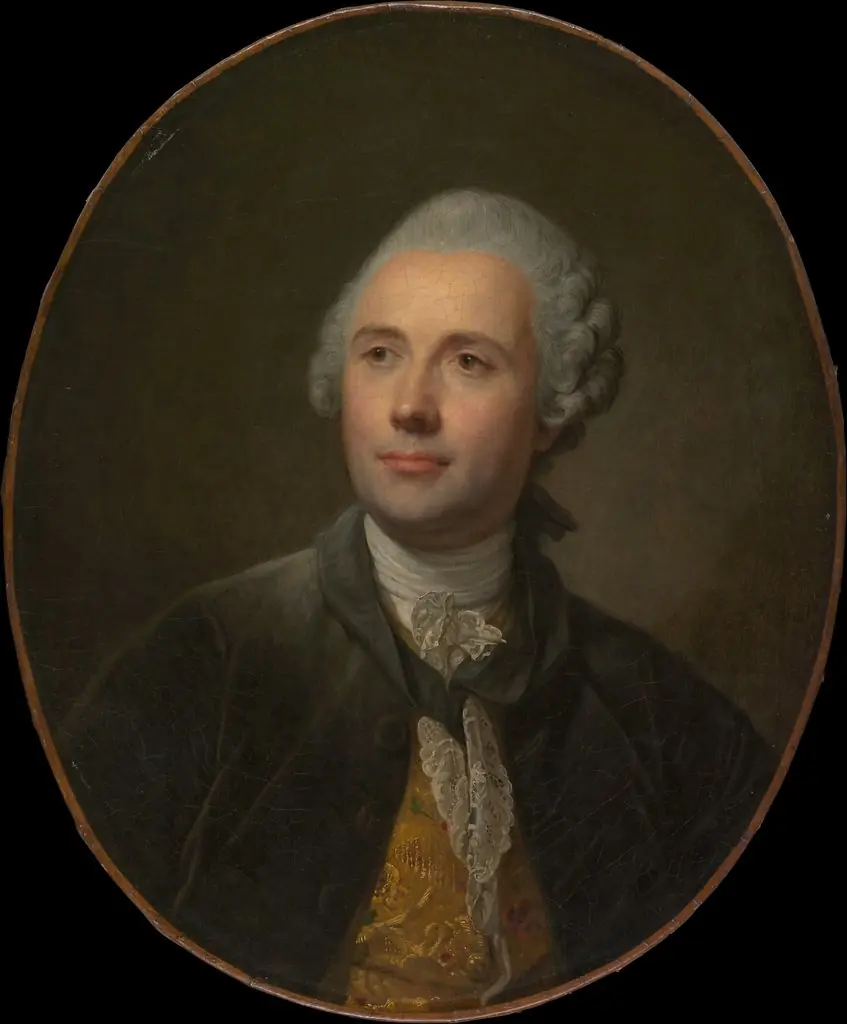 Jean Jacques Caffieri (1725–1792)
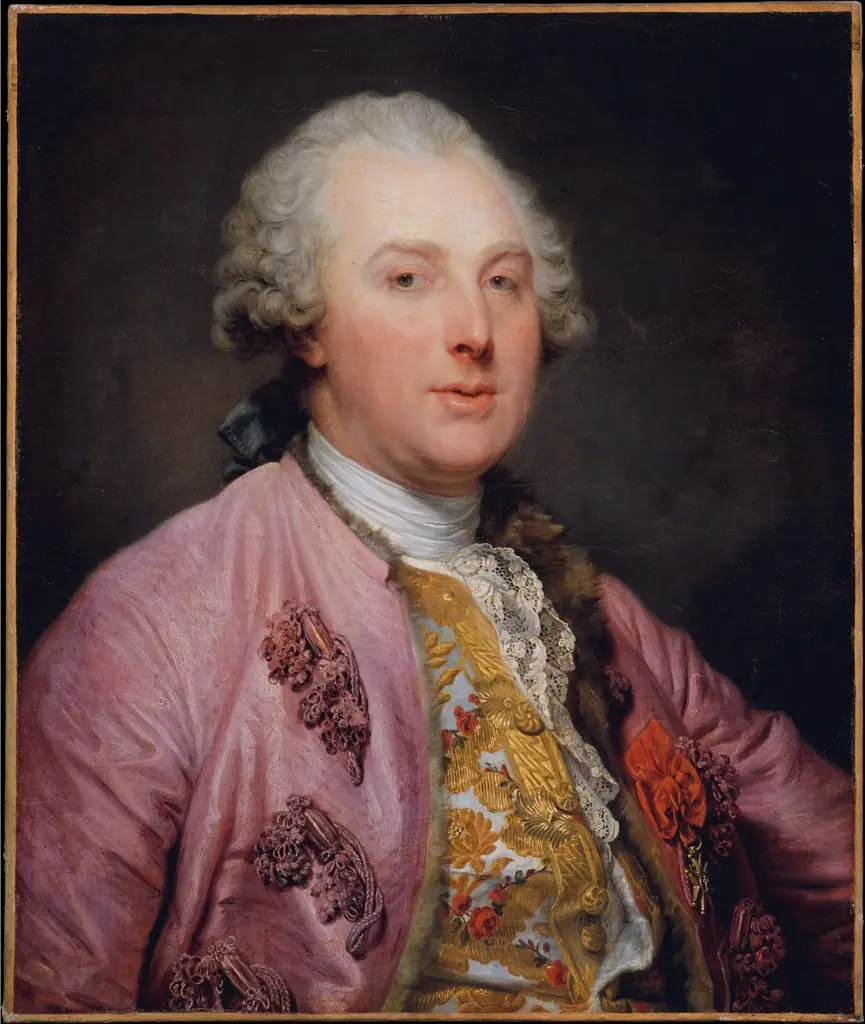 Portrait of Charles Claude de Flahaut de La Billarderie (Comte d'Angiviller)
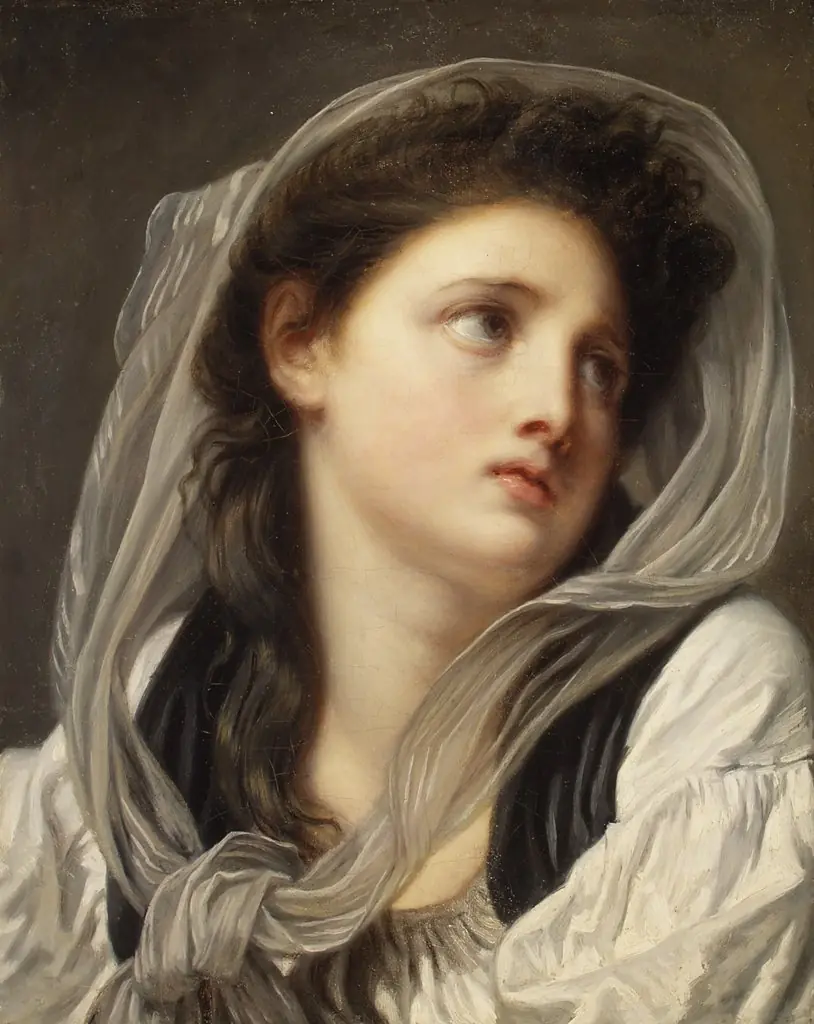 Head of a Young Woman
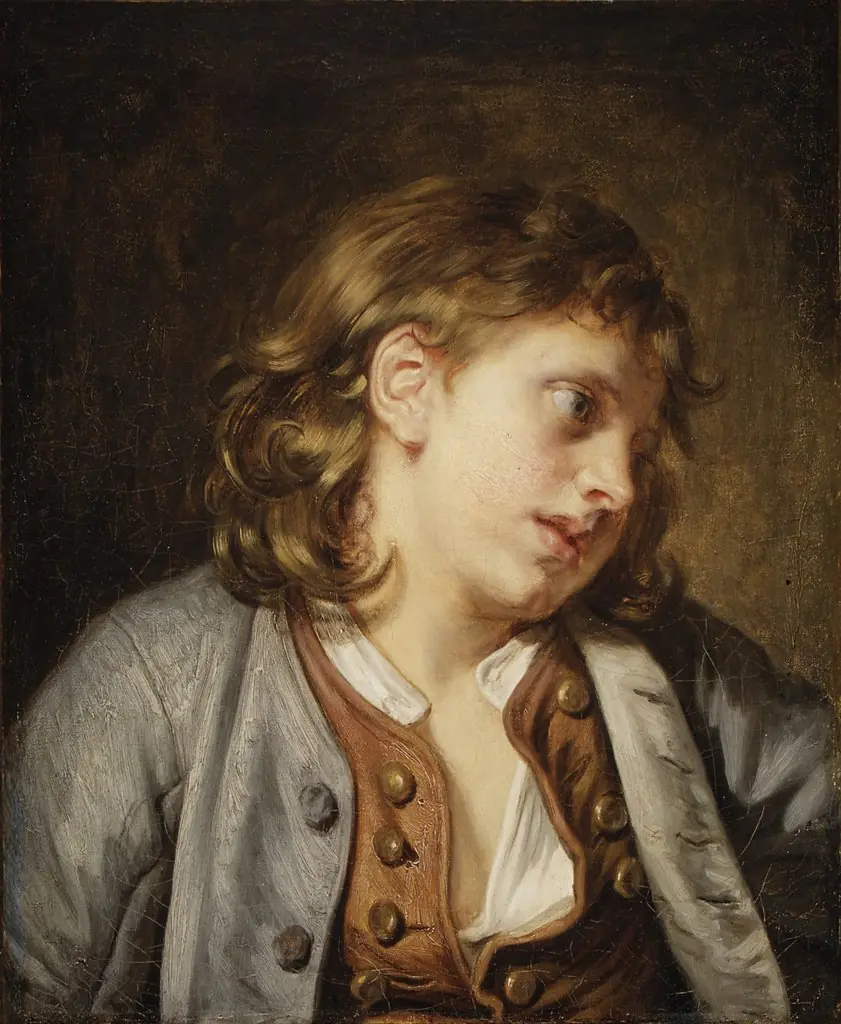 Head of a Young Boy
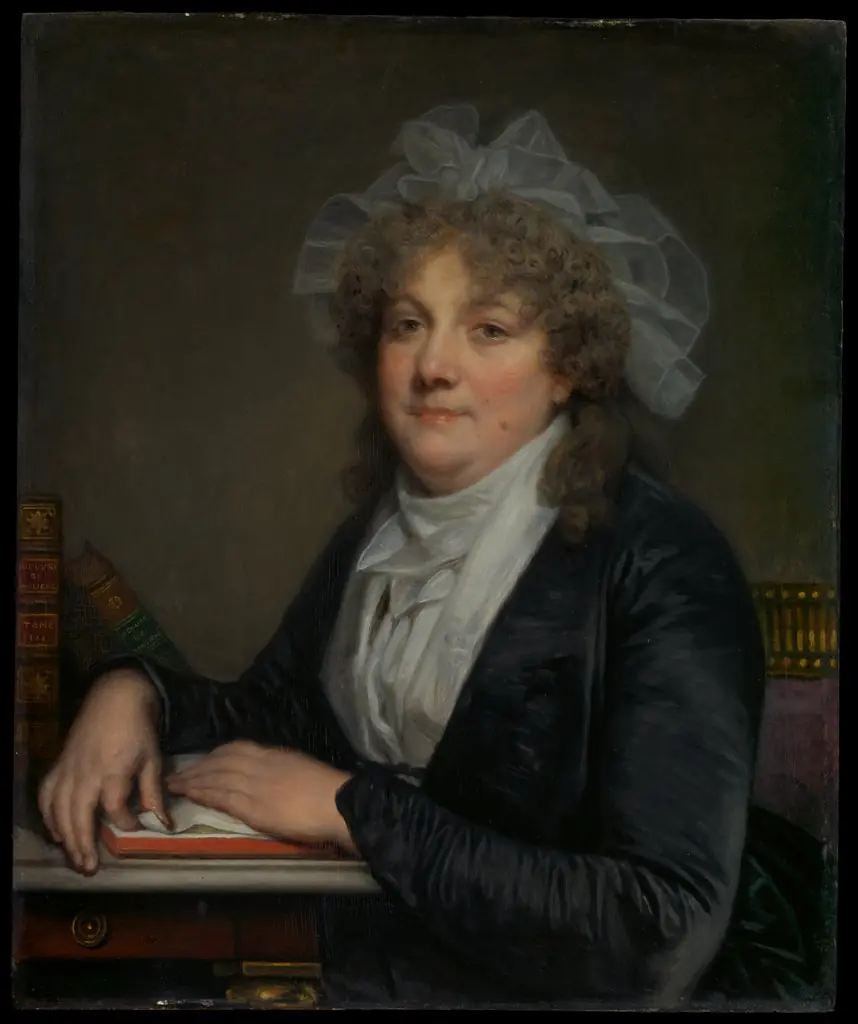 Madame Jean-Baptiste Nicolet (Anne Antoinette Desmoulins, 1743–1817)