The Triumph of Death by Pieter Brueghel the Elder
View the artwork: The Triumph of Death →
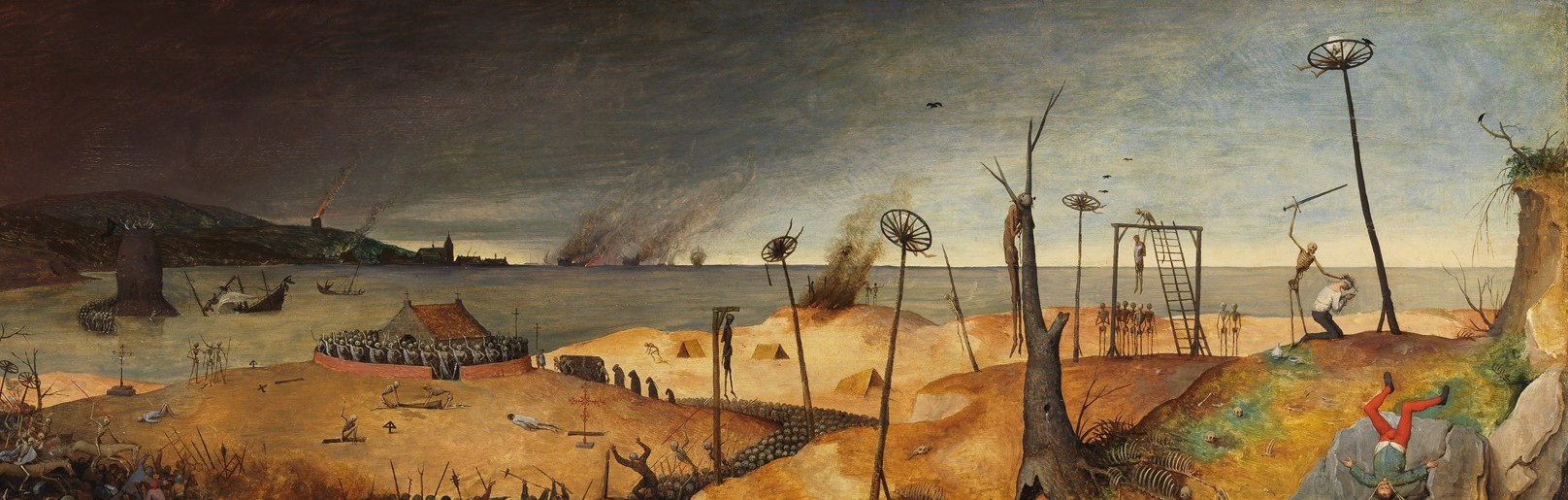
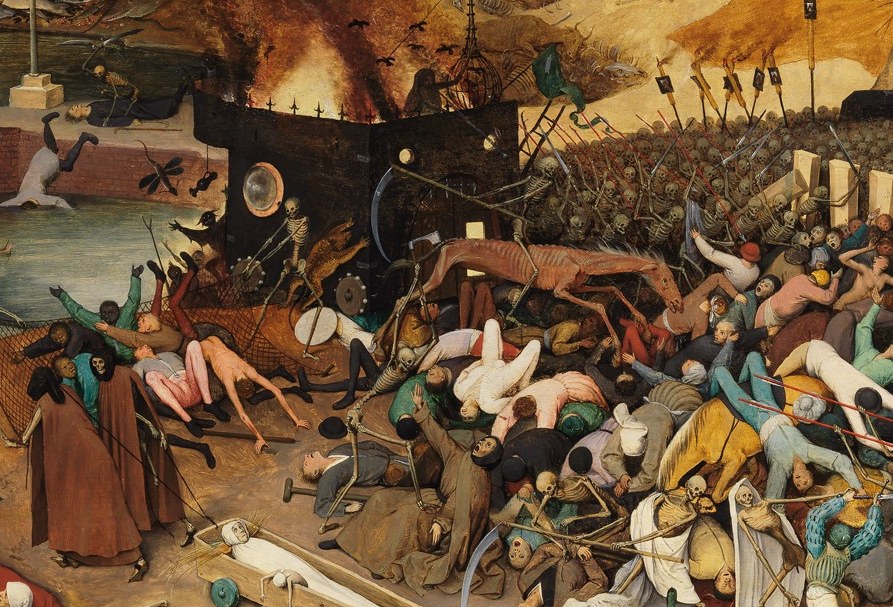
This is The Triumph of Death, painted by Pieter Bruegel the Elder around 1562. It has been in the Museo del Prado in Madrid since 1827. The scene is not a random massacre. Bruegel constructed an allegory so systematic that Death itself becomes a bureaucracy, complete with coffin-lid shields, administrative bells, and a gate made from a giant coffin door that herds the living into darkness.
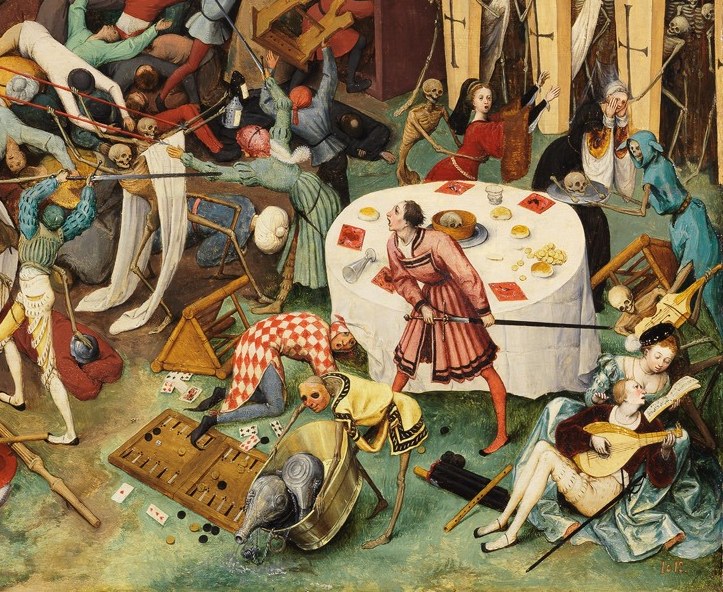
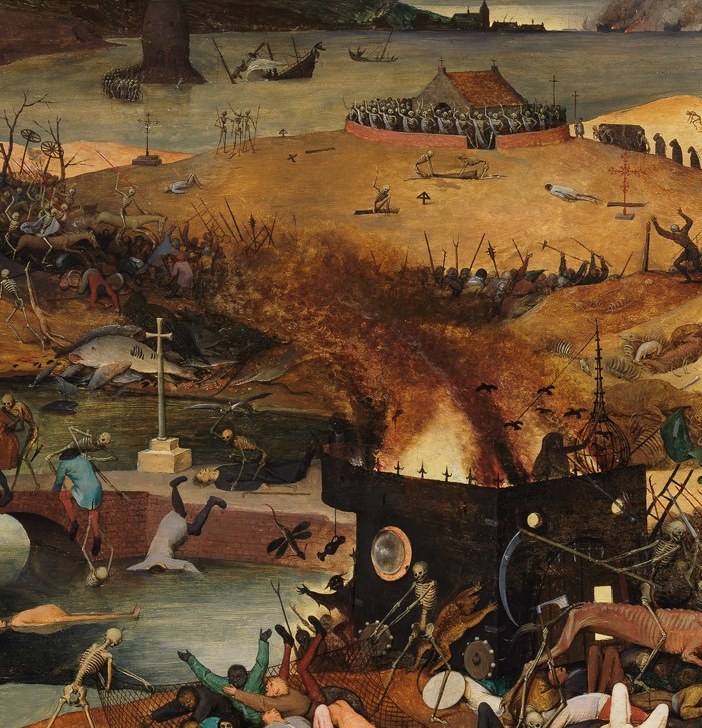
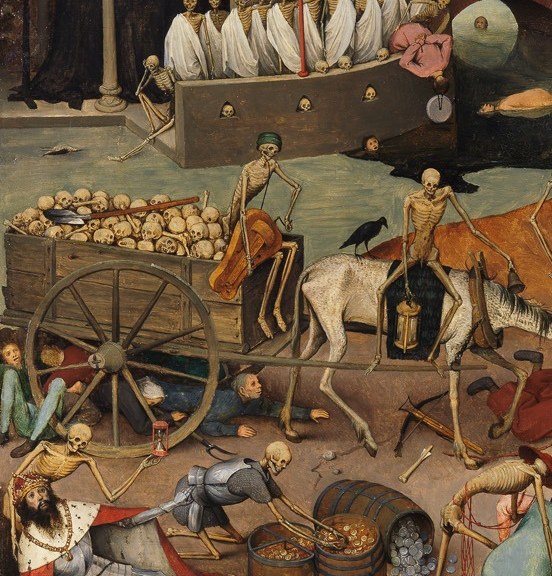
Look first at the colossal skeletal rider on the pale horse in the center. Then look at the formation advancing behind it: a phalanx of skeletons holding shields made from the lids of coffins. Now scan for the bell-ringer on the right, summoning creation to attention with a tocsin you can almost hear. The most nightmarish detail sits in the lower right: a coffin lid repurposed as a funnel, driving terrified humans into a dark enclosure. Even the ships on the distant black bay appear stranded, closing off every last hope of escape.
Bruegel came of age when religious imagery was no longer the default subject of painting. He channeled that shift into secular allegories and peasant scenes, and The Triumph of Death is possibly his most exhaustive statement. The panel catalogs nearly every form of mortality his era knew: war, execution by breaking wheel, judicial hanging on multiple gibbets, and even the plague. A cardinal in ecclesiastical robes is seized like a commoner. A dying king in ermine lies beside scattered gold coins and an hourglass, earthly power made worthless. One armored soldier draws his sword in futile defiance, the painting's sole act of resistance.
The Triumph of Death turns mortality into something procedural and inescapable. It was named one of the BBC's 100 Great Paintings. Spend time with it and the panorama never stops giving up new details, each one a small argument that you, too, are out of time.
#arthistory #bruegel #northernrenaissance
Details
Transcript
It looks like chaos. It is not. Death has organized itself into an army. Their shields are coffin lids. This is mass death made industrial. A bell rings. Sound, in a silent painting. A funnel made of a coffin door drives the living into darkness. Bruegel painted this around 1562. The Prado has held it since 1827. Even the ships on the black bay offer no escape.