Artwork
The Triumph of Death
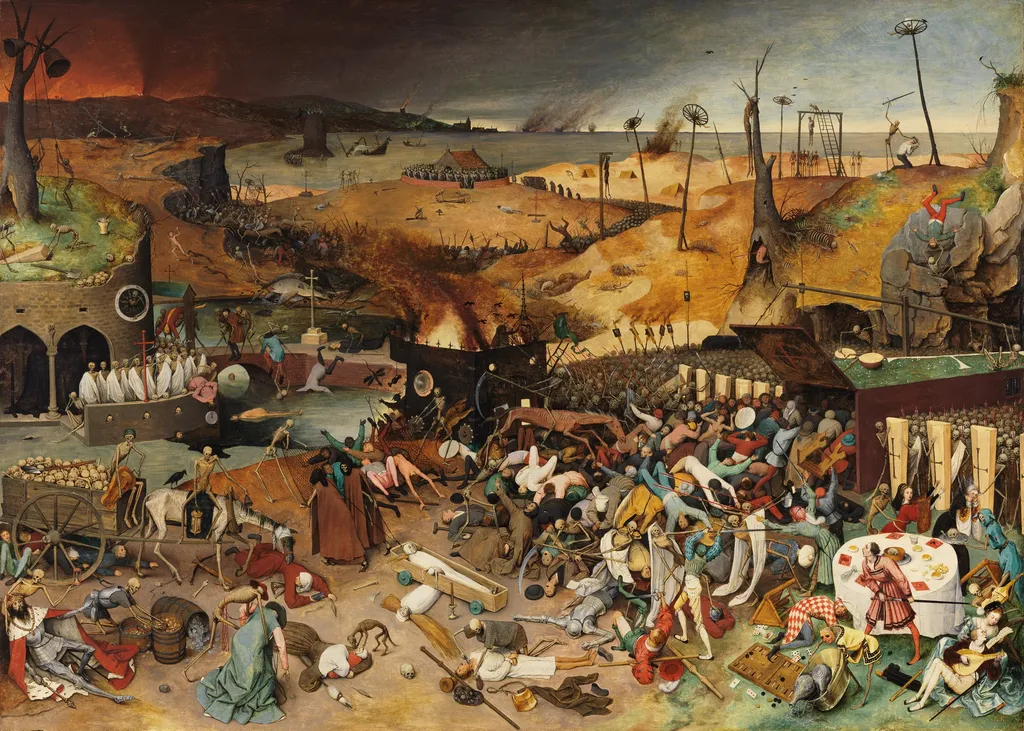
The Triumph of Death is an oil painting by the Northern Renaissance artist Pieter Brueghel I. It dates from 1560 and is held in the collection of the Museo del Prado.
About this work
Subject & Meaning
The scene serves as a grim allegory of the mid-sixteenth-century plague, emphasizing the futility of earthly wealth and resistance against inevitable doom.
Pieter Bruegel the Elder's painting depicts a panoramic apocalypse where an army of skeletons indiscriminately massacres humanity across a scorched, barren landscape littered with shipwrecks and burning cities. The work synthesizes the Northern tradition of the Dance of Death with the Italian Triumph of Death motif, illustrating that mortality spares no social rank, from peasants and jesters to kings and cardinals. Iconography includes horseback skeletons wielding scythes, likely alluding to the Four Horsemen of the Apocalypse, and a coffin-shaped trap decorated with crosses.
Specific symbols reinforce the fragility of life: a woman's thread is cut by scissors representing Atropos, while another holds a spindle and distaff. A dying king reaches for useless gold as a skeleton displays an empty hourglass, and a hurdy-gurdy player parodies human happiness while crushing a man beneath his cart. The scene serves as a grim allegory of the mid-sixteenth-century plague, emphasizing the futility of earthly wealth and resistance against inevitable doom.
Technique & Style
The Triumph of Death is executed in oil paint on a wooden panel, a standard support for Netherlandish painters of the mid-sixteenth century. The panel measures approximately 117 by 162 centimeters, giving the composition a broad horizontal format suited to its panoramic sweep. Stylistically, the work is rooted in the Early Netherlandish tradition and is closely indebted to the visual language of Hieronymus Bosch, whose fantastical imagery of damnation and grotesque creatures Bruegel absorbed and reworked.
Bruegel fuses two distinct graphic traditions within a single painted field: the Northern woodcut Dance of Death cycle, exemplified by Hans Holbein the Younger's designs, and the Italian allegorical conception of the Triumph of Death as a sweeping fresco-like panorama. The handling combines densely packed narrative vignettes across a scorched, desolate landscape with a high, distant horizon, allowing dozens of independent episodes to be read simultaneously while preserving overall atmospheric unity.
History & Provenance
The Triumph of Death is permanently housed in the Museo del Prado in Madrid, Spain. The work has been part of the museum's collection since 1827. Historical records indicate the painting was previously owned by Elisabeth Farnese, Charles III of Spain, and Ferdinand VII of Spain before entering the Prado.
While specific accession numbers are not provided in the available sources, the inventory status is confirmed by its long-term residence in the institution. The painting was created around 1562 and has been exhibited as a central piece of the Prado's Early Netherlandish holdings. It was notably featured as part of the BBC's series 100 Great Paintings, highlighting its significance in public exhibitions and media beyond the museum walls.
Context
The Triumph of Death has been regarded as a pivotal work in Bruegel’s oeuvre and in the Early Netherlandish tradition, noted for its stark vision of a lifeless landscape (James Snyder. It formed part of the BBC’s 100 Great Paintings, signaling broad critical acclaim. Scholars highlight Bruegel’s synthesis of Northern Dance of Death woodcuts with the Italian Triumph of Death motif, while also acknowledging the clear influence of Jérôme Bosch’s fantastical imagery and the woodcut series of Hans Holbein the Younger.
The painting’s enduring impact is evidenced by copies made by Bruegel’s son Jan Brueghel the Elder and its continued presence in the Museo del Prado since 1827.
Legacy
The Triumph of Death has become a reference point for later artistic and cultural representations of inevitable mortality. Its visual language of skeletal armies and apocalyptic landscapes informed subsequent depictions of the Dance of Death motif across Northern European art, a development noted in German scholarship. The work entered popular consciousness through its use as the backdrop for the Monty Python Spanish Inquisition sketch, its allusion in Sylvia Plath’s poem, and its reproduction on Black Sabbath’s 1977 greatest‑hits album, all documented in English‑language sources.
Literary works by William S. Burroughs, Don DeLillo and Andrew McGahan explicitly invoke the image to underscore themes of wealth, repentance and the universality of death. Contemporary encyclopedic entries in French and Dutch highlight its role as a seminal allegory that shaped the historiography of collective mortality.
Overview
Pieter Bruegel the Elder completed The Triumph of Death around 1562, an oil painting that vividly portrays the inescapable power of mortality. This large-scale work is a complex allegorical scene, depicting a world overrun by skeletal figures. It currently resides in the collection of the Museo del Prado in Madrid, where it has been housed since 1827. The painting is recognized as a significant work, having been included in the BBC's "100 Great Paintings."
Own this work as a print
Artist & collection

Artist
Pieter Bruegel (also Brueghel or Breughel) the Elder ( BROY-gəl, US also BROO-gəl; Dutch: ; c.

- Christ in Limbo
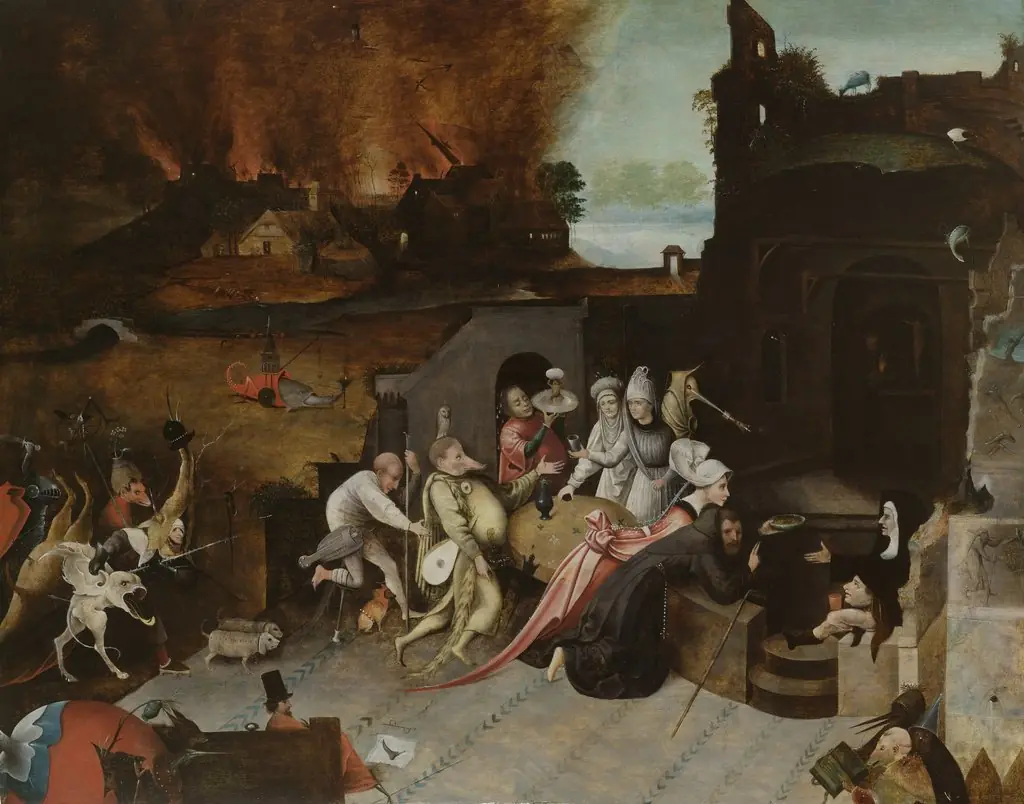 The temptation of St Antony
 The Temptation of St Anthony
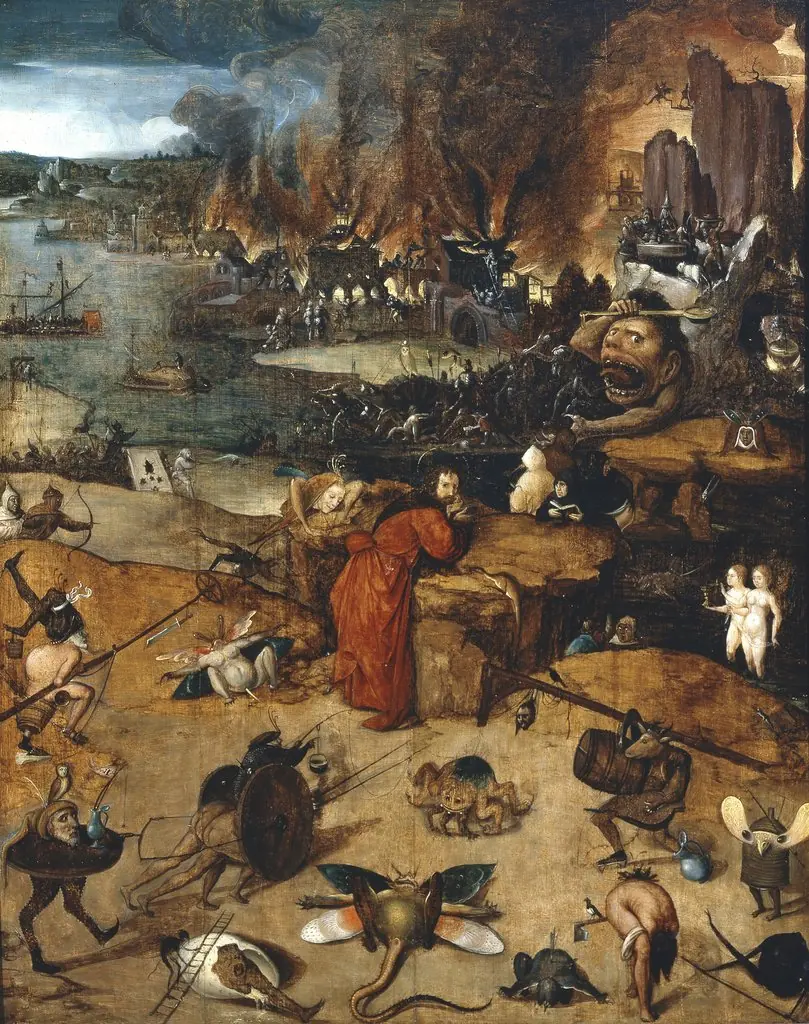 Temptation of St. Athony
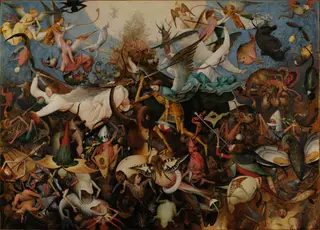 The Fall of the Rebel Angels
 Hell
Hell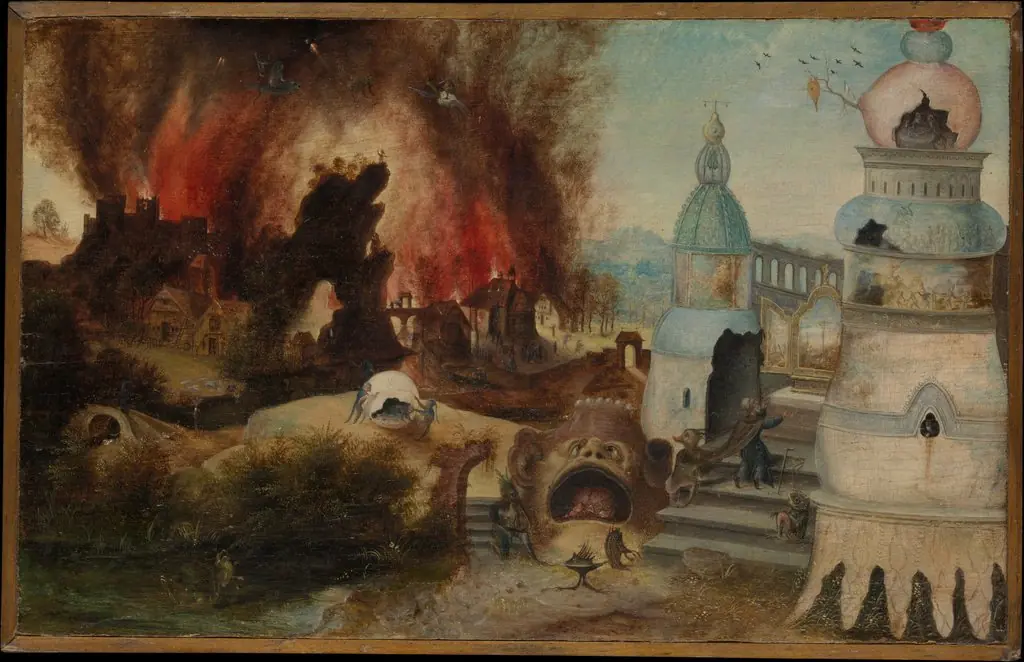 The Temptation of Saint Anthony
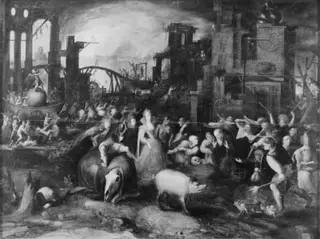 The Temptation of St Anthony
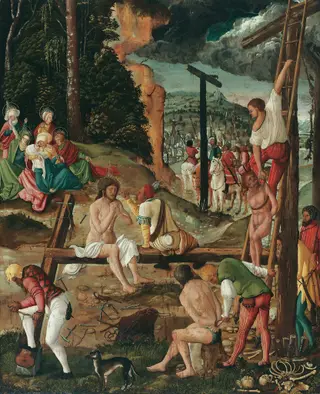 Before Christ's Crucifixion (Christ in Misery)
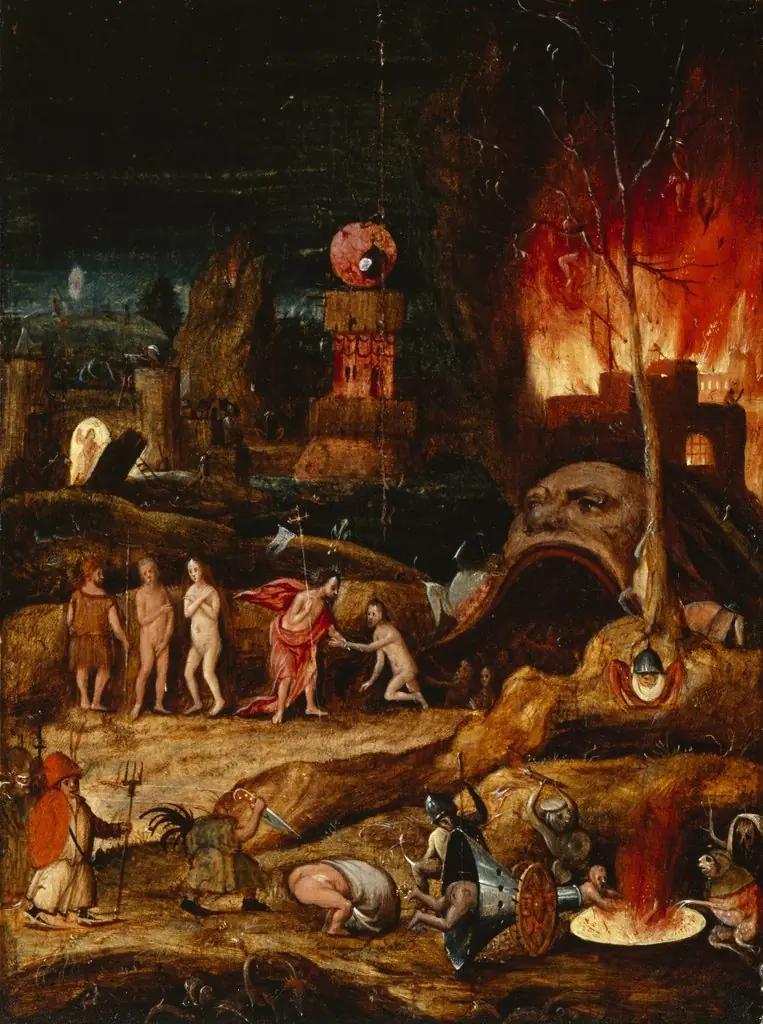 Christ in Limbo
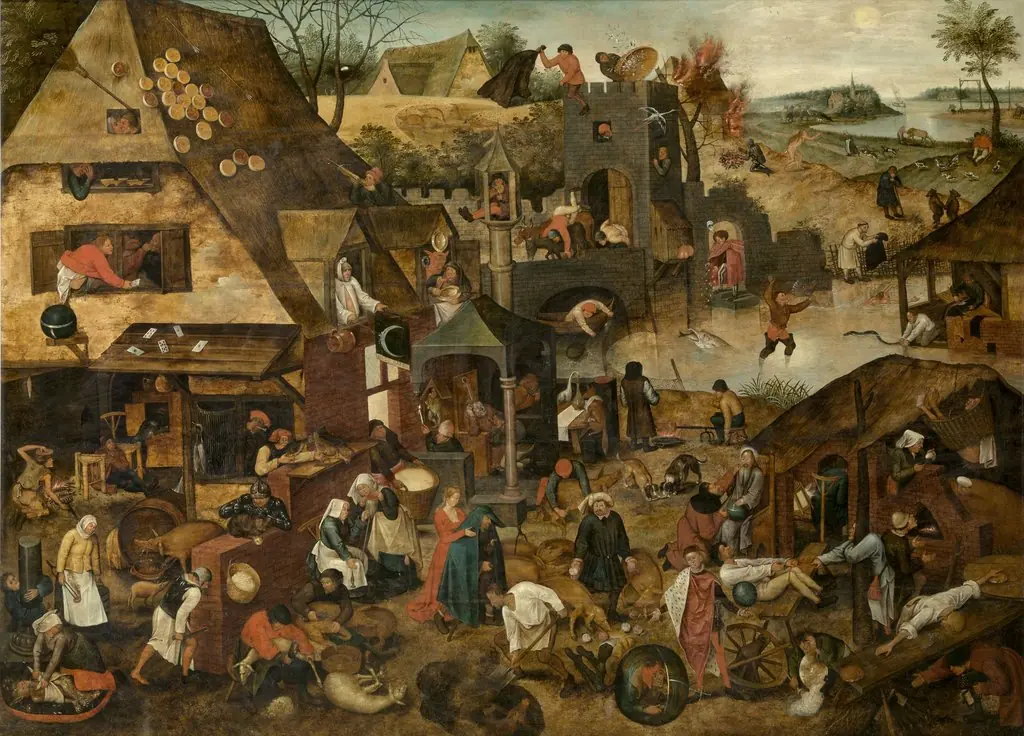 Proverbs
 The Martyrdom of Saint Ursula and the 11,000 Virgins