Bélizaire and the Frey Children by Jacques Amans
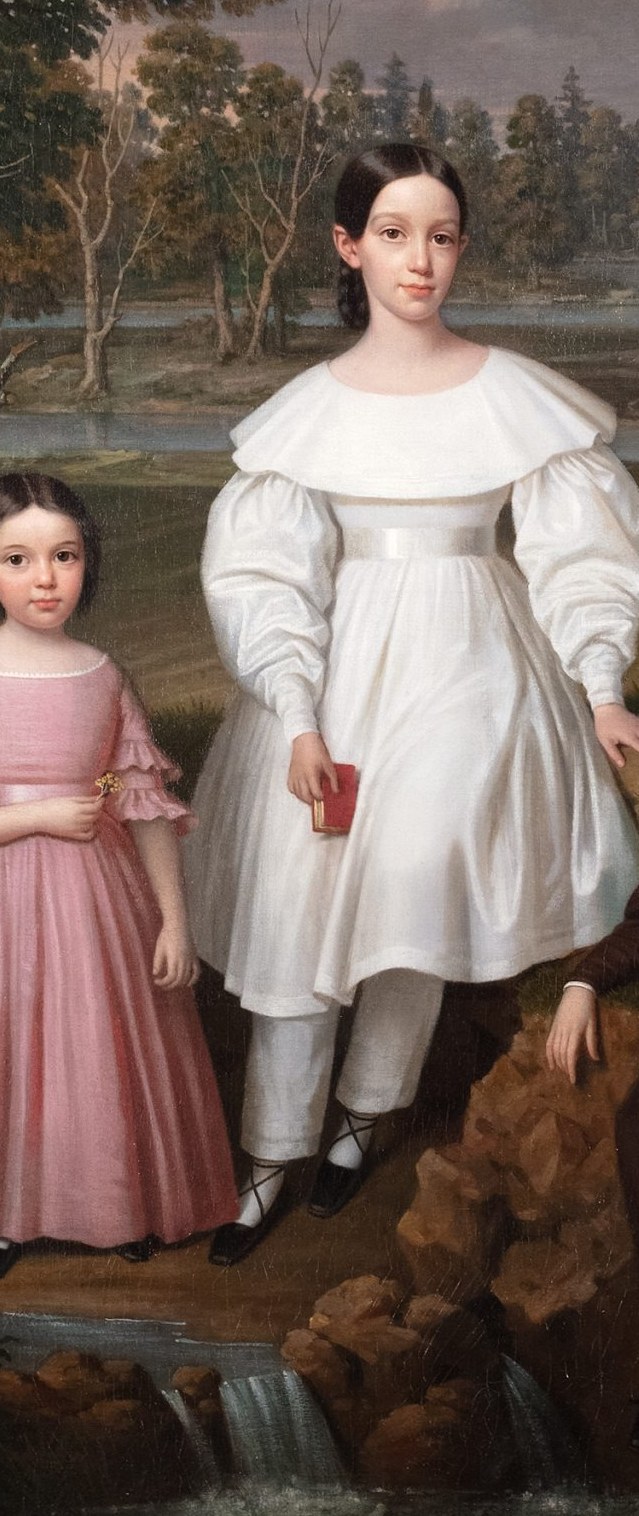
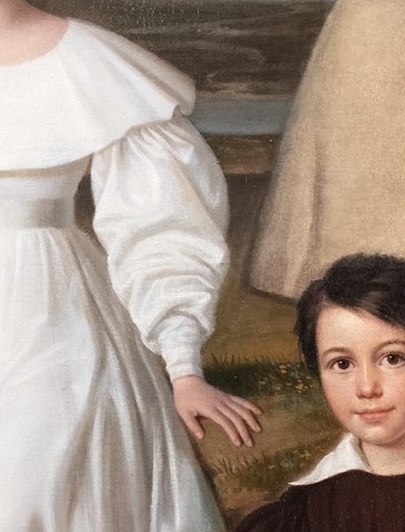
In 1837, a wealthy New Orleans merchant named Frédéric Frey commissioned a portrait of his three young children. The artist placed them outdoors by a stream on the family's Louisiana land. But the most arresting figure in the painting was nearly lost to history.
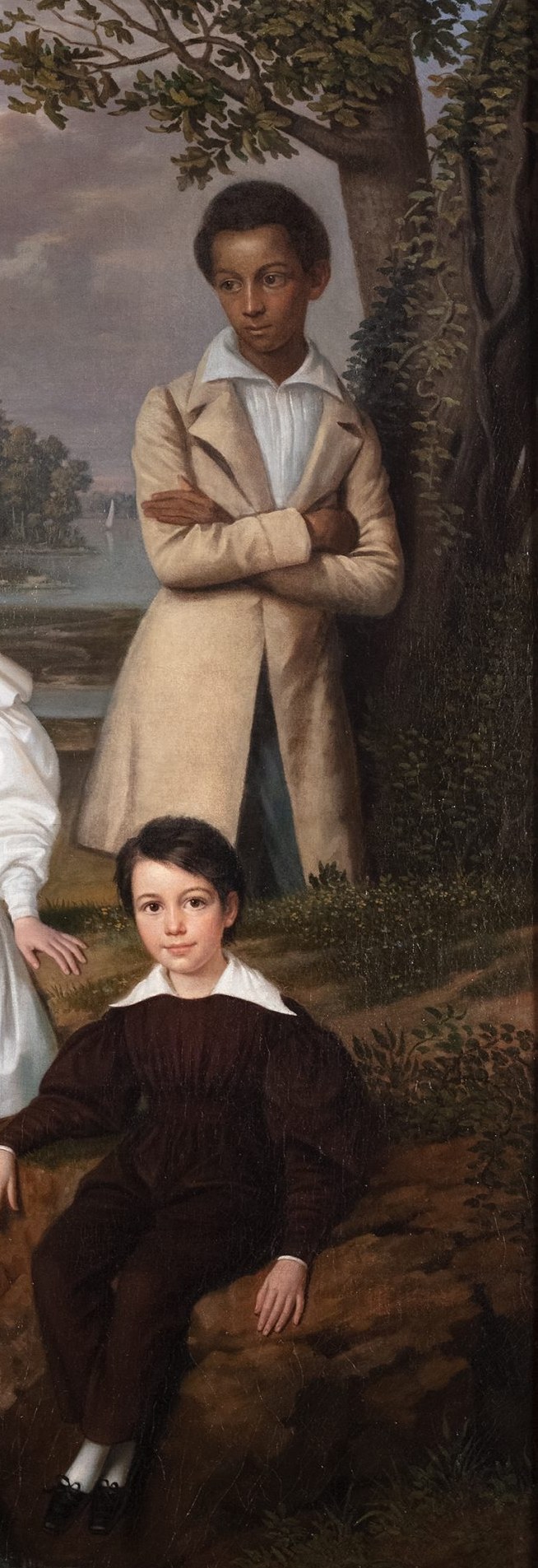
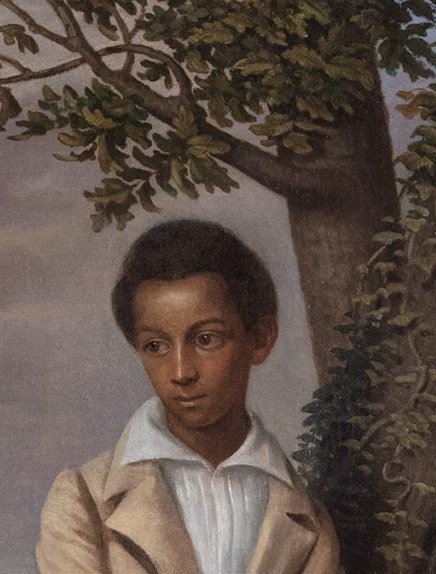
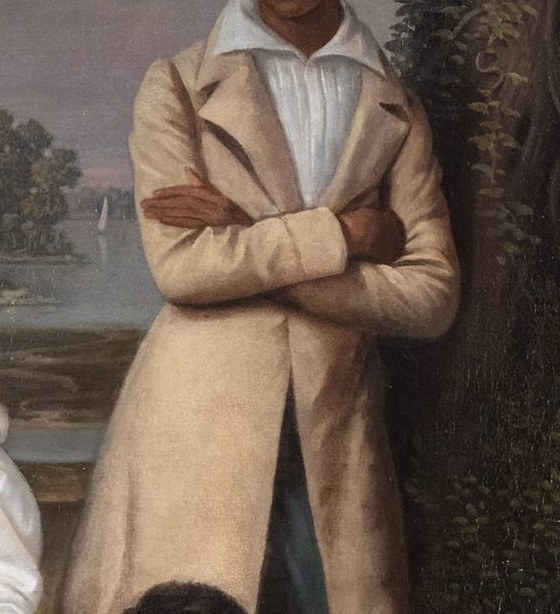
Standing behind the Frey children is a teenager named Bélizaire. He is dressed as well as any of them, in a dark coat with a white collar and crossed arms that project composure. His eyes meet the viewer's directly. Bélizaire was enslaved by the Frey family from the age of six, purchased alongside his mother Sallie in 1828. He likely acted as a companion and caretaker to the three children, two of whom would die of yellow fever the very year this was painted.
More than a century after it was made, the portrait turned up in an antiques shop, with Bélizaire intentionally painted out. A 1972 restoration uncovered his figure beneath the overpainting. Why he was erased remains a family story: one version says Frédéric Frey, angered with him, had him sold and removed from the canvas. Records show Bélizaire was indeed sold in 1841 to settle debts, bought back, and sold again in 1857 to the Evergreen Plantation, where he worked as a cook. He survived enslavement and was emancipated at the war's end. The last trace of him is an entry in the 1865 Freedmen's Bureau records. He was 37.
This painting is now the only known image of anyone enslaved at Evergreen Plantation, a place where four hundred people were held in bondage. It sits in the collection of the Metropolitan Museum of Art, a quiet witness that refused to stay invisible.
Details
Transcript
New Orleans, 1837. A merchant commissions a family portrait. Three well-dressed children, the Freys, pose on a Louisiana riverbank. But a fourth figure stands taller than any of them. His name is Bélizaire. He is fifteen, and he is enslaved. The Freys bought him at age six. He helped raise these children. Look at how the painter dressed him, in a fine coat, a white collar. An equal, in paint. The only known portrait of a person enslaved at Evergreen Plantation. Two of these children died of yellow fever that same year.