View of the Seacoast near Wargemont in Normandy by Pierre-Auguste Renoir
This is Pierre-Auguste Renoir's View of the Seacoast near Wargemont in Normandy, painted in 1890 and now at The Metropolitan Museum of Art. It is a small, radiant demonstration of Impressionist landscape painting at its most efficient. Renoir builds a complete coastal world out of remarkably few gestures, and he makes the light feel real by letting colour do the work that drawing used to do.
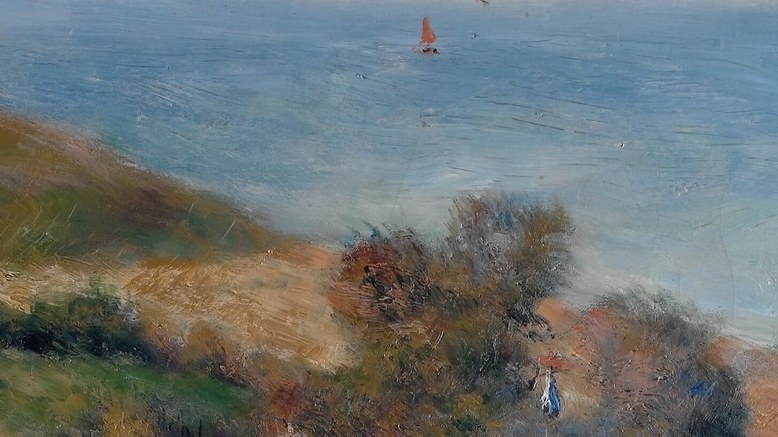
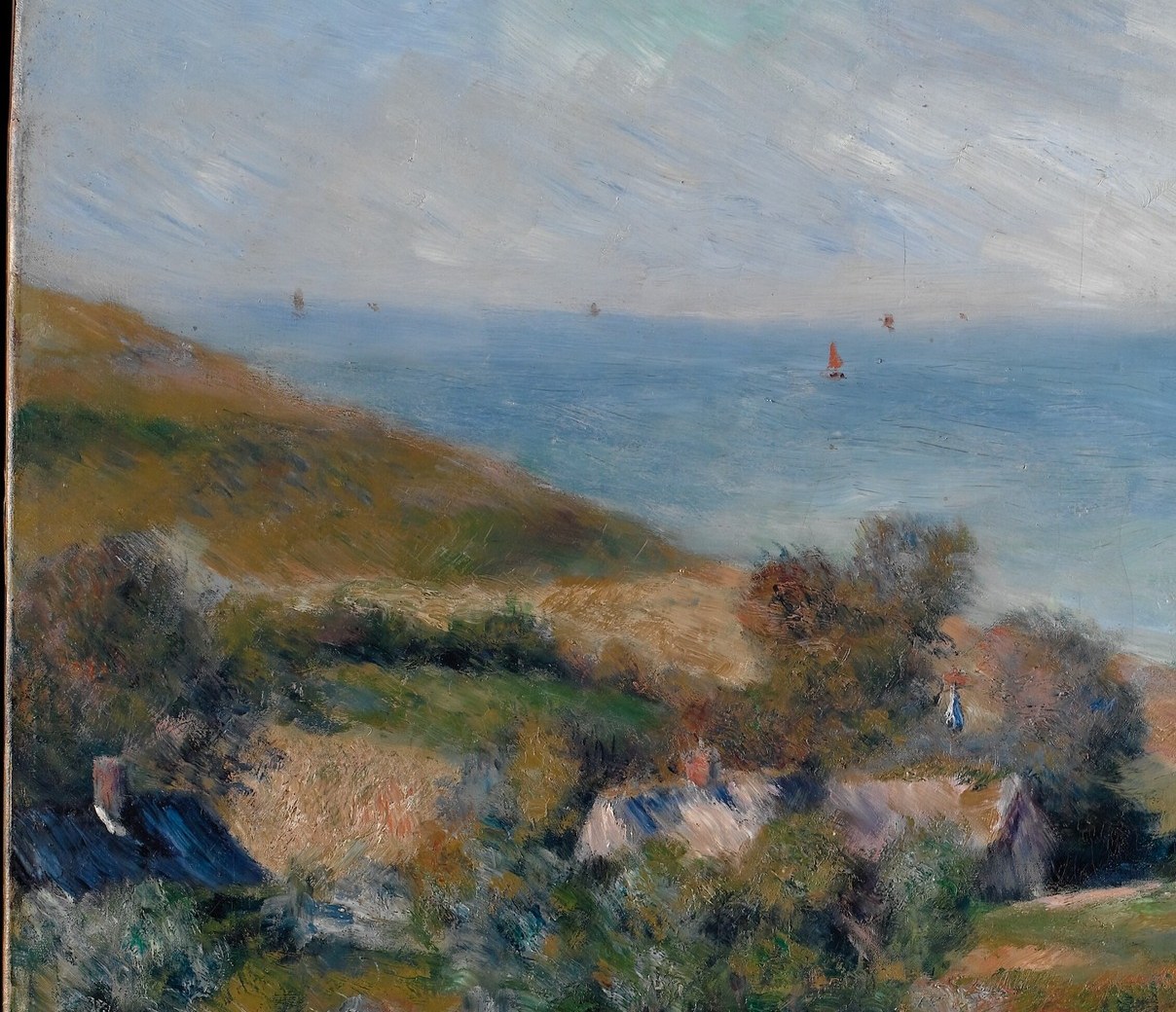
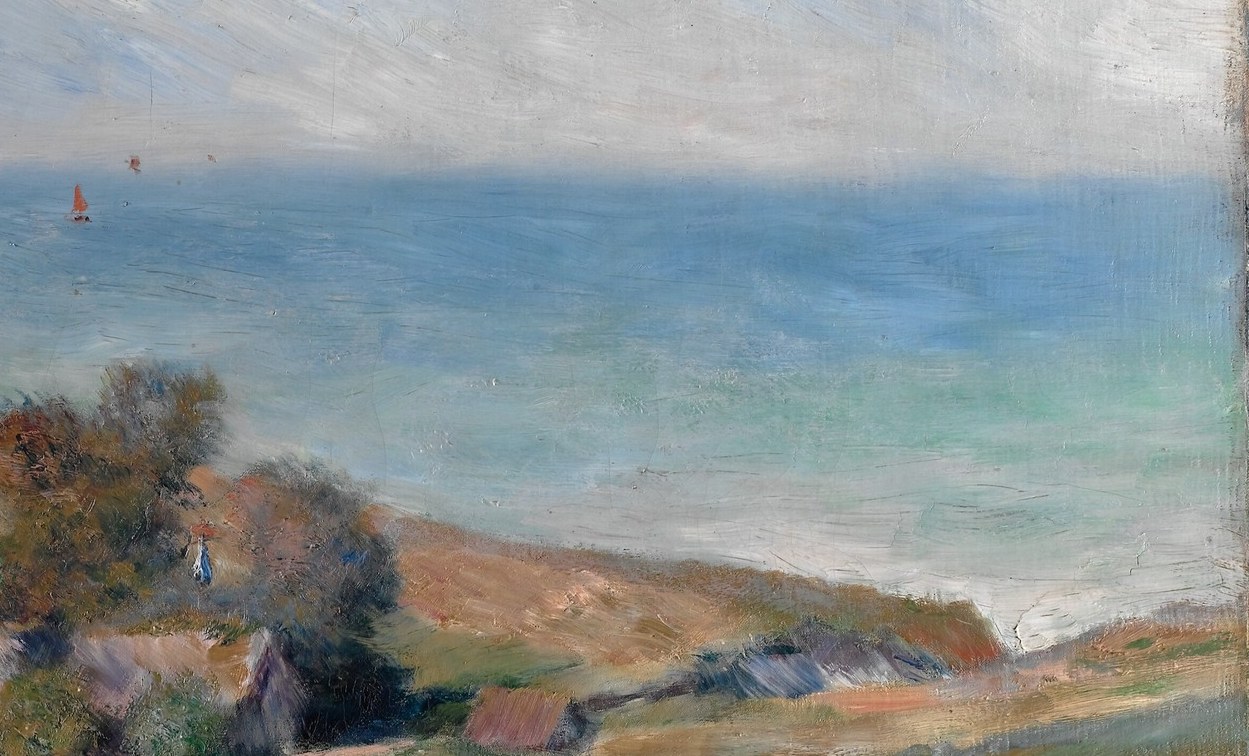
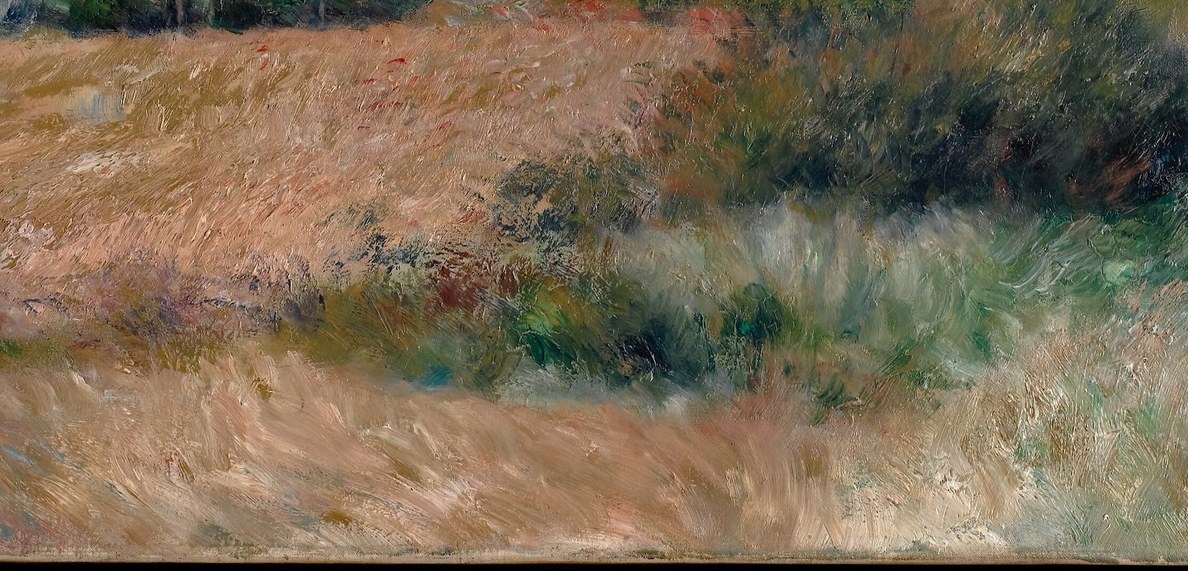
Watch the left hill closely. Where the sun hits the crest, the greens turn to warm yellows and ochres. Where it rolls into shadow, the colour slides back to cool viridian. That shift happens inside a single mass, and it is what gives the form its weight. Down in the foreground, the grass is pure impasto, thick, separate strokes of ochre, lime, and cream. Renoir loaded the brush and dragged it, and he never blended the strokes together. He trusted your eye to do the mixing.
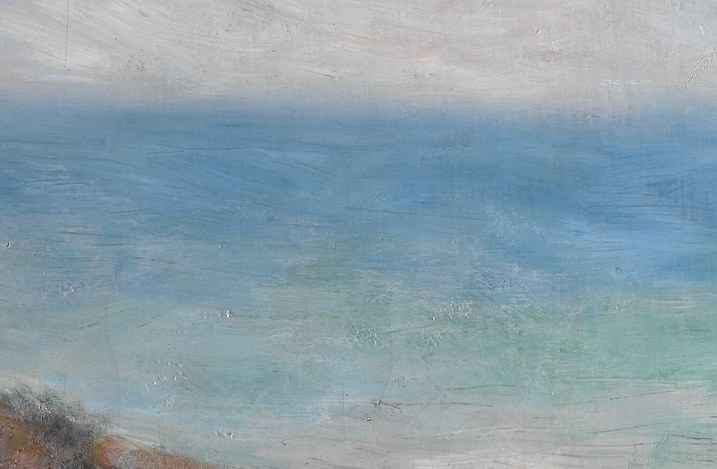
The sea is nearly flat, painted in a few horizontal pulls of blue-grey. Tiny white dashes resolve into distant sailboats only when you pause on them. Those boats are easy to miss, but they are the detail that turns a study of light into a portrait of a working Norman coast. The white village cluster anchors the middle distance, and a dark bocage hedgerow cuts across the fields, placing the scene squarely in the Pays de Caux.
Renoir painted this late in his Impressionist years, around 1890, when he was returning to landscape as an occasional subject. He worked en plein air, setting his easel on this headland and committing the scene in a single session. The result is a painting that gets warmer and more luminous the longer you let it sit. Next time you look at Impressionist grass, ask yourself: is the colour really in the meadow, or did Renoir find it in the light?
Details
Transcript
This hill seems solid. Fully modelled. Now look at the exact same hill in direct sun. One surface, two temperatures. Warm ochre slides into cool green. Renoir painted this entirely outdoors, in one go. The sea is three flat strokes of blue-grey. Those tiny white dashes. Boats with sails. The whole foreground is just thick, directional paint.