Allegorical Portrait of Anna of Austria as Minerva by Simon Vouet
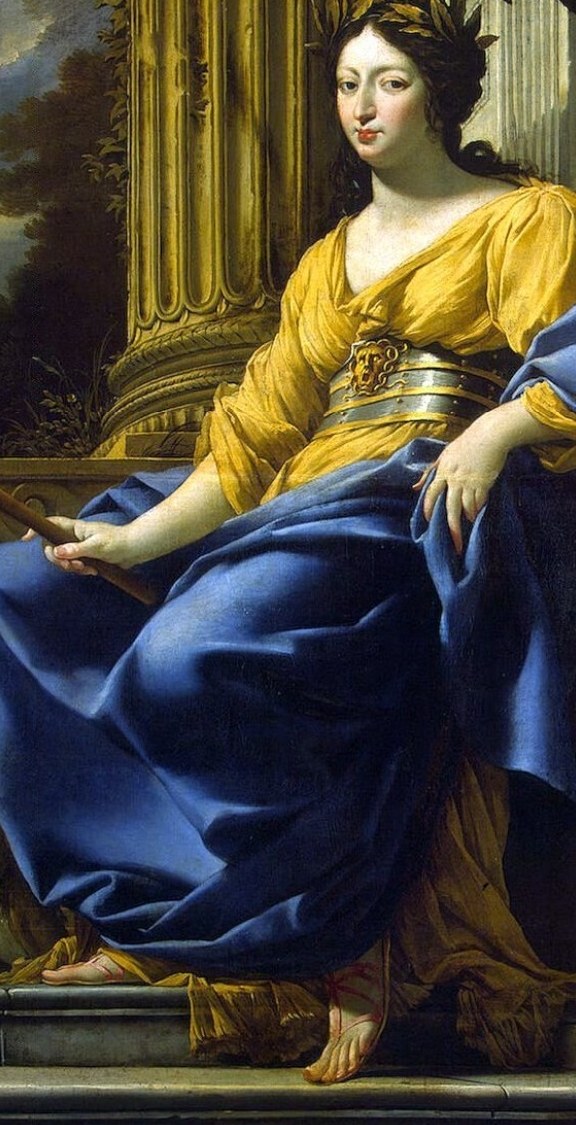
In 1646, Simon Vouet, the 'Premier peintre du Roi' in France, painted the "Allegorical Portrait of Anna of Austria as Minerva," now housed at the State Hermitage Museum.
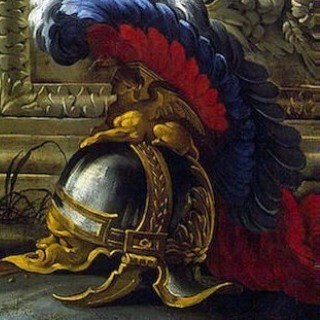
This grand painting depicts Anna of Austria, Queen of France, embodying Minerva, the Roman goddess of wisdom and war. Notice the owl, a traditional symbol of Minerva, subtly placed at her feet. Her discarded helmet further references her prowess and authority.
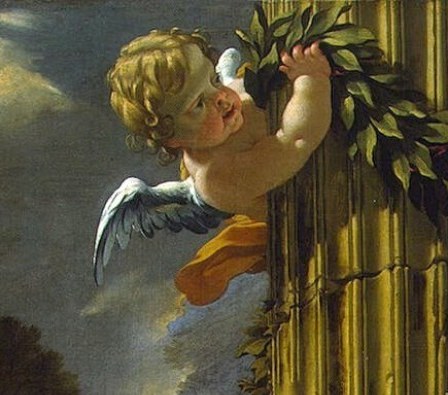
Two cherubic putti float above, crowning her with laurel wreaths, symbols of victory and honor. An inscription on the plinth boldly declares "NVLLVM NVLMEN ABEST," meaning "No power is absent," reinforcing the Queen's divine association and influence.
Vouet's work, exemplifying the French Classical Baroque style, captures a regal and serene power. What do you find most striking about her portrayal?
Details
Transcript
This is Anna of Austria, Queen of France. In 1646, she was painted as Minerva, goddess of wisdom. An owl, Minerva's symbol, watches from her feet. The discarded helmet refers to her power in war. Two putti crown her with laurels of victory. An inscription reads: 'No power is absent.' Simon Vouet, France's 'Premier peintre du Roi,' made this portrait.