Buttermilk Pedlar by William P. Chappel
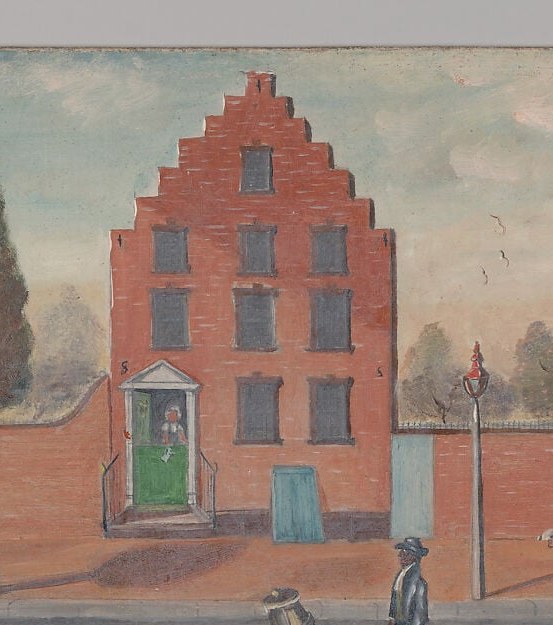
William P. Chappel’s “Buttermilk Pedlar” is a memory document posing as a simple street scene. Painted in the 1870s, it preserves an unpaved New York that was already slipping away, recording the city’s Dutch colonial architecture and itinerant trades before modernization erased them.
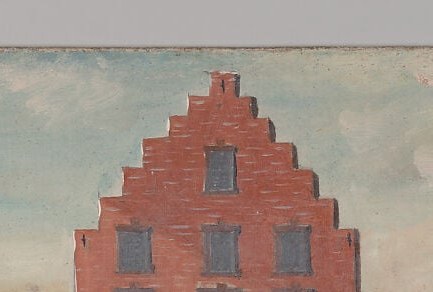
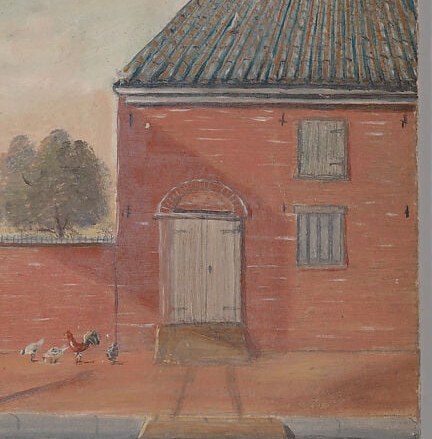
Chappel painted on slate paper, an unusual choice that gave his work a distinct, flat surface. His attention goes to the facts: the crow-stepped gable, the bright green door, the dirt road, the low boundary wall separating public from private space. There is no romantic haze here, only a clear-eyed catalogue of a neighborhood.
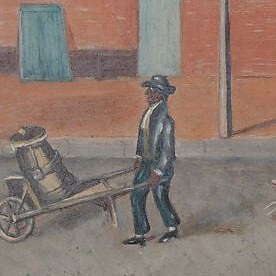
An artist who worked as a tinsmith and a tax assessor, Chappel painted what he knew. His small street scenes, almost all set on the Lower East Side, are now a vital record because he noticed the everyday things that grand history painters ignored. The buttermilk pedlar, with his low cart and dogs, belonged to a local economy that was already being replaced by larger commercial systems.
The Metropolitan Museum of Art houses this quiet, stubborn painting. When you look at it, you are not seeing a generic rural scene. You are looking at a specific street, recorded by someone who walked it. What detail of your own neighborhood would you paint if you knew it might not last?
Details

Transcript
This is a New York City street. The year is around 1875. But almost nothing here still exists today. The crow-stepped gable is a relic of Dutch colonial rule. By the 1870s, these buildings were already disappearing. Look at the road. It's unpaved dirt. A buttermilk vendor walks his route. Even he is a vanishing figure. The painter, William Chappel, recorded this world before it vanished entirely.